

« It’s not magnificent, it’s just Moroccan. » On social media, Sinan Benlakhdar, 25, a Franco-Moroccan, has been singing the praises of his home country for two years. A graduate of the renowned French communications school CELSA in 2023, he flew, master’s degree in hand, to Morocco, in search of his roots. « I knew I was Moroccan through my father, but I didn’t really feel it. I didn’t have a command of Darija. It was as if I were a foreigner in my own country. That’s why I chose to go to Morocco, » he explains.
“I knew I was Moroccan through my father, but I didn’t really feel it (…). That’s why I chose to go to Morocco”
He decides to share his adventure on social media under the pseudonym « sinan_leptitmarocain. » What was initially meant to be a « sabbatical year » quickly transformed into a collective experience shared virtually with part of the Moroccan diaspora. By speaking about dual culture, identity, and heritage, his story sparked an enthusiasm he was far from imagining when he started out in content creation. Today, he has accumulated 101,000 followers on Instagram.
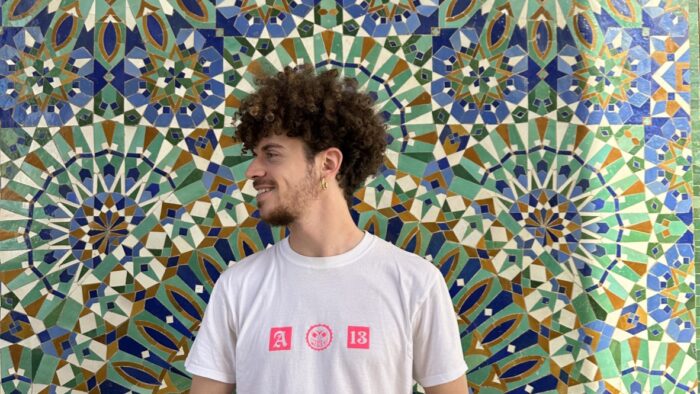
Like him, many content creators from the diaspora are returning to Morocco and promoting it on social media, sometimes even settling there permanently. Their videos, in which they share their (re)discovery of the country and showcase their pride in being Moroccan, accumulate tens of thousands, even millions of views on digital platforms (Instagram, TikTok, Facebook, and YouTube), and resonate particularly with young members of the diaspora around the world, even attracting the attention of political officials and public institutions.
A movement of cultural reappropriation
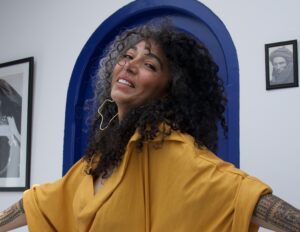
Myriam perfectly embodies this trend. She has always felt Moroccan, but found in content creation a way to combine her sociology skills with her creativity. Born in France to Moroccan parents, this mother, who holds a doctorate in sociology of education, currently lives between Canada and Morocco after having resided in Montreal.
She launched her account « Mayasanaa » on social media to share with her community her process of cultural reappropriation, celebrating her Moroccan and Amazigh identity. Today, she has accumulated more than 59,800 followers and presents herself as one of the pioneers of this type of content. « French and Moroccan people make up the majority of my followers in equal shares, » she observes. She also plans to return and settle permanently in Morocco.
While she does not make a living from content creation, social media has allowed her to speak regularly at conferences on the topic of identity. She is also frequently contacted by women who wish to get Amazigh symbols tattooed, and who sometimes ask her to research their grandmother’s tattoos.
“I wished to document my journey in search of my roots for all those abandoned children who know nothing of their birth country”
For her part, Julie, 29, has just completed her three months in Morocco. Her quest for identity takes on a particularly poignant dimension: « I was abandoned by my mother (Moroccan) at birth, in Belgium. I wished to document my journey in search of my roots for all those abandoned children who know nothing of their birth country. » Within a matter of weeks, her audience exploded, and engagement around her posts followed the same trajectory. She now has more than 61,600 followers on Instagram.
Partnership proposals quickly poured in: culinary workshops, tourist experiences, hotel accommodations… « Since my arrival in Morocco, all my accommodations have been covered, » she specifies. For this Sciences Po graduate, who has notably worked as a community manager with the Jordan Tourism Board, the goal is to make a living from content creation.
Voir cette publication sur Instagram
When influence becomes strategy
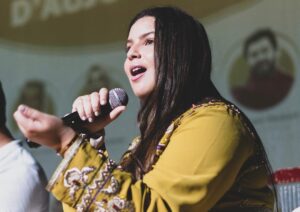
Hiba El Aïdi, 26, a lawyer, has perfectly grasped the considerable influence of these content creators. Having arrived in Quebec at the age of six with her family, she grew up in Montreal while maintaining a strong connection to Morocco. During the Covid-19 pandemic, she developed a deep interest in her home country, seeking to discover a reality that goes beyond the traditional aspects she already knew. She then became passionate about the world of Moroccan content creators.
« Their content creation overflowed with energy. I started organizing live sessions on Instagram with these ‘influencers’ who presented a renewed image of Morocco: authentic, dynamic, and free from stereotypes, » she explains. This observation led her to found the collective Morocco with Purpose in 2022 to « reconnect the Moroccan diaspora to its roots, » banking on this new way of capturing the attention of young people.
“Content creators have a young and modern perspective on the kingdom and are now clearly part of Moroccan soft power”
« I truly built my communication strategy with the support of content creators. They have a young and modern perspective on the kingdom and are now clearly part of Moroccan soft power, » she analyzes. Her approach quickly won over institutions: she pitched her project to the Ministry of Youth, Culture, and Communication, led by Mehdi Bensaïd, which began by awarding her grants before becoming a partner.
« My project aligned perfectly with His Majesty King Mohammed VI’s directives regarding the promotion of MREs. The idea is that there are no Moroccans and Moroccans residing abroad (MREs), there are just Moroccans of the world, » she concludes.
This nascent government interest in diaspora content creators is something Sinan has felt when he was contacted to produce an advertising spot for the kingdom’s tourism board, or when he received the « Siyaha Passion » (passion tourism) award from the hands of Tourism Minister Fatim-Zahra Ammor. Last July, he also had the opportunity to read a poem, in Darija, before the Minister of Culture. « It was an immense source of pride for me to collaborate with them. When I think that at the start of this adventure, I didn’t understand Darija and the only thing I knew about Morocco on a tourism level was Jemaa el-Fna square, it’s crazy! » he recounts.
Toward professionalization?
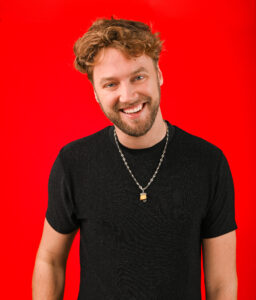
Often romanticized, the earnings of these content creators are the subject of much speculation. Invited to trendy events, hotels, and restaurants, many internet users think they live solely off their social media. « People often imagine that content creators earn a lot of money through their community, because videos sometimes get millions of views. In reality, digital platforms pay little, or even nothing at all for some, » explains Christian Mamoun, 35. « The earnings come rather from partnerships or contracts signed with brands, » he adds.
A fashion photographer for ten years, this German-Moroccan content creator, born in Germany, settled in Morocco in 2023. On his social media, he regularly shares videos of encounters with Moroccans from all walks of life, ranging from a churro vendor in the streets of Casablanca to the chef of the very chic Tour Hassan Palace hotel in Rabat. « It all started with a video. I met the famous bookseller Aziz Mohamed in the medina of Rabat, with the goal of capturing his portrait. I shared this spontaneous encounter on social media. The video went viral and that’s how I got into content creation, » he recounts. Today, he has accumulated more than 81,400 followers on Instagram.
Voir cette publication sur Instagram
“You can feel that public institutions are beginning to see the impact that content creators can have on the promotion of Morocco”
More than a true source of income, content creation on social media is more of a showcase for his work as a photographer and videographer, giving him visibility. His work also attracts Moroccan brands, such as Dari, a couscous and pasta label, with whom he collaborated to highlight the cultural and culinary heritage of the kingdom, as well as public institutions such as the Regional Tourism Council of Fès-Meknès, to promote the region’s tourism.
« You can feel that public institutions are beginning to see the impact that content creators can have on the promotion of Morocco, » he emphasizes, advocating for the structuring of the profession and for « aid or subsidies » to help content creators « go further » in their showcasing of the country.
What does the future hold for these content creators from the diaspora? Between passion and profession, personal quest and partnership opportunities, they are navigating uncharted waters. If their content is worth its weight in gold in terms of soft power for the kingdom, it remains to be seen whether this value creation will one day translate into financial recognition commensurate with their cultural impact.
Written in French by Cécilia Leriche, edited in English by Eric Nielson


