

The French system is no longer the only option for Moroccan families seeking an international education. Driven by rising tuition costs and an increasingly diverse educational landscape, alternative systems are gaining ground, led by foreign public schools and private international institutions offering different pedagogical approaches.
Among them, the Spanish system stands out as a well-established and relatively affordable option. In Morocco, it operates through a network of public schools directly affiliated with the Spanish Ministry of Education, currently serving more than 5,000 students and employing nearly 400 teachers.
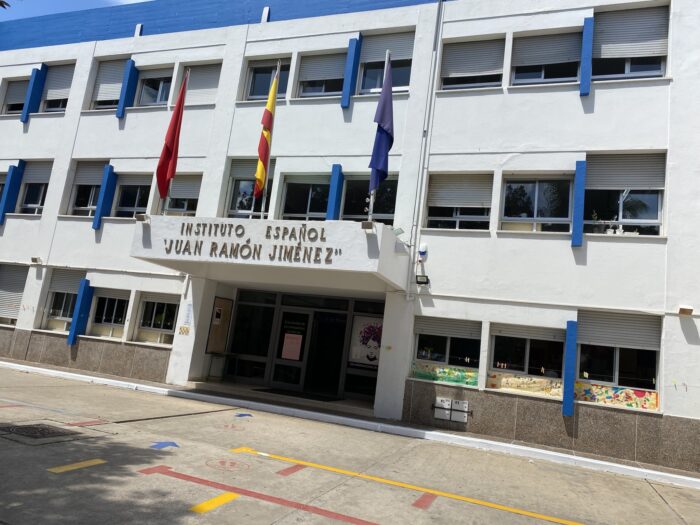
In Casablanca, the Spanish Institute, founded in 1967, exemplifies this long-standing presence. The school offers a full curriculum, from preschool through high school, in line with the Spanish education system, with a strong emphasis on multilingualism and cultural openness.
Quality, cost, and credibility
These were precisely the factors that convinced Lamia to enroll her son in the school this year. “The first reason was the quality of the system, about which we’d heard positive feedback from friends and family and from other families whose children attend the school. The second reason was financial: compared to other international schools, the Spanish system seemed the most reasonable in terms of cost, neither excessive nor particularly burdensome. The third reason was proximity. The school is conveniently located, close to our home in the Maârif neighborhood, and doesn’t require long daily commutes ” she explains.
Language also played an important role in the family’s decision. “We wanted to expose our son to as many languages as possible, in this case, Spanish, French, English, and Arabic” Lamia says. It is a strategic choice at a time when Spanish, spoken by more than 500 million people worldwide, continues to strengthen its position as a major international language.
The Spanish system also appeals to families because of its institutional stability. Unlike some private international schools, these are public institutions, with curricula and tuition are regulated by the Spanish authorities. This was another decisive factor for Lamia’s family: “We considered other educational systems, mainly the British system, but we were deterred by very high tuition costs and some uncertainty regarding the status of those schools.”
The French system, meanwhile, was ruled out for both financial and personal reasons. “The French system wasn’t an option either, both because of its high cost and my husband’s negative experience, he attended a French school for his entire elementary and secondary education” Lamia explains.
So far, the initial results have been positive. “We see that our son is thriving (…). At just four years old, he’s already comfortable speaking two foreign languages. It’s a real asset for his development ” she says. This satisfaction doesn’t, however, overshadow a broader expectation. “We would have preferred to be able to rely on a stronger public education system” she laments.
The rise of private international schools
At the same time, Anglo-Saxon education systems have gained significant momentum in recent years, driven by growing demand for more flexible teaching methods and greater international exposure. Long-established institutions such as the Casablanca American School, founded in 1973, reflect this enduring presence. The school offers an American curriculum enriched by the International Baccalaureate program, which is widely recognized for facilitating admission to universities abroad. The model emphasizes independence, critical thinking, and extracurricular activities, departing from more traditional, academically driven approaches.
The sector is also expanding rapidly. An increasing number of private international schools, often English-speaking or hybrid institutions inspired by British, American, or Canadian models, are opening across the country. One example is Victoria International School in Bouskoura, which offers a Canadian curriculum leading to both a Moroccan and an international diploma. The school promotes what it describes as a “holistic” educational approach, promising “academic rigor and personal development in a bilingual or trilingual environment.”
For Sara, whose daughter attends the school, the choice was initially based on a very practical consideration. “It was a natural choice because of the school’s proximity to our home. That was really our main criterion” she says. Looking back, she is satisfied: “I think the system offers a good balance between learning and the child’s development. They encourage participation and independence.” She also highlights “more modern, child-centered methods,” though she adds, “it also depends a lot on each child.”
Then comes the question of cost, which remains considerably higher in these private schools. “It’s still quite substantial, but once you’re looking for a certain environment and a certain level of quality, you have to accept the cost ” she says. This pragmatism is reflected in her long-term vision: “If I had to move tomorrow, I would once again prioritize proximity, even if it meant adapting to a different system, such as the French system.”
An evolving educational landscape
These different educational paths reflect a broader shift. While the French system remains highly attractive, it now faces increasingly well-established competition. The Spanish model has emerged as a credible public alternative, while private international schools are betting on educational innovation and a more global outlook.
Beyond educational preferences, parents’ choices increasingly reflect a complex balancing act involving cost, location, language instruction, and future opportunities. One constant, however, remains: the search for the best possible environment for their children, even if it means moving away from a model that has long dominated Morocco’s international education landscape.
Written in French by Ghita Ismaili, edited in English by Amina Kadiri


