

The recent exchange of letters on the issue of secularism between the Minister of Islamic Affairs, Ahmed Toufiq, and the Secretary General of the PJD, Abdelilah Benkirane, has brought up a question: Does secularism truly exist in Morocco, or is it simply an element of official rhetoric?
« We are secular. It’s true, we don’t have texts similar to those from 1905. But here, everyone is free to make their own choices. There is no constraint in religion, » stated Ahmed Toufiq
The first, quoting an excerpt from a private discussion with the French Minister of the Interior, Bruno Retailleau, to whom he reportedly replied, in response to a question about Morocco’s perception of secularism : « We are secular. It’s true, we don’t have texts similar to those from 1905. But here, everyone is free to make their own choices. There is no constraint in religion. » This was enough to trigger a fiery reaction from the leader of the Lamp Party.
During a party meeting in Berrehil, Abdelilah Benkirane criticized the remarks of the Minister of Islamic Affairs. « Moroccans are Muslims firmly attached to their religion, and their country is a Muslim country, not a secular state. Its king is not just any king, he holds the title of Commander of the Faithful, and that’s been the case for a long time, » he declared in front of a crowd of party « brothers. »
This attack did not go unnoticed by the minister. In a lengthy letter, Ahmed Toufiq, who is normally known for his discretion, did not hesitate to reinforce his position, while lamenting Abdelilah Benkirane’s hasty judgment.
In this correspondence, the minister reminded him of the context in which his remarks were made: « You are the leader of a modern political party. And the modern political party is inspired by a secular Western system. » Responding to this well-argued letter, which combined firmness and diplomacy, the Secretary General of the PJD opted for a more conciliatory approach, emphasizing that the remarks made during the Berrehil meeting were not directed at Ahmed Toufiq, but at those who seek to sow discord.
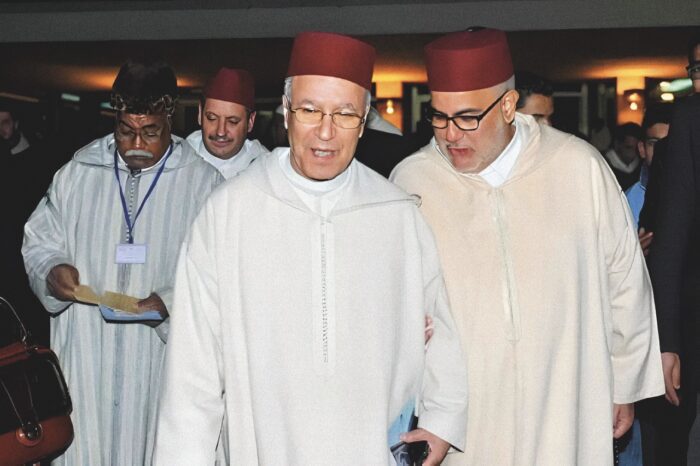
This correspondence quickly made its way across the internet, sparking interest and reactions from a large number of personalities and online users.
The keys to interpreting the Toufiq-Benkirane exchange
In this exchange, two visions of Islam are in opposition. As Asma Lamrabet, essayist and former member of the Rabita Mohammadia of the Ulema, analyzes: « The first (Ahmed Toufiq, ed.) speaks from the perspective of a historian and a pragmatic political management of religion, while making a distinction—rather than a rupture—between the political and the religious. Meanwhile, the second (Abdelilah Benkirane, ed.) has a reductionist ideological-religious approach to the concept of secularism, perceived and understood as hostile to any religious dimension. »
“Ahmed Toufiq’s arguments are not without merit, and they even have a touch of humor. But instead of secularism, I prefer to speak of secularization, which seems to me to be a more open concept”
University professor and author of Modernités arabes, Khalid Zekri comments on the exchange: “It’s always important to have a debate on issues that touch on the organization of societies. The mistake would be to try to blindly imitate the French law of 1905. Despite the conformism in Ahmed Toufiq’s remarks, his arguments are not without meaning, and even humor. Instead of secularism, I prefer to speak of secularization, which seems to me a more open concept as it allows for the possibility of a state religion while guaranteeing the autonomy of politics and civil society from religious power.”
On his part, political science professor and specialist in the management of the religious field, Omar Iharchane, believes that “in terms of form, the debate is a healthy phenomenon and proof of societal dynamism that should be encouraged. Because the opposite is stagnation, which is fatal for any society. The language used in the debate is polite, and that is what we expect from two public figures who occupy or have occupied an official position at the top of the state.”
However, the professor regrets that these correspondences did not lay the foundations for a public debate on secularism. “In terms of content, the polemical nature took precedence. Public opinion mostly focused on the unsaid, with its share of settling scores and ambiguous messages. The debate thus ended as soon as the messages were delivered, whereas if the goal of the two protagonists had been to establish a public debate, they would have expanded more on the subject,” observes Omar Iharchane.
Origin: secularity
Beyond the personal perspectives on the exchange between the two men, the question of the limits of religion in the face of secularism arises. This duality, far from being the result of the shift toward modernity, embodied by the nation-state, has its roots early on, immediately following the emergence of Islam.
Professor at the Faculty of Legal, Economic, and Social Sciences at Hassan II University in Aïn Chok, Casablanca, Mohammed Mouaqit explains: « Very early in Islam, the transformation of the Caliphate into a kingdom took place during the time of Mu’awiya Ibn Abi Sufyan, who is considered the instigator of this transformation, although some attribute it to Caliph Uthman Ibn Affan. This shift means that we find ourselves in a situation where it is no longer religion that prevails, but rather politics that imposes its rules. »
Today, in the era of the nation-state, religion is just one of many sources of law. « From the moment we entered the institutionalized modern state, which holds the monopoly on legislation, the state incorporated Islamic law (Sharia) as a component to regulate certain aspects of society’s life, » emphasizes Mohammed Mouaqit.
“In practice, within the Moroccan context, there are many manifestations of secularism, but in a way that does not contradict the religious foundation as a phenomenon”
An analysis shared by Omar Iharchane: « In practice, within the Moroccan context, there are many manifestations of secularism, but in a way that does not contradict the religious foundation as a phenomenon. However, there are a few exceptions, and it is on these that some base their argument that Morocco is a secular state. This conclusion arises from the confusion between modernity and secularism. »
He goes on to add: « However, it can be affirmed that Islamic law is only one source of legislation among others. While it is given priority in certain texts, notably in the Family Code, it can lose its priority in other areas. Morocco differs here from Egypt, for example, whose constitution, since President Anwar Sadat, states in Article 2 that ‘Islam is the religion of the state (…) and the principles of Islamic law are the primary source of legislation.‘ »
What role does religion play in a secular system?
“The major confusion surrounding this topic is falling into the trap of the French experience. French secularism was built on the conflict between the clergy and political leaders”
The balance of power between religion and politics in Muslim countries thus varies from one country to another. In Morocco, « this duality is first embedded in our Constitution, which confirms a dual foundation through, among other things, two unifying constants (thawabit), namely, the democratic choice and the moderate Muslim religion. Is this ambiguity or a true political will to reconcile these two references? In any case, this ideal of harmonization remains, unfortunately, still hard to conceive in terms of social reality, » notes Asma Lamrabet.
She adds: « This duality, experienced as opposition, is primarily due to the prevailing religious discourse and thought that reduces Islam to a dogmatic and orthodox view, strictly legalistic and stripped of all its ethical and spiritual dimension, which is essential and at the heart of the sacred text of Islam. »
So, how can one reconcile religion and politics in a way that guarantees both fundamental freedoms, individual freedoms, and religious freedoms? According to our interlocutors, it all depends on the model of secularism we wish to adopt, independent of any mimicry or cultural subordination.
« The major confusion surrounding this topic is falling into the trap of the French experience. French secularism was built on the basis of the conflict and contradiction between the clergy and politicians, which led to an absolute separation between private/religious affairs and public/political affairs. This experience is what created secularism, » raises Omar Iharchane.
“The model of Anglo-Saxon secularism, where King Charles III is the Supreme Governor of the Church of England, as sovereign of the United Kingdom, could be relatively closer to Morocco”
This model, completely distant from the Moroccan experience, cannot serve as a framework for understanding the political and social dynamics that could establish a Moroccan model of secularism. Asma Lamrabet is of the same view: « In Christian Western countries, secularism was the process of a long history of liberation from the dogmatism of the clerical institution. This history did not occur in Islam. »
In Morocco, there is the uniqueness of the Commandery of the Faithful, a model for managing religion and politics, which has its own tradition and historical context and is distinct from both European secularism and the historical Arab secular ideology. However, the model of Anglo-Saxon secularism, where King Charles III is the Supreme Governor of the Church of England as the sovereign of the United Kingdom, could be relatively closer to Morocco.
The importance of the religious field in the Moroccan public sphere contrasts with the establishment of a French-style secularism
The importance of the religious field in the Moroccan public sphere contrasts with the establishment of a French-style secularism. However, Omar Iharchane does not rule out the possibility of drawing inspiration from secular models where religion is not completely absent from public life:
« The British, American, and German experiences have given rise to a completely different form of secularism, based on the possibility of coexistence between the religious and political spheres, provided that there is a distinction between them, not an absolute separation. These experiences started from the premise that religion plays a role in the public sphere and is not limited to the private sphere, and as a result, they created a distinction between the two realms, based on a set of determinants from which we can draw inspiration to build an authentic Moroccan experience. By authenticity, I mean here not a return to the past, but avoiding the trap of literal copying. »
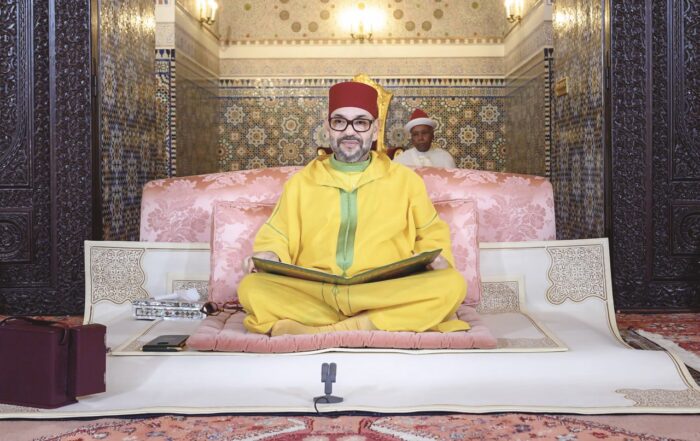
An approach supported by Khalid Zekri: « We can draw lessons from certain experiences external to Islam to think about our reality, so that members of society can maintain relationships with one another without necessarily using Islamic prescriptions as the only reference for their actions. »
Plural identity, a vehicle for secular ideals
Regarding the relationships between individuals, it is important to ask whether, as Moroccans, we are ready to separate the social and religious spheres
Regarding the relationships between individuals, it is essential to ask whether, as Moroccans, we are ready to separate the social and religious spheres. Part of the answer lies in analyzing Moroccan social identities to determine whether they are, or are not, receptive to difference.
Anthropologist Hassan Rachik distinguishes three levels of comparison for social identities: “It is important to identify three levels of comparison for social identities. Is identity uniform, exclusive, or plural? Totalitarian or selective? Inherited or acquired?”
For the anthropologist, the plurality of social identity allows for greater emancipation of the individual: “Plural identity offers individuals the ability to choose between different identities, easily shifting from one to another, mixing two identities, depending on the context. One can, for example, be Amazigh and Muslim, Egyptian and Coptic, etc. But the problem that can arise here is the hierarchy of identities, when an individual is required to choose one identity over another. However, in general, the plurality of social identity offers independence to the individual.”
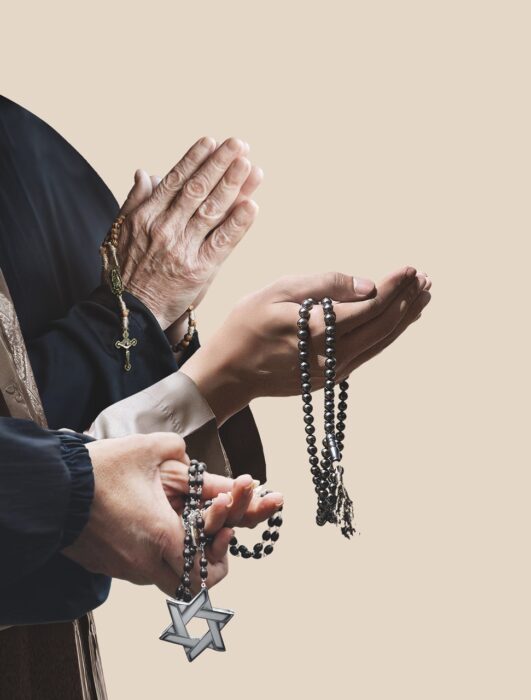
And he continues: “Totalitarian identity is one that leaves no room for any form of individual expression. This identity organizes every aspect of a person’s life, starting with their body, how they dress, and even their interactions with other members of their community. Selective identity, although it also implies certain behaviors, does not force the individual to adopt a single identity throughout the day. For example, one can listen to a particular type of music and wear a jellaba to pray on Friday at the mosque. Selective identity offers greater identity comfort.”
Regarding the third level of comparison, the anthropologist explains that some identities are inherited at birth, while others are acquired: “At birth, we are given a name, an ethnic background, a language, and sometimes a religion, etc. But it sometimes happens that we choose a different path from the one we were expected to follow. For example, a person of Amazigh origin may become a fervent advocate of Arab identity, or the opposite.”
These levels of analysis allow Hassan Rachik to draw a conclusion: “In some situations, these identities can shift toward extremism or radicalization, becoming deadly identities, regardless of whether the social identity is religious, ethnic, or something else. The first step toward this shift is the ideologization of social identities.”
In the shadow of outdated laws
“For a few years now, we have been practicing our religious rites in peace. The rare instances of intimidation we experience come from individuals affiliated with certain conservative political parties or from media close to these circles”
What about in practice? Adam Rabati, a man in his fifties, married and a father of two, is also an evangelical pastor. He embraced Christianity in the 1980s. He regularly hosts Moroccan converts to Christianity in his « house church. » « For a few years now, we have been practicing our religious rites in peace, without any pressure from either the authorities or citizens. No one hinders our freedom of worship, » our interlocutor testifies, before continuing: « The rare instances of intimidation we experience come from individuals affiliated with certain conservative political parties or media outlets that are reputedly close to these circles. Some news sites label us as obscurantists. »
Aside from these exceptions, everything seems to unfold naturally. In fact, just a month ago, Adam and his wife Farah welcomed their second daughter, to whom they chose a Christian name. « We decided to name her Aster, and the authorities accepted the name without any conditions, » Adam reveals.
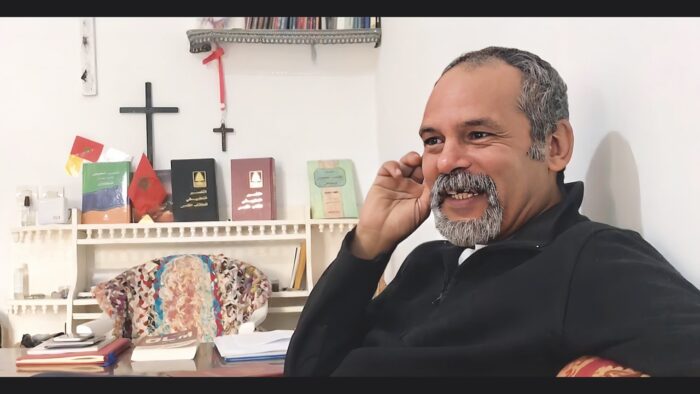
However, from a legal and regulatory standpoint, there are still certain difficulties that prevent Moroccan Christians from fully enjoying their rights.
« There are still barriers that stand against us as a religious minority in the country. For example, we do not have access to youth centers where we wish to organize public activities, and we cannot yet form associations, » regrets Adam Rabati, who advocates for a reform of the legal articles that restrict the exercise of individual freedoms. « There can be no democracy without guaranteeing freedom of conscience, » he continues.
“The principles of respect for freedom of conviction, belief, and worship are inherent in the foundational text of Islam”
« Another important principle within secularism, and present in Islam, is that of the freedom of religious conviction. Indeed, the principles of respect for freedom of conviction, belief, and worship are inherent in the foundational text of Islam but have always been overlooked by a rigorous theocratic-political reading that is resistant to the values of freedom and emancipation, » insists Asma Lamrabet.
And she concludes: « Unfortunately, Morocco did not retain this freedom of religious conviction in its most recent constitutional reform, where the focus was rather on freedom of worship. However, the free exercise of worship is only one dimension, certainly necessary, but not sufficient for true freedom of choice and religious conviction. »
However, the question of the duality between democracy and freedom of worship should be raised in a way that sets the foundation for a constructive debate. Omar Iharchane offers a framework for understanding: « Regarding what we are experiencing today, the proper classification is to know who is for democracy and who is against it. This is the starting point if we want to succeed in the public debate on secularism. A debate that can lead to a consensual formula regarding the nature of the state, society, and the governance system in which everyone can find themselves and have their individual and public rights and freedoms guaranteed. »
« Another important principle within secularism, and present in Islam, is that of the freedom of religious conviction. Indeed, the principles of respect for freedom of conviction, belief, and worship are inherent in the foundational text of Islam but have always been overlooked by a rigorous theocratic-political reading that is resistant to the values of freedom and emancipation, » insists Asma Lamrabet.
And she concludes: « Unfortunately, Morocco did not retain this freedom of religious conviction in its most recent constitutional reform, where the focus was rather on freedom of worship. However, the free exercise of worship is only one dimension, certainly necessary, but not sufficient for true freedom of choice and religious conviction. »
However, the question of the duality between democracy and freedom of worship should be raised in a way that sets the foundation for a constructive debate. Omar Iharchane offers a framework for understanding: « Regarding what we are experiencing today, the proper classification is to know who is for democracy and who is against it. This is the starting point if we want to succeed in the public debate on secularism. A debate that can lead to a consensual formula regarding the nature of the state, society, and the governance system in which everyone can find themselves and have their individual and public rights and freedoms guaranteed. »
Written in French by Amine Belghazi and Bouchra El Azhari, edited in English by Eric Nielson


