


The gaming industry has become the world’s leading cultural and creative industry, surpassing film and music. How do you envision positioning Morocco not only as a consumer, but as a creator and exporter of gaming content that carries our cultural identity onto the international stage?
It is an indisputable reality that the gaming industry is today the world’s leading cultural and creative industry. Faced with this reality, our ambition is clear: Morocco will not be solely a consumer market, but a country of creation, production, and export of video game content.
This ambition is part of the broader context of Morocco’s emergence. Under the High Leadership of His Majesty King Mohammed VI, may God assist Him, Morocco’s rise is unfolding in a comprehensive direction that, alongside economic growth, gives considerable importance to human capital, social cohesion, and sociocultural and territorial inclusion. In this royal vision, culture, heritage, and creativity become springboards for development.
“ In the space of a few years, we have witnessed an unprecedented acceleration of the gaming ecosystem: a shift from around ten structured startups to more than 100 today, and support for more than 50 project leaders”
The cultural and creative industries fit naturally into this landscape. And the video game industry is the spearhead of this effort. It is along these lines that, since 2021, we have undertaken a profound transformation, built on an integrated approach combining talent training, project incubation, investment mobilization, and international outreach. The goal is to position Morocco durably as a credible and competitive player in a global market worth nearly $300 billion USD.
The results are already visible and concrete. In the space of a few years, we have witnessed an unprecedented acceleration of the ecosystem: a shift from around ten structured startups to more than 100 today, support for more than 50 project leaders, and the creation of more than 2,000 direct jobs.
This momentum found a strong expression on the ground with the launch of the Morocco Gaming Expo, whose first edition in 2024 marked a turning point, and whose second edition in 2025 confirmed Morocco’s standing on the international stage: more than 70,000 visitors, 100 local exhibitors, more than 60 international experts, and more than 30 investors from 18 countries. These figures are not merely indicators; they reflect a new reality, that of a Moroccan ecosystem that is taking shape, attracting interest, and beginning to count on an international scale.
But beyond infrastructure and figures, our true strength lies in our human and cultural capital. Morocco has a creative, connected, and talented youth, as well as an exceptional cultural heritage. Our ambition is precisely to transform this cultural wealth into powerful narrative worlds, into interactive experiences, into exportable content. Video games thus become a strategic vehicle for cultural outreach, soft power, and value creation. In short, we are bringing about a new position for Morocco: that of a country that no longer merely consumes stories, but creates them and shares them with the world.
Morocco’s youth represent a significant share of the population, and gaming skills open up prospects for skilled jobs. What institutional levers does the ministry intend to activate in order to transform young people’s passion into a genuine, structured professional sector?
Morocco has a major strategic advantage: a connected youth deeply engaged in digital practices, who represent more than 30% of the national population. Today, millions of young Moroccans play video games and develop real skills, often self-taught, in programming, design, or digital creation. Our responsibility is to transform this passion into economic opportunity, and this energy into a structured professional sector.
To achieve this, we have activated several complementary institutional levers. First, the structuring of a coherent and forward-looking national training offering. In partnership with the Ministry of Higher Education and the OFPPT, we have undertaken an unprecedented effort to align skills with market needs. More than fifteen specialized accredited programs as of the 2025–2026 academic year in public and private university institutions.
We have an ambitious goal of 10,000 talented professionals trained by 2030, including 6,000 graduates and 4,000 profiles from qualifying vocational training programs. The aim is to guarantee investors a pool of immediately operational skills, and to give young people concrete access to careers with a future.
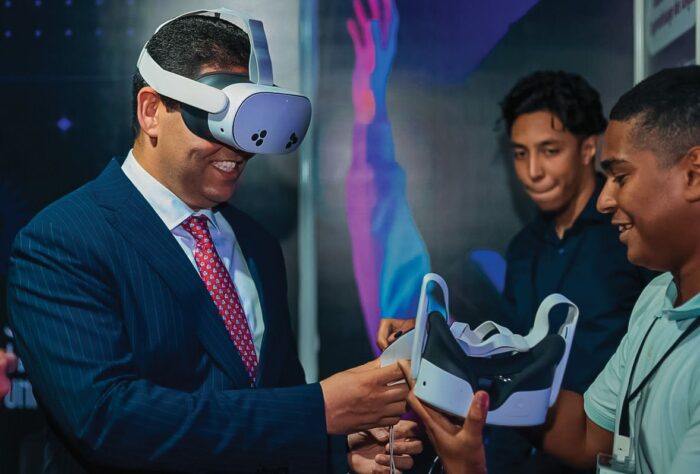
Next, we have strengthened support for talent and entrepreneurship. Through our incubation and support programs, we enable young developers to move from idea to market, turning their projects into viable, value-creating startups.
“Gaming is a genuine driver of employability, innovation, and social mobility”
In parallel, we have launched high-impact structuring initiatives, notably the Gamification Lab program, set up in 2025 in partnership with the CDG. This program marks a major strategic shift that consists of directly connecting gaming startups to the needs of public policy and major economic sectors (education, health, culture, tourism, employment). It thus makes it possible to position gaming as a tool of innovation serving the general interest. Finally, structuring events such as the Morocco Gaming Expo, which play a key role in connecting young talent to professionals, easing their access to publishers and investors, and giving Moroccan creations international visibility. Our approach is comprehensive and coherent: to train, to support, to connect, and to integrate.
Today, gaming is no longer merely a pastime for our youth; it is becoming a genuine driver of employability, innovation, and social mobility. And our ambition is unequivocal: to bring about a generation of Moroccan creators, entrepreneurs, and experts capable of establishing themselves in the global gaming industry.
The development of the gaming industry requires an interministerial approach (culture, higher education, investment, digital transition, and so on). How does the ministry coordinate this cross-cutting vision in order to create a genuine environment conducive to the emergence of competitive Moroccan studios?
The development of the gaming industry cannot be carried by a single player; it is a national, cross-cutting undertaking that mobilizes several public policies at once: culture, training, investment, innovation, and the digital economy. Faced with this challenge, we have made a choice to put in place integrated, transparent governance geared toward effectiveness. The Ministry of Youth, Culture, and Communication plays a central role of strategic steering. It defines the vision, coordinates public action, and ensures overall coherence. It also acts as the single institutional point of entry for investors, which is essential to simplify and secure their procedures.
Around this steering, we have structured a complete chain of intervention. The Moroccan Agency for Investment and Export Development (AMDIE) actively supports international investors by offering them operational assistance, strategic advice, and targeted guidance toward the sector’s opportunities. The Regional Investment Centers play a key role at the territorial level, as one-stop shops, facilitating the establishment of companies and their integration into local ecosystems. This organization today makes it possible to offer investors and entrepreneurs a smooth, coordinated, and secure journey, from idea to establishment and development.
“Today, we are no longer in a phase of experimentation; (we have) a clear objective: to make Morocco a regional hub of the gaming industry in Africa and in the MENA region”
But beyond the structures, what makes the difference is the systemic vision we have put in place. We have built an ecosystem around four fundamental and complementary pillars: talent, with an ambitious strategy of training and skills development; studios, by supporting entrepreneurship and creation; financing, by mobilizing suitable public and private mechanisms; and market access, by supporting the internationalization of Moroccan players.
This integrated approach allows us to move beyond a fragmented logic in order to build a genuine national value chain for the gaming industry. Our ambition is to create an environment structured, attractive, and competitive enough to bring about Moroccan studios capable of competing on an international scale. Today, we are no longer in a phase of experimentation; we are in a phase of acceleration and strategic positioning, with a clear objective: to make Morocco a regional hub of the gaming industry in Africa and in the MENA region.
Thus, in the space of five years, we have done far more than set a dynamic in motion. We have laid the solid foundations of an industry of the future in Morocco. The results are tangible: talented professionals trained, startups created, and international appeal rising sharply. But beyond the figures, what matters most lies elsewhere: we have set in motion a profound and irreversible transformation, that of a Morocco which is no longer content to consume, but which creates, produces, and exports cultural and technological value.
The gaming industry is today a strategic choice. A choice for our youth, to whom we are offering new prospects. A choice for our economy, which we are diversifying toward high-value-added sectors. And a choice for the Kingdom’s outreach, through a new form of cultural and creative influence.
Morocco is taking its full place in a global industry. And this movement is only just beginning.
Written in French by TelQuel Impact, edited in English by Eric Nielson


