

Just a few hundred kilometers apart, two ancient medinas reflect two versions of the same country. One is collapsing under the weight of bulldozers and the promise of a grand boulevard; the other breathes, freshly painted, alive, and proud of what it is. One mourns those who were forced out. The other displays, on every doorway, the names of those who still live there.
“An old medina that is maintained is infinitely more valuable than a medina that is replaced”
This is not simply a question of size or budget. Casablanca is the kingdom’s economic capital, with resources the small Atlantic town could never hope to match. Asilah, with its 36,000 inhabitants, has neither an industrial port to preserve nor a 2 billion dirham boulevard project to finance. And yet, it is Asilah that seems to have understood something essential: a maintained medina is infinitely more valuable than one that is replaced.
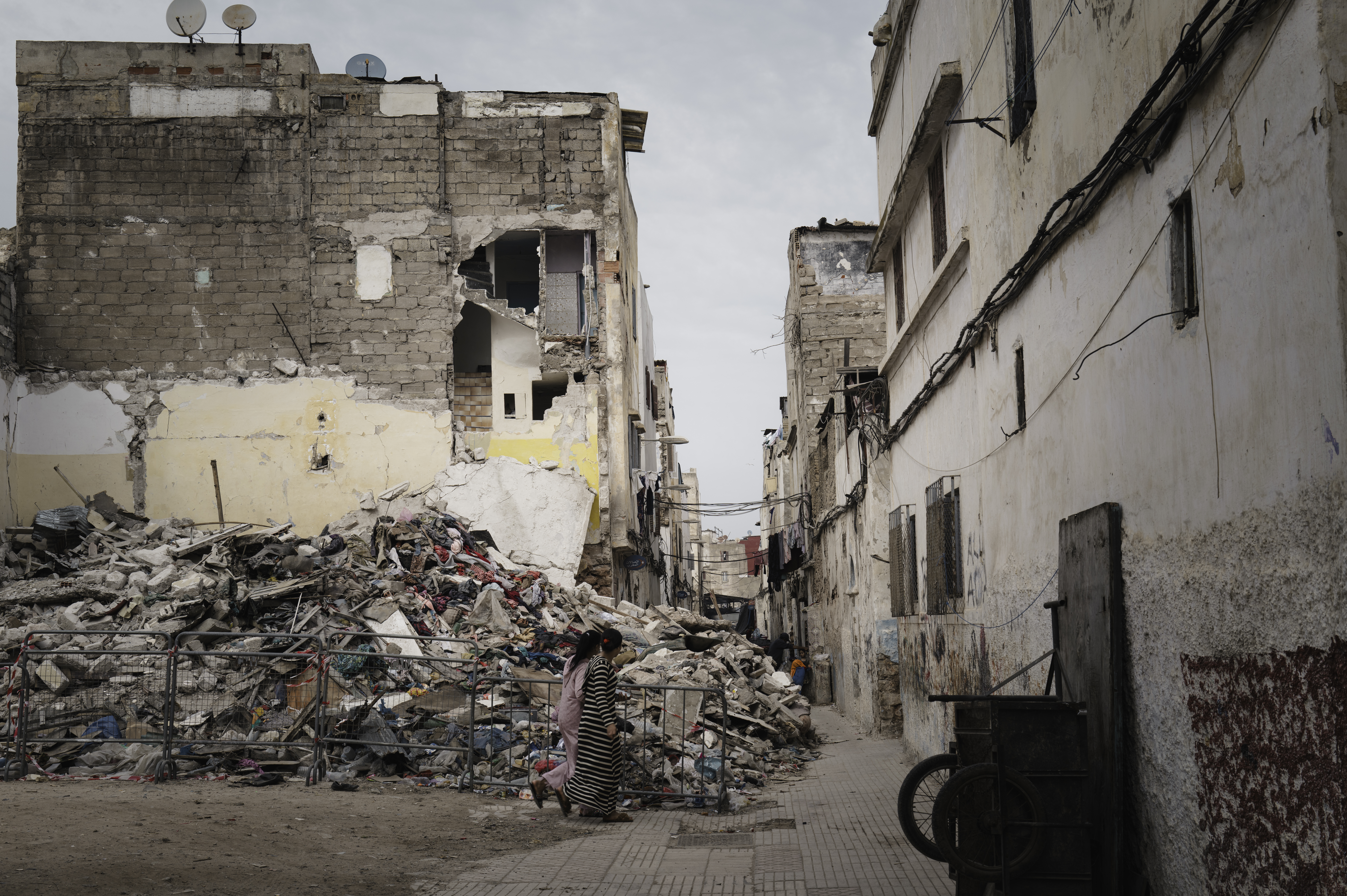
The contrast is striking, almost indecent. In Bab Marrakech, cracks run from floor to ceiling, families sleep on mattresses laid out directly on the sidewalk, and relocation vouchers circulate like lottery tickets no one ever truly wins. In Asilah, the walls are white, the alleyways paved, and murals watch over passersby with wide-open eyes.
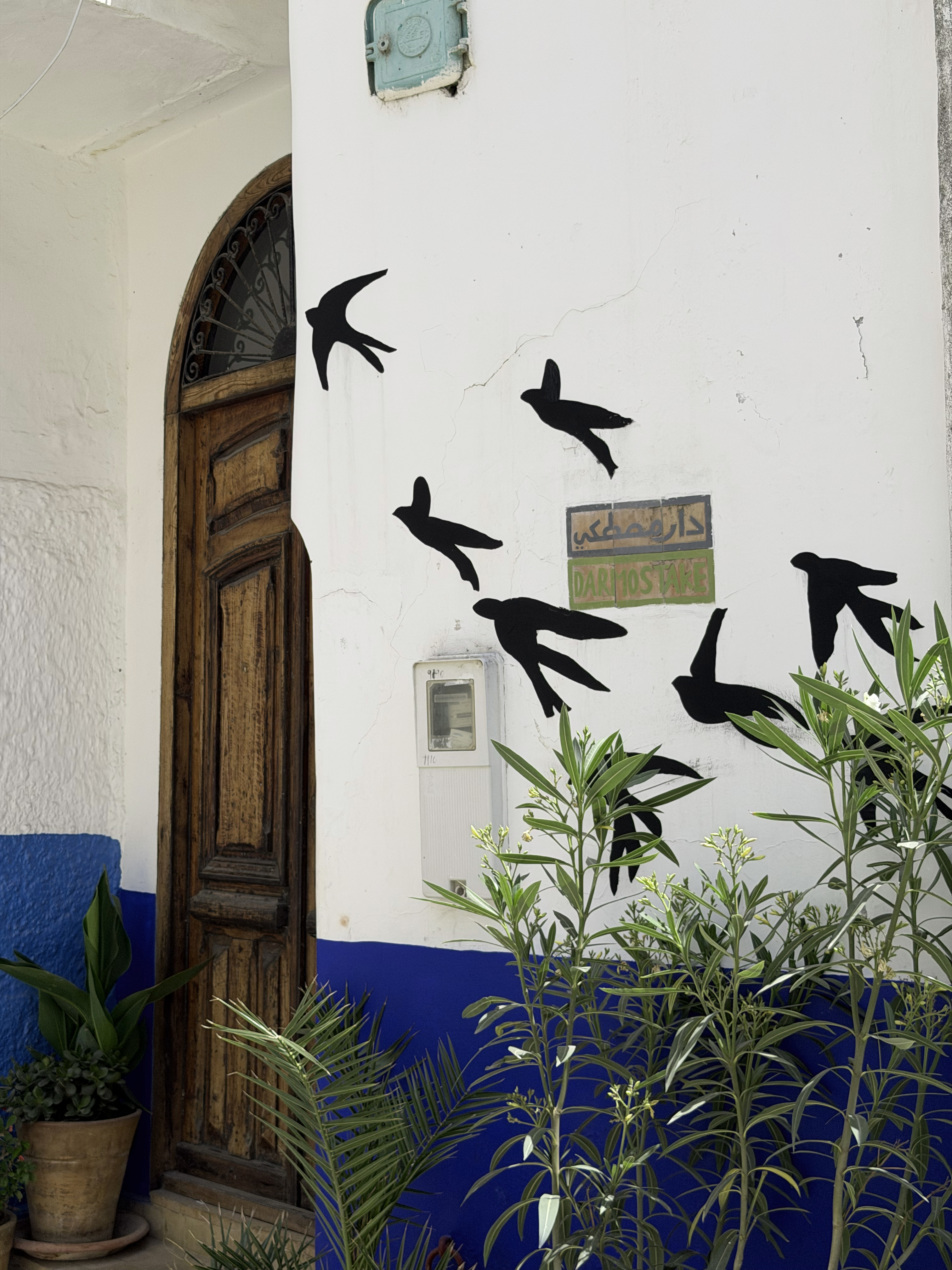
In Asilah, the walls have a name
In the heart of Asilah’s old medina, every house announces itself. On the facade of a home decorated with swallows carved into stucco, an antique zellige tile reads: “Dar Mostake.” It is neither a tourist attraction nor a decorative flourish. It is a declaration: someone lives here, someone owns this place, someone has roots here. The house has a name because it still has an owner, and the owner has a name because he is still there.
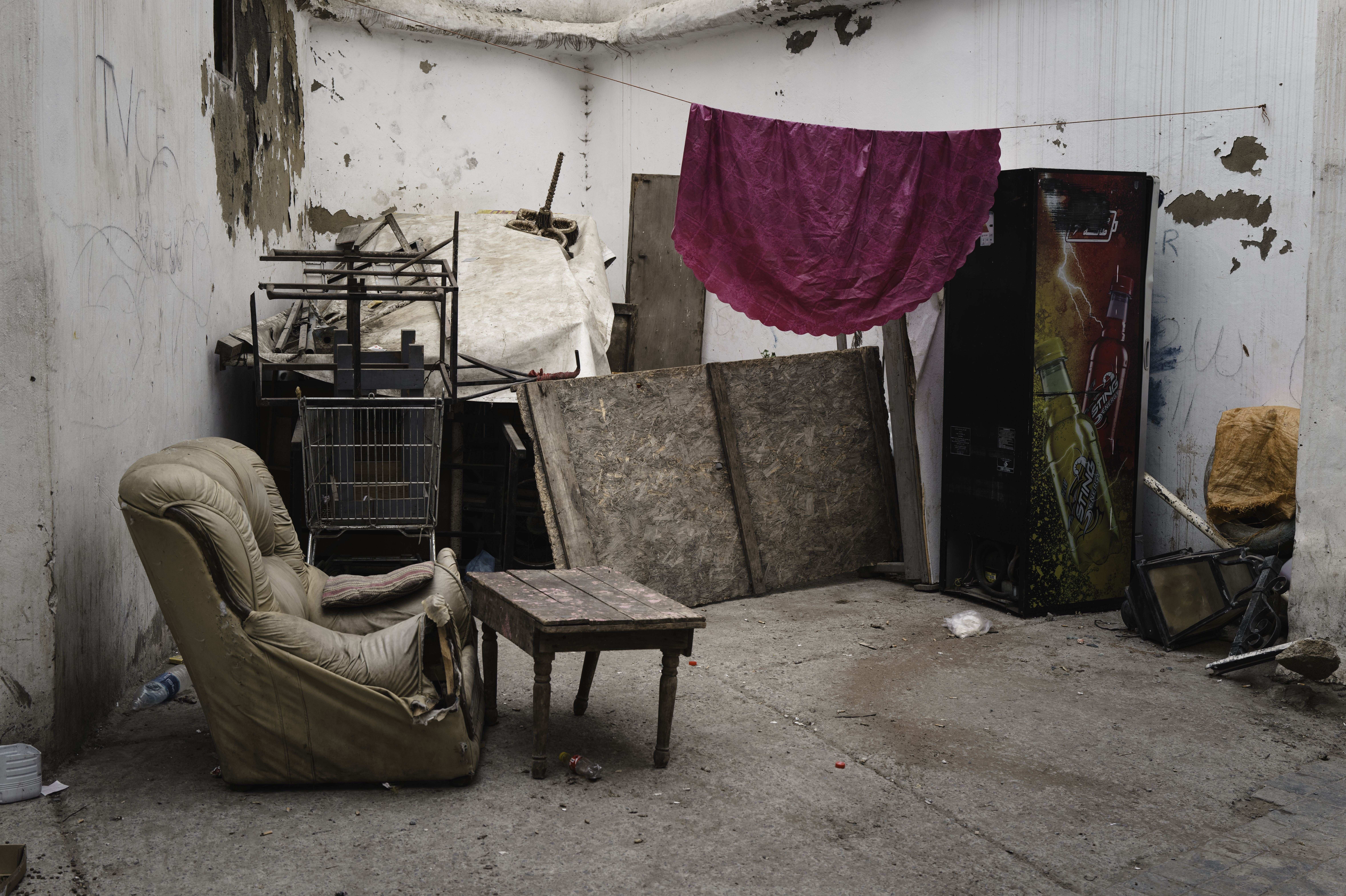
In Bab Marrakech, the houses hold memories rather than names. They contain the lives of those who still cling to them; sometimes by choice, often out of fear of losing the little they have left. Samira, 58, says it plainly: “I can’t leave my house, even though I know it could collapse at any moment. If I leave, I lose my place. I know I’ll never get another apartment.” The apartment promised to her in 2015, the one attached to the relocation voucher she received, had already been sold by the time she arrived at the developer’s office. Since then, she has remained trapped in a house whose cracks have widened alongside her years: too poor to leave, too distrustful to believe anyone will come to help her.
“They’re wiping out his medina. They’re wiping out his livelihood. Instead, they’re offering him a small new apartment in a neighborhood he doesn’t know.”
As previously reported by TelQuel, the relocation program tied to the Avenue Royale project affects nearly 16,000 families and 2,500 commercial premises. The fortunate few are being sent to Nassim or Hay Rahma. On paper, these are new neighborhoods. In reality, they are far from the port, far from the markets, far from everything that once sustained the lives of those being displaced. Youssef, a fishmonger from Bab Marrakech, has done the calculations: commuting to the docks costs him 35 dirhams a day. “What will I have left to feed my children, especially with prices exploding?” he asks. The question is even more urgent now that the regional delegate for marine fisheries has barred small retailers from entering the port. Youssef says he has not earned a single dirham in the past twenty days. They are wiping out his medina. They are wiping out his livelihood. In exchange, he is being offered a small apartment in a neighborhood he does not know.
Art as an act of resistance
In Asilah, another choice was made. Since the 1970s, the Cultural Moussem launched by Mohamed Benaïssa has transformed the medina into an open-air gallery. Artists from all around the world have painted its walls: women with hair like the sea, faces hidden beneath wildflowers, swallows soaring above studded wooden doors. Even today, along the alleyway that runs beside the ramparts, a monumental mural stands beside Berber rugs drying in the May sun: Two cultures, two textures, the same whitewashed wall.
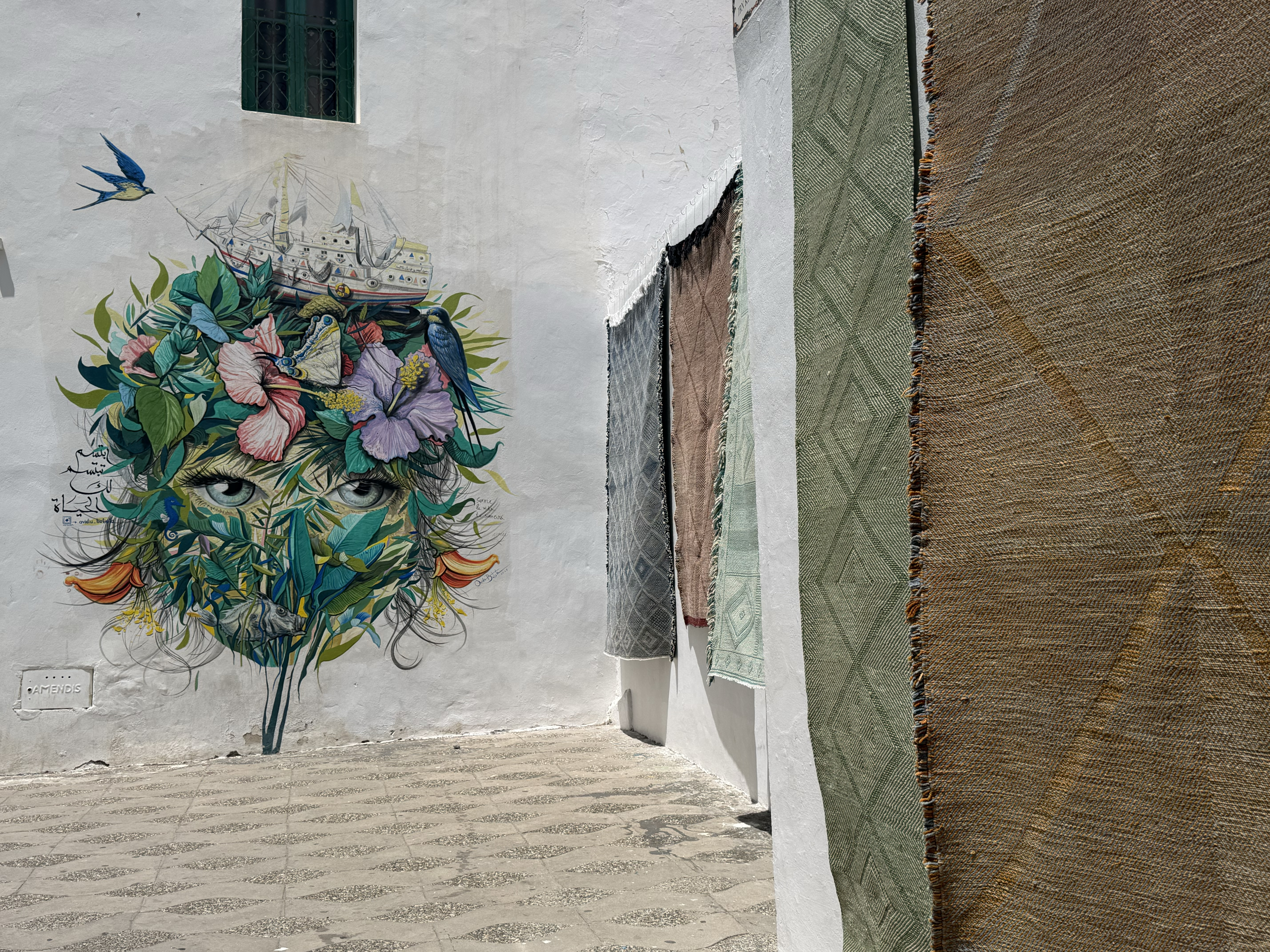
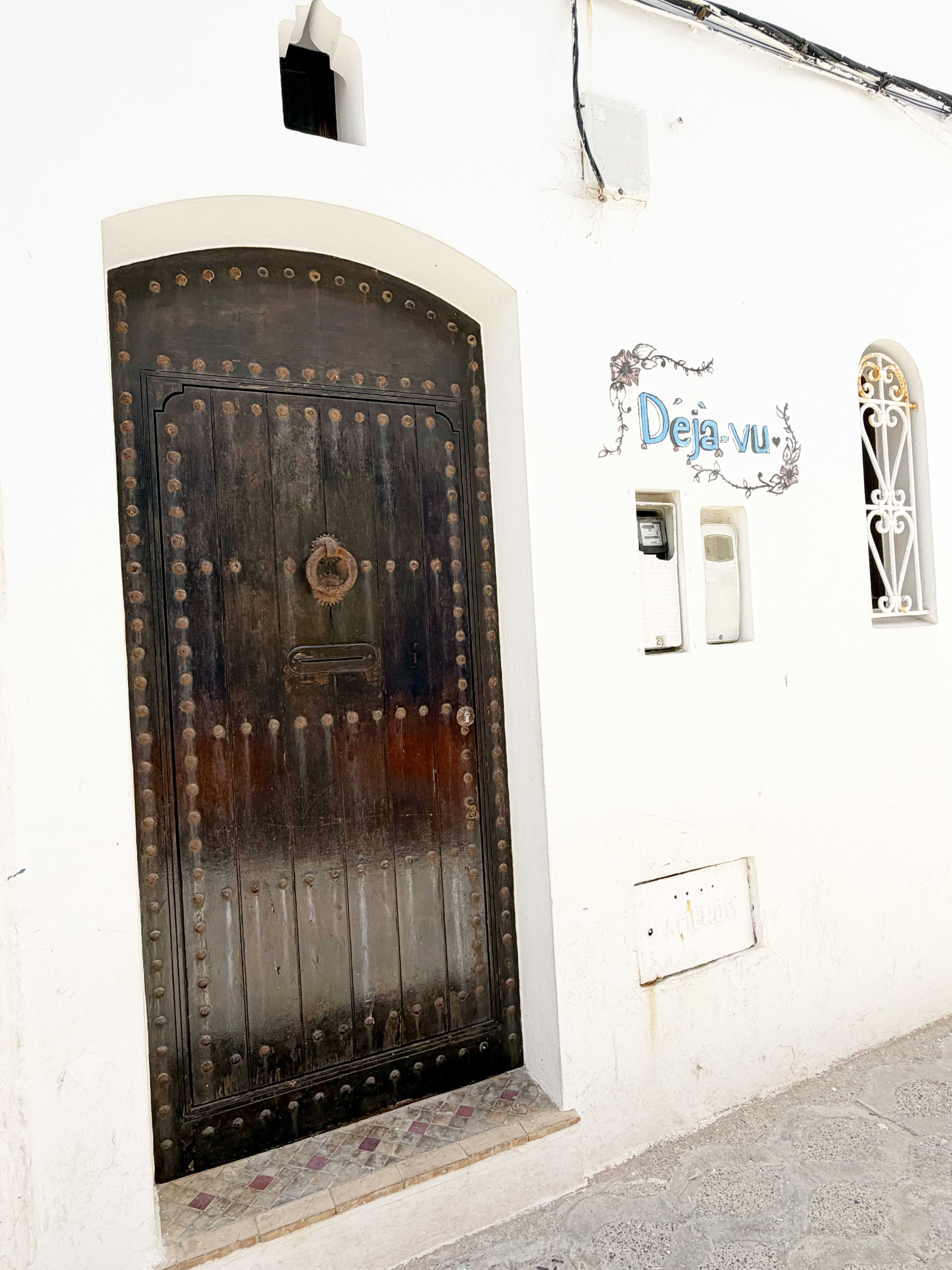
This is not a museum. Residents cook, hang laundry, and open their shops beneath the murals. A carved wooden door bears the inscription “Déjà-vu” in blue letters, as though the medina itself remembers everything it has endured and has chosen to smile at it rather than mourn it. Art did not arrive here to attract tourists, even if it now does so in abundance. It came to affirm that this neighborhood deserved to be seen.
“When the bulldozers come, they won’t just tear down walls: they’ll erase murals, memories, and a sense of belonging”
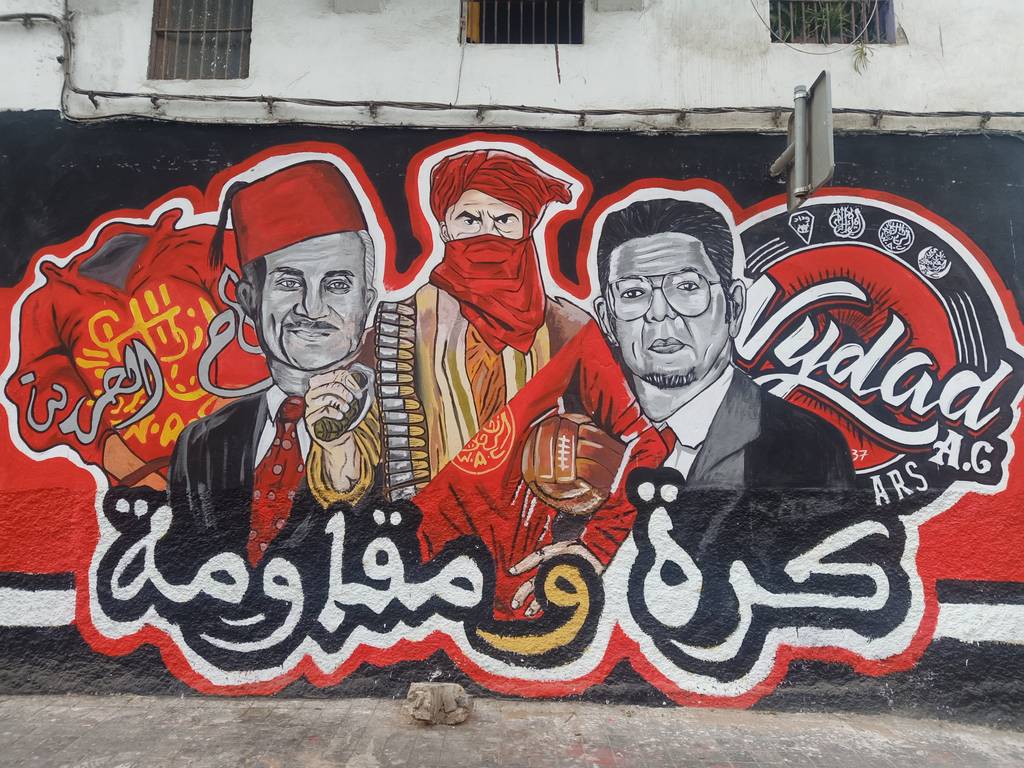
In Bab Marrakech, too, the walls speak. But they speak of something else. Hundreds of murals in the colors of the Wydad Athletic Club (WAC) line the alleys of the old medina: red and white, the emblems of the club founded right here, in the heart of the medina, on May 8, 1937. No one can rewrite that history elsewhere. It is etched in stone, in the streets, in the collective memory of a neighborhood that gave birth to one of Africa’s most popular clubs. « We were born in the old medina, but we’ll certainly end our days elsewhere. It hurts, » confides a young man we met in Bab Marrakech, his gaze lost on a blood-red facade. When the bulldozers roll in, they won’t just tear down walls: they’ll erase murals, memories, and a sense of belonging.
In Bab Marrakech, the walls speak too, but they tell another story. Hundreds of murals in the colors of Wydad Athletic Club (WAC) line the alleyways of the old medina: red and white, the emblems of the club founded here, in the heart of the medina, on May 8, 1937. That history cannot be relocated elsewhere. It is carved into the stone, embedded in the streets, and rooted in the collective memory of a neighborhood that gave birth to one of Africa’s most popular football clubs. “We were born in the old medina, but we’ll probably die somewhere else. It hurts,” says a young man we met in Bab Marrakech, his gaze fixed on a blood red facade. When the bulldozers arrive, they will not merely destroy walls. They will erase murals, memories, and an entire sense of belonging.
What the ocean sees from the ramparts
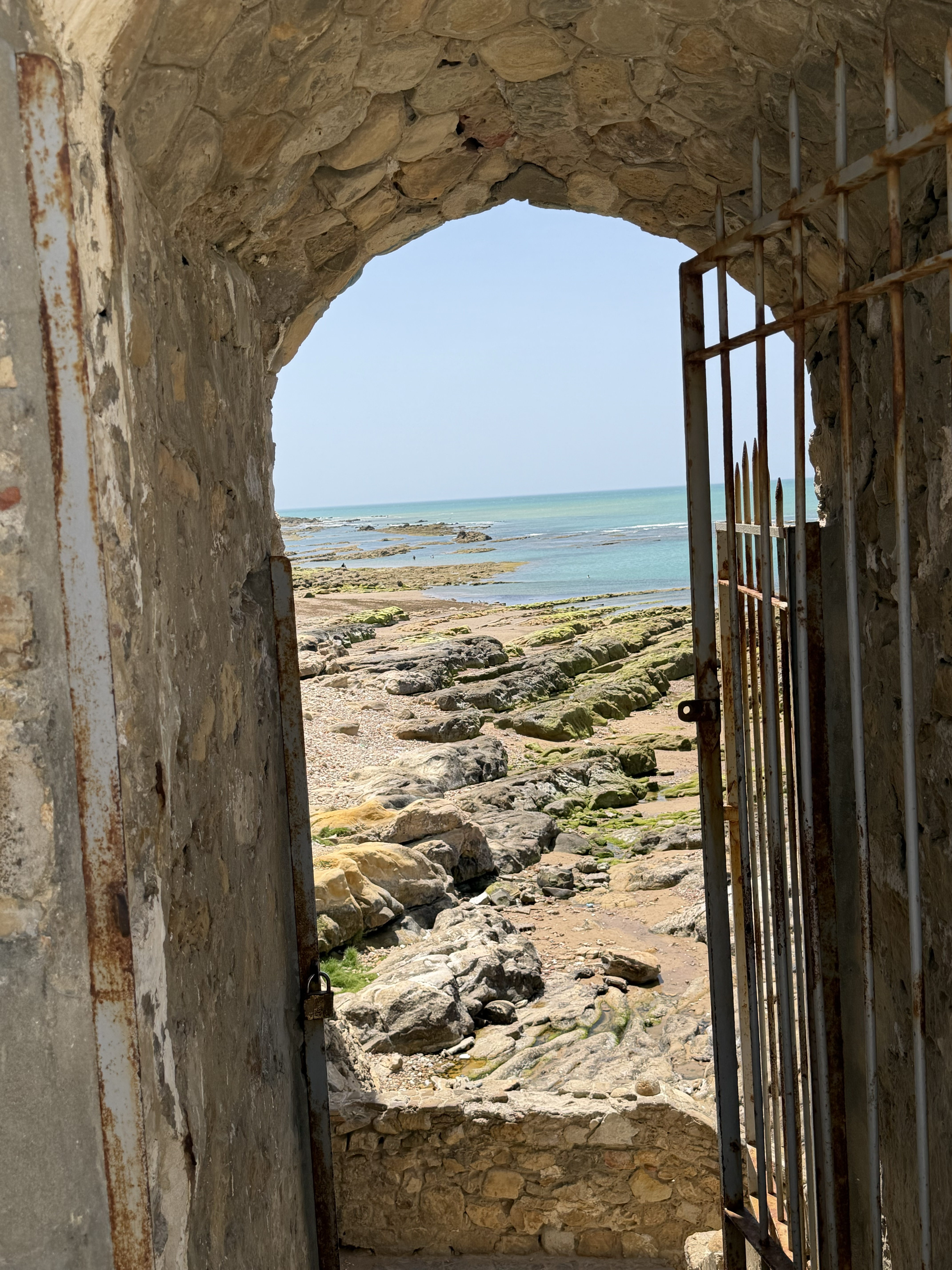
In Asilah, one of the gates in the ramparts opens directly onto the Atlantic. An ancient stone archway, a rusted gate ajar, and beyond it: rocks covered in green algae, turquoise water, and the cloudless sky of May. You do not walk through this gate so much as stand before it. It reminds you that the medina has never turned its back on the ocean that gave birth to it. That the ramparts exist not to shut the sea out, but to hold the city together.
Casablanca’s old medina also faces the Atlantic. It too was born from the port, built by generations of fishermen and sailors who sold their catch at Bab Marrakech long before anyone imagined a royal avenue. The two medinas share the same horizon, the same Atlantic breeze, the same identity as cities turned toward the open sea. But in Casablanca, the ramparts did not hold. One by one, they gave way beneath the weight of development projects, neglect, and a city that expanded too quickly while looking elsewhere.
“Asilah chose another path: its residents were not displaced, its narrow streets were not sacrificed, and its medina became—without demolishing anyone’s home—one of the most beautiful in Morocco. Perhaps that is the lesson Casablanca refused to hear”
On paper, Avenue Royale was meant to connect the Hassan II Mosque to Mohammed V Square: a monumental thoroughfare spanning 50 hectares, envisioned as the largest promenade in Africa. Nabila Rmili, president of the City Council, urged elected officials to feel “proud of this historic moment.” The residents of Derb Remad and Bab Marrakech, meanwhile, were mostly wondering whether their relocation vouchers were still valid. The question is not whether Casablanca needs a grand avenue. Every major city dreams of one. The question is what a city is willing to sacrifice to build it, and how many families, merchants, and neighborhood elders it is prepared to leave behind the fences. Asilah chose another route. Its residents were not displaced, its alleyways were not sacrificed, and its medina became, without forcing anyone from their home, one of the most beautiful in Morocco. Perhaps that is the lesson Casablanca refused to hear.
Written in French by Younes Saoury, edited in English by Amina Kadiri


