

In the douar of Lahsinate, a few kilometers from Essaouira, the Dahab Zoyout cooperative is experiencing an unprecedented situation. This landscape of olive and argan trees, bruised by several years of drought, has been transformed into a lush and generous setting.
“The price per liter of olive oil has dropped from 120 dirhams before the rains to 40 dirhams today”
“It is the first time we have opened the doors of the cooperative to discover such a landscape,” smiles Khadija, 23, an employee of the cooperative. It is a transformation that hints at a highly promising upcoming season and is already translating into concrete figures. “The price per liter of olive oil has dropped from 120 dirhams before the rains to 40 dirhams today,” the young woman explains. As for the argan, the expected abundance of the harvest is already presenting its own challenges: “We already know that we will have to hire more people to cope.”
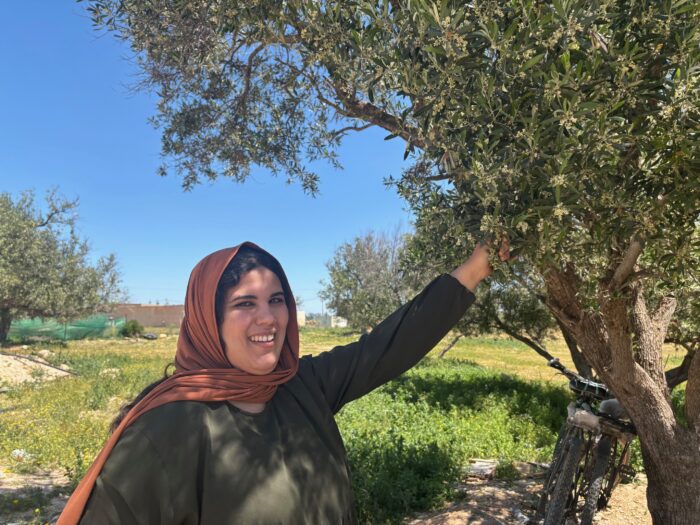
A few steps away, Hassan, 60, shares the same relief. This native of the douar Lahsinate has always lived by the rhythm of the argan: “This rain is a blessing. Barely a year ago, we were worried about the future. The ground was as dry as a desert.” The man pauses, his gaze turned toward the leafy branches. “I have been working in this trade for forty years, and I have never seen such a turnaround, so fast, so spectacular. It offers a glimpse of better days ahead.”
But what are these hopes worth across the entire sector? Last August, our headline read “the argan is in agony.” What is the situation today?
“Today, I am going to speak to you with hope,” Fatima Amehri, president of the Moroccan Association of the Geographical Indication of Argan Oil (AMIGHA), states right from the start. “The rain has changed our morale. Last year, the harvest was worse than mediocre. A cooperative used to counting its production in tons ended up with only a few hundred kilos.”
“We cannot yet say that the year is going to be good, because we continue to suffer the effects of seven years of drought. Let us say that we will finally reach the vital minimum.”
Yet, the president urges caution. “Prices are going to drop, and that is good news. But we must remain measured. We cannot yet say that the year is going to be good, because we continue to suffer the effects of seven years of drought. Let us say that we will finally reach the vital minimum.”
A vital minimum that is also measured in numbers: “Last year, a kilo of raw material cost about 15 dirhams. From now on, we can hope that it will drop back to between 5 and 7 dirhams. But to consider the harvest truly good, it would need to be between 2 and 3 dirhams—just as it was before 2019.”
A respite, not a cure
While the weather remains the primary driver of the sector, it is not its only enemy. Because behind the return of the rains, a structural threat remains: the stranglehold of large corporations over the resource. Competition from multinationals, chief among them the French group Olvea, continues to weaken local players. By purchasing the raw material directly from harvesters at prices that women’s cooperatives simply cannot match, these industrial actors capture the bulk of the harvest, suffocating local structures.
This imbalance is all the more glaring given that Morocco holds a near-global monopoly on argan production—and yet, according to a recent World Bank assessment, 93% of the oil is exported in bulk, without local processing. It is foreign companies that package it, add value to it, and resell it under their own brands. France alone accounts for 60% of Moroccan exports. In other words, Morocco produces; the world grows rich.
The women’s cooperatives, which employ more than 8,500 women and constitute the social backbone of the sector, are the primary victims of this dynamic. Several of them, forced to close their doors due to a lack of supply, will have to rebuild in a market now dominated by economies of scale that work against them.
The paradox is all the more painful given that the potential exists. Still according to the World Bank, if Morocco developed its own cosmetics processing industry, the sector could attract 0.6 billion dollars in additional investments and create around 17,000 jobs by 2035.
But to achieve this, two major initiatives are essential: the implementation of a mandatory traceability system—which is currently lacking, thereby weakening the organic and sustainable certifications required by European markets—and the modernization of a regulatory framework that imposes a multitude of administrative authorizations on local manufacturers, making them less competitive than their foreign rivals.
“The return of the rain is a breath of fresh air,” Fatima Amehri sighs. But she warns: “As long as access to the resource remains unregulated and the ‘argan’ designation enjoys no international legal protection, the sector will remain structurally vulnerable.”
Written in French by Cécilia Leriche, edited in English by Eric Nielson


