

The model for drug distribution in Morocco has « reached its limits. » That was the assessment delivered Tuesday, March 10, in Rabat, by the president of the Competition Council, Ahmed Rahhou, during a press presentation of his opinion on the state of competition in pharmaceutical distribution markets. A diagnosis that sheds light on the sector’s economic vulnerabilities, the saturation of the pharmacy network, and the need for a gradual transformation of the model. « This model is generating difficulties, first for the profession itself, but also for citizens, » Rahhou summarized.
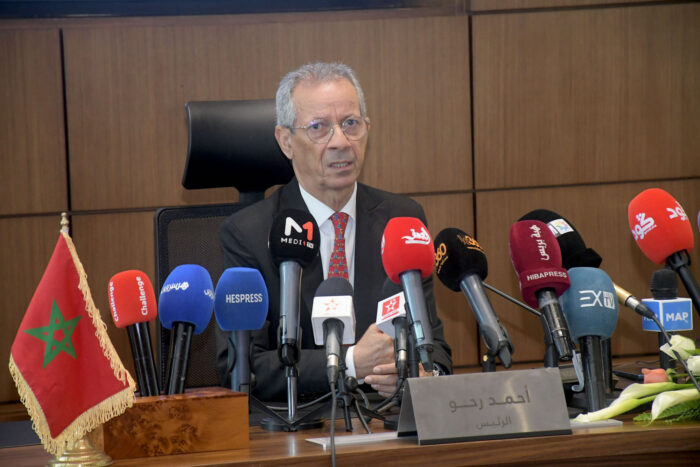
The aim of this opinion is twofold: to take stock of how the market is functioning and to identify the levers likely to improve its competitive dynamics, to the benefit of both professionals and patients.
A market under pressure
With 25.9 billion dirhams in revenue in 2024, the pharmaceutical market is one of the largest in the country: 10.6 billion dirhams in imports, 1.6 billion in exports, 56 industrial pharmaceutical establishments, 66 wholesale distributors, and 14,134 retail pharmacies.
And medication consumption is steadily growing. According to data analyzed by the Competition Council, the average annual spending per capita rose from 476 dirhams in 2020 to 642 dirhams in 2024. At the same time, medication expenses covered by the CNSS and CNOPS reached 11.86 billion dirhams.
Despite this momentum, the economic margins of distribution players are shrinking. The current system relies essentially on remuneration proportional to the price of medications. A logic that weakens the entire supply chain as public policies seek to reduce prices in order to improve access to treatments.
On the wholesale distribution side, the Council highlights the fragility of the economic model of wholesale distributors. Between 2016 and 2024, their combined revenue grew from 9.68 to 16.26 billion dirhams. But over the same period, financial profitability declined, with the net income/revenue ratio falling from 1.3% to just 0.9%.
According to the Council’s analysis, several factors explain this situation. Wholesalers’ margins remain directly tied to the price of medications, while their costs, particularly fuel and salaries, have increased by 36% between 2020 and 2024. Added to this are significant regulatory constraints, such as the obligation to maintain a safety stock equivalent to one month of sales. Another difficulty: payment timelines work against them. Wholesalers pay laboratories in an average of 81 days, but wait 97 days before being paid by pharmacies.
To correct these imbalances, the Council recommends in particular establishing a mixed remuneration system combining a proportional margin and a fixed flat fee per unit, as well as harmonizing the regulation of payment timelines.
Too many pharmacies
It is however the retail pharmacy segment that concentrates the bulk of the concerns. Morocco today has more than 14,000 pharmacies, or one pharmacy for approximately 2,600 inhabitants. A density twice the recommendation of the World Health Organization (WHO), which advocates one pharmacy for every 5,000 inhabitants.
Between 2015 and 2024, the number of pharmacies increased by 54%, primarily driven by the massive influx of newly graduated pharmacists. In 2024, 910 pharmacists obtained their degree, compared to 297 in 2016. This rapid expansion is undermining the sector’s economic balance. According to the Council, 70% of pharmacies generate annual revenue of less than 1.2 million dirhams, and the average income per pharmacy hovers around 85,000 dirhams per year.
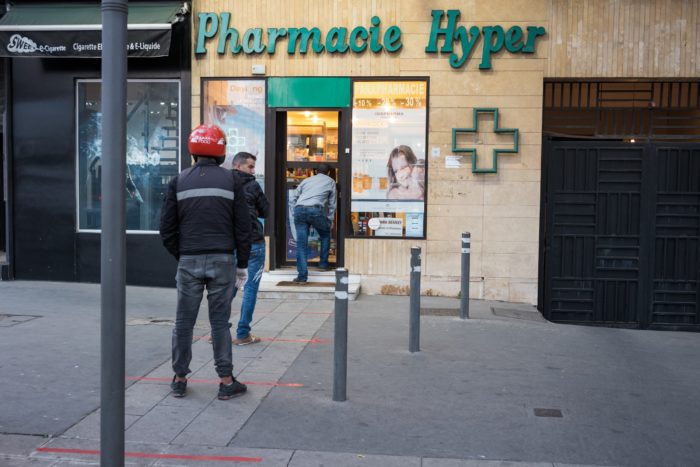
« Today, in Morocco, after completing their studies, a pharmacist often has only two options: open their own pharmacy or, if they cannot afford to, stay home, » Ahmed Rahhou emphasized.
“If you need medication between 12 p.m. and 3 p.m. or in the evening, you sometimes have to drive all around town to find a pharmacy on duty”
Paradoxically, this high density does not always guarantee optimal access to medications. « Citizens can generally find a pharmacy near their home, which is a positive. But can we say they will find it open at any time of day? No, » Ahmed Rahhou noted. Restrictions on opening hours and the organization of on-duty rotations create a gap between geographic accessibility and actual access to pharmaceutical services. « If you need medication between 12 p.m. and 3 p.m. or in the evening, you sometimes have to drive all around town to find a pharmacy on duty, » he lamented.
In several European countries, pharmacies open early in the morning and close late at night, with rotation systems that ensure continuity of service.
Dependence on medication
Another structural vulnerability lies in the economic model of Moroccan pharmacies, which relies almost exclusively on the margin applied to the price of medications. The more expensive the medication, the higher the margin. Conversely, when the government reduces prices to improve access to treatments, pharmacists’ remuneration mechanically decreases, with no compensatory mechanism in place.
“You cannot ask a pharmacist who does not have significant means to be the sole investor in a 300-square-meter pharmacy”
This dependence is all the more worrying given that the Moroccan market is very largely dominated by the least expensive medications. According to data analyzed by the Council, the lowest price bracket (manufacturer price excluding tax of 166 dirhams or less) accounts for nearly 99% of sales volume and approximately 80% of their total value. Furthermore, nearly 85% of the price reductions decided by public authorities have concerned this same bracket.
In this context, pharmacies have few alternative sources of revenue, the Council emphasizes. Unlike what is practiced in several countries, Morocco has no specific fees for medication dispensing or for pharmaceutical services such as patient follow-up, prevention, or public health initiatives.
« In several countries, between 20% and 30%, and sometimes up to 50%, of transactions carried out in pharmacies do not involve medications, but other products: parapharmacy, dietary products, personal care, etc., » Ahmed Rahhou elaborated. This diversification makes it possible to reduce economic dependence on medication while gradually transforming the pharmacy into a genuine health and advisory space.
But such a model requires significant investment, particularly in commercial floor space and fit-out. « You cannot ask a pharmacist who does not have significant means to be the sole investor in a 300-square-meter pharmacy, » the Council president emphasized.
Lessons from abroad
To inform its thinking, the Competition Council analyzed pharmaceutical distribution models in several countries, across Europe, the Middle East, and North America. This benchmarking exercise highlights several common trends.
The first concerns the transformation of the economic model of pharmacies. In many countries, pharmacist remuneration incorporates fees for services such as vaccination, screening, chronic patient support, or therapeutic follow-up. In some systems, these services now account for between 20% and 40% of pharmacy revenue. A share that goes well beyond the simple sale of medications. The role of the pharmacist is thus evolving toward that of a first-line actor in the healthcare system.
The second trend observed: the gradual structuring of the pharmacy network. In several of the countries studied, between 30% and 60% of pharmacies are integrated into networks or groupings. In France, nearly a third of pharmacies are affiliated with a brand or cooperative network. In Belgium, the proportion is similar. These structures make it possible to pool purchasing, digital services, marketing, or training, while maintaining the professional independence of pharmacists and achieving economies of scale.
Next comes the broadening of the pharmacy offer toward wider health spaces, with products such as medical devices, nutrition, or childcare. These activities are often more profitable than the sale of regulated medications.
Finally, the international comparison sheds light on another distinctive feature of the Moroccan market: the high density of pharmacies combined with a very low ratio of pharmacists per pharmacy. Where Morocco averages one pharmacist per pharmacy, other countries tend to have around three, with rotation systems that improve both service quality and the absorption of newly graduated pharmacists.
Toward a gradual transformation
In response to these findings, the Competition Council advocates for an in-depth reform, but one carried out in stages. Among the avenues put forward are the recognition of the pharmaceutical act through fees for services such as vaccination, screening, or chronic patient follow-up, as well as a revision of the criteria for pharmacy establishment in order to avoid overdensity in certain areas. The opinion also recommends introducing, in time, a right of substitution allowing pharmacists to dispense an equivalent generic medication when the prescribed product is not available.
“Why couldn’t a pharmacist, as in other sectors, turn to an investment fund to finance their project?”
But the most structurally significant proposal concerns the regulated opening of pharmacy capital. A proposition that meets strong resistance within the profession. « Why couldn’t a pharmacist, as in other sectors, turn to an investment fund to finance their project? » Ahmed Rahhou wondered. Allowing investors in could facilitate the modernization of pharmacies and the creation of larger structures, capable of employing several pharmacists and offering a broader range of services, he argued.
This opening would be accompanied by strict safeguards to avoid conflicts of interest. The Council proposes in particular to prohibit any participation by pharmaceutical laboratories, insurance companies, clinics, or large retailers.
For the president of the Competition Council, the reform of the pharmacy model concerns more than just pharmacists. « This issue does not concern only the profession. It also concerns the government and citizens. It is a genuine national debate, » he affirmed. « This evolution will not happen overnight. It may take five years, perhaps ten. But we must move in this direction, » Ahmed Rahhou insisted. Before concluding: « The hardest thing would be to shut down the discussion. It is time to open the debate on all these issues, without taboos. »
Written in French by Ghita Ismaili, edited in English by Eric Nielson


