

But first, let’s go back a few weeks, specifically to Friday, February 18, in Rabat. As the last rays of the sun faded, the official commission took their places on the minaret of the Oudayas Mosque, the city’s lunar crescent observation center. TelQuel meets with Mehdi Benlkhdar, the adoul responsible for drafting the official report.
“The report concerns the observation of the lunar crescent to determine the start of the month of Ramadan,” he explains. “Today, we begin at 6 p.m. The observation period lasts 44 minutes, ending precisely at 7:11 p.m.”
A codified process
The regional committee consists of two adouls and four religious officials (the imam and the religious guides). Their role is crucial: to observe with the naked eye, record weather conditions, and certify whether or not the crescent moon has been sighted.
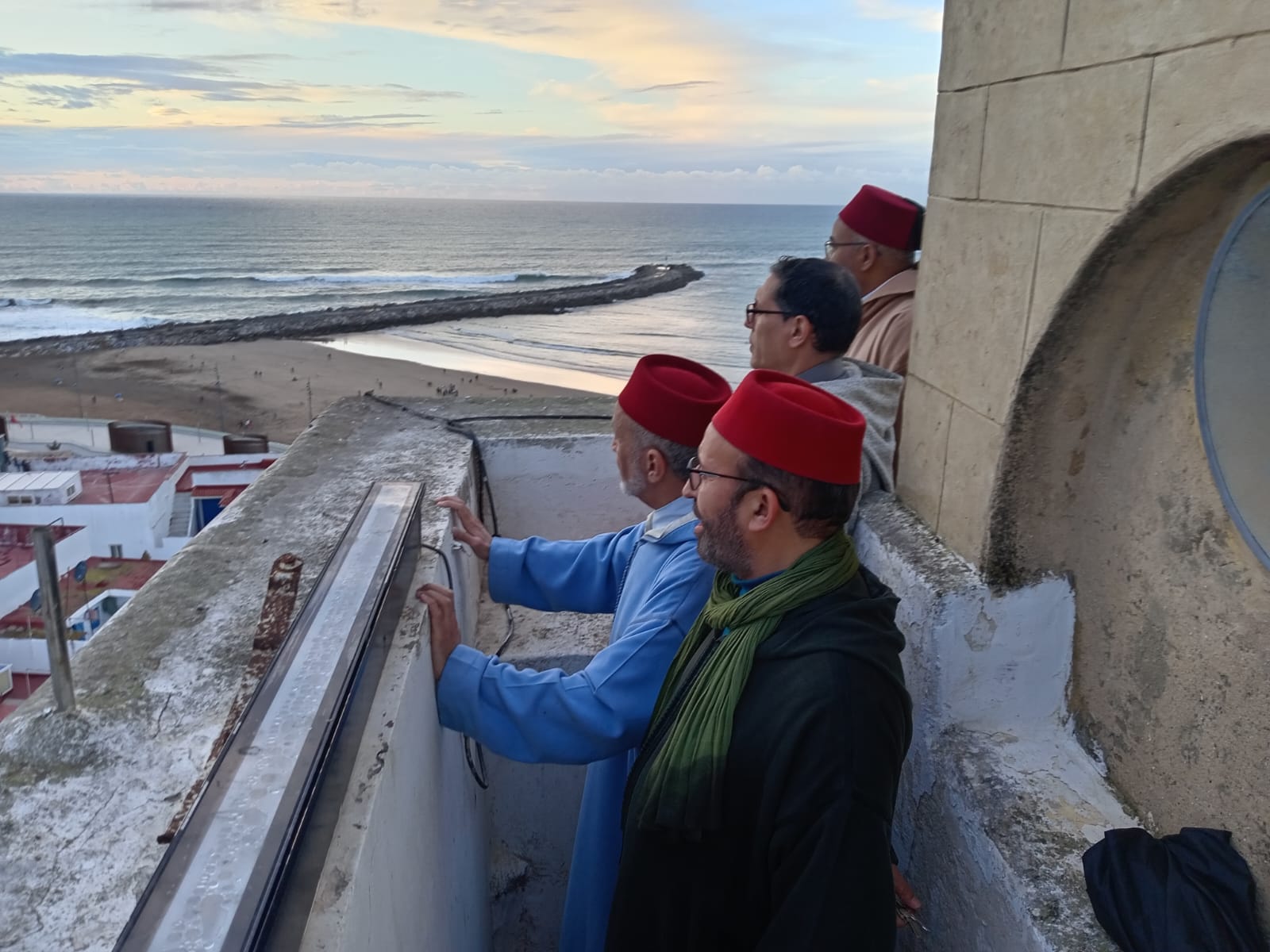
Once drafted and signed by all members present, the minutes are forwarded to the regional delegation for Islamic Affairs, which immediately communicates them to the relevant authorities at the Ministry of Islamic Affairs.
At this stage, Ahmed Attif, regional director of Islamic Affairs, steps in; he is responsible for overseeing the complex coordination process between the various regional centers.“The Kingdom has approximately 250 observation centers spread across the entire national territory,” the official notes. “Several centers are located in the Saharan regions, particularly under the jurisdiction of the Royal Armed Forces.”And each center has its own committee.
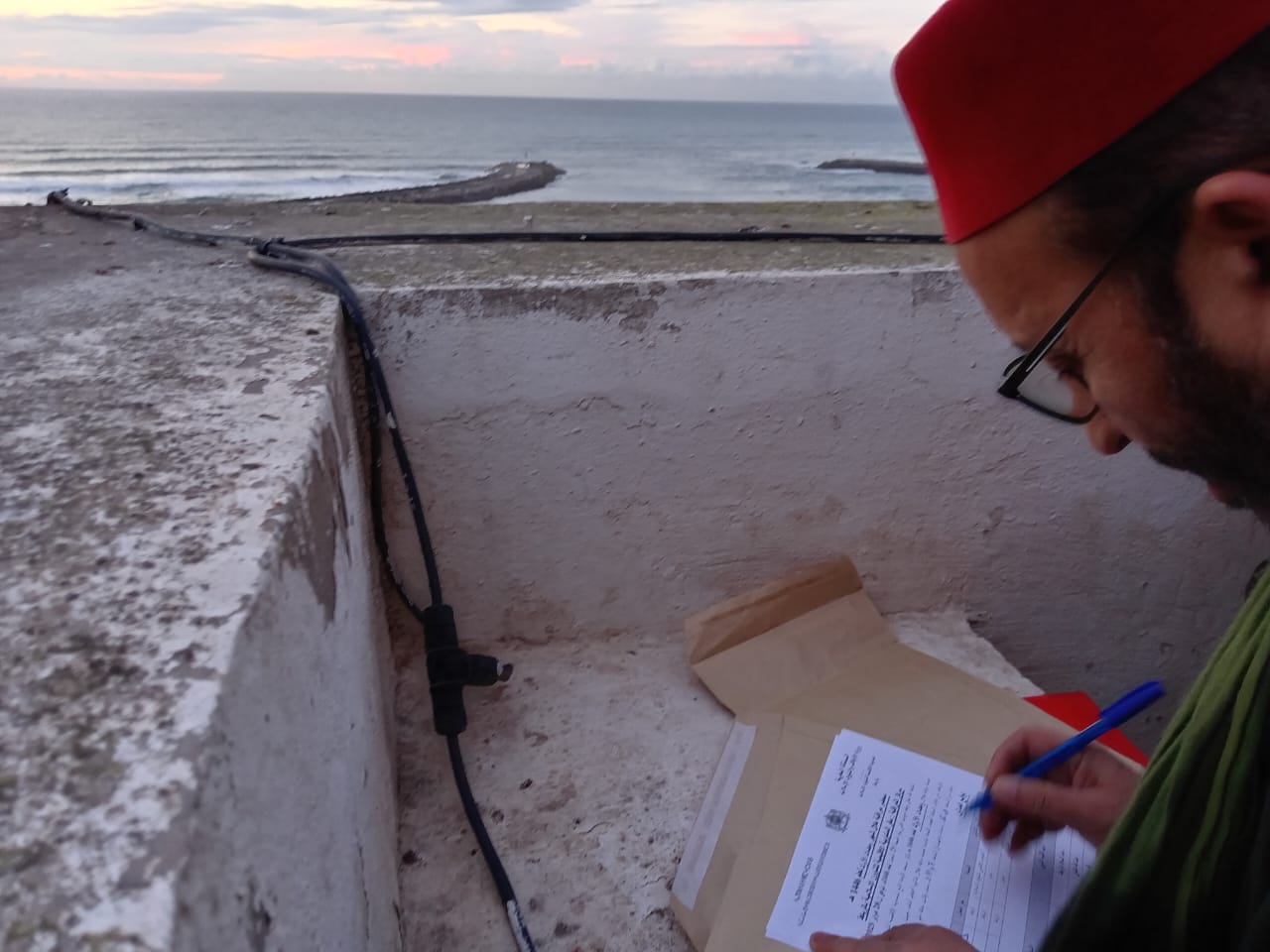
The process is the same everywhere: once drafted and signed by all members present on a committee, the minutes are forwarded to the regional delegation of Islamic Affairs. The results are thus compiled regionally, then nationally. In the event of a clear result (certain sighting of the crescent), the proclamation is made immediately. In case of doubt, the announcement is made only after a thorough verification by all national centers.
The results, whether positive or negative, are reported directly through a monitoring mechanism linking the various observation centers, thus ensuring a rapid flow of information to the regional delegations and then to the ministry.
This practice has its roots in prophetic tradition, according to the hadith:“Fast when you see it (the crescent), and break the fast when you see it, and if the sky is overcast, complete the month to thirty days.”
The contribution of astronomers
“Thank God, visual observation remains central to our work. It has never contradicted the astronomical calculations of the Hijri calendar issued by the Ministry of Habous. There has never been a major discrepancy,”emphasizes Adoul Mehdi Benlkhdar.
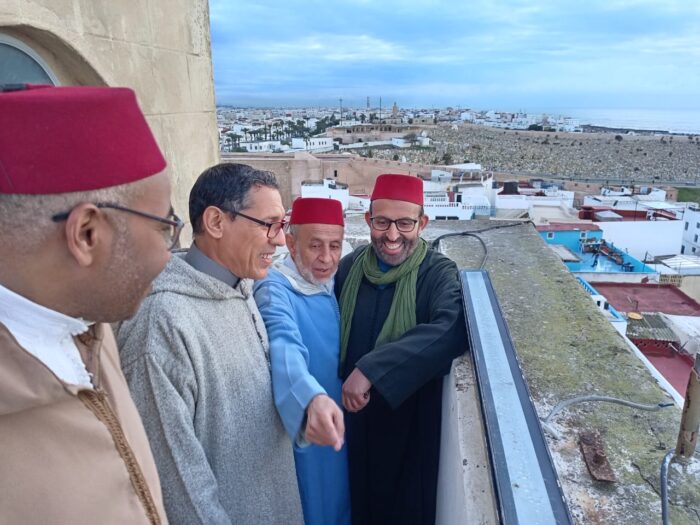
For this calendar, developed by a specialized scientific committee led by experts in astronomy, remains an essential reference, even though the final decision always rests on direct observation.
“The Moroccan Hijri calendar is prepared by a scientific committee with a thorough understanding of lunar timing. It is distributed to all regional and provincial delegations, serving to guide the observation process,”explains Othman Hammadi, provincial delegate for Islamic Affairs in Rabat.
This calendar is not only useful during Ramadan; it also sets the daily times for the five daily prayers, as Othman Hammadi points out:“This booklet serves as a reference not only for the observation committees but also for imams and religious officials at mosques.”
“A Reliable Practice”
“We are proud to have a clear and unambiguous tradition,”says Mehdi Benlkhdar, noting that Morocco, along with a few other countries such as the Sultanate of Oman, stands out for its rigor in observing the lunar crescent.
“It is a reliable practice that has been praised by eminent scholars in the field. A Hassani religious discourse presented before His Majesty Amir Al Mouminie during the month of Ramadan 1436 (June 2015) is proof of this,” emphasizes Ahmed Attif.
The official asserts that in countries where astronomical calculations prevail, errors can occur. He cites Saudi Arabia as an example, where in 2011, the king had to pay a fidya due to an error in determining the start of the lunar month, as reported by several media outlets.
“Our country stands out precisely because we always prioritize direct observation, without technical tools,” insists Ahmed Attif. “Astronomical calculations, while taken into account, remain merely an aid.”
The crescent of the festival
So, a few weeks later in Casablanca, it was time again to observe the appearance—or lack thereof—of the lunar crescent that determines the day of Eid al-Fitr. At the top of the Hassan II Grand Mosque, Ali El Amraoui, astronomical advisor to the Ministry of Habous and Islamic Affairs, details the steps leading up to the famous observation: “First, we calculated the prayer times, then we determined the time of the moon’s setting on the 29th of this month at this specific location, as well as its orientation. This allows us to know exactly where to look, rather than proceeding at random. The moon this month is particularly visible: it is the brightest crescent of the year. We should therefore be able to see it easily, provided the sky is clear.” Mustapha Kafraoui, the adoul responsible for drafting the official observation report, notes: “We have been conducting this observation from this exact location for over fifteen years.”
And Farid Houat, an adoul in Casablanca, adds : “We continue the tradition of observing the lunar crescent with the naked eye, despite the parallel use of astronomical calculations, because in Islamic tradition, during the time of the Prophet, this is how the observation was carried out.”
Finally, as night falls, the wait comes to an end: the thin but bright crescent moon is sighted, leading to the official proclamation of the end of the month of Ramadan. The tradition is preserved and honored, and the celebration can begin.
Written in French by Aymane Kadiri Alaoui; edited in English by AngloMedia Group.


