

Hamid Al Atillah remembers everything. The police bursting into their home in Oran, the police station where his father was held for four days without anyone knowing what had happened to him, the cold and the rain during the transfer to the Moroccan border. “Even though I was only five and a half years old, I remember almost the entire journey very clearly. Those moments of suffering have remained etched in my memory,” he says.
On December 18, 1975, in retaliation for the Green March launched by Hassan II to reclaim the Sahara, Algerian President Houari Boumediene ordered the mass expulsion of Moroccans living in Algeria. Hamid recounts what his mother passed on to him: “She had heard Boumediene say on the radio: ‘If Hassan II has launched a Green March, I will launch a Black March’.”
While this specific speech cannot be found in the archives, the expression “Black March” took hold to describe the operation, precisely because it echoed the Green March. Tens of thousands of Moroccans were affected by this expulsion, with the exact figure impossible to establish, ranging from 45,000 to 350,000 people depending on the sources.
The violence of the expulsion
The Al Atillah family was living peacefully in Oran. The father, born in 1913, had spent almost his entire life there. They owned two houses and a grocery business. Then, in a single day, everything collapsed. The father was arrested and taken to the police station, where he was subjected to interrogations and physical and psychological torture. The Algerian authorities issued him an ultimatum: recognize the Polisario and keep his property, or refuse and be expelled. “He chose not to betray his country, Morocco,” his son recounts.
Meanwhile, the mother and the six children were taken to the police station. The scenes Hamid remembers are terrifying: “Each family sitting on the ground, huddled together on a wet floor, in tears, children screaming.” Elderly people, the sick, even patients taken directly from the hospital with their IV drips, were crammed in there, under the watch of armed police officers.
“If someone was wearing a ring, they said it belonged to Algeria. If they liked a jacket, they took it off them and seized it”
After several hours, the moment of deportation arrives. They are given slates with registration numbers to be photographed, their fingerprints are taken, then they are crammed into buses and trucks, under the surveillance of machine guns. On the way to the border, people throw stones at the vehicles, others hurl insults at them.
At the border, at the Colonel Lotfi post in Maghnia, they are subjected to one last humiliating search. “If someone was wearing a ring, they said it belonged to Algeria. A jacket caught their eye? They took it off them and kept it,” Hamid recalls. A police officer takes advantage of the situation to steal jewelry and money, promising to return it in Moroccan dirhams. At the border, he disappears. A thirteen-year-old girl runs after him to recover the stolen money. He takes her into a customs post. “From that moment on, she never reappeared,” reports Hamid, who collected this testimony years later from his twin brother, who remains inconsolable.
Disappearances were numerous. Some people were taken as far as Tindouf, or even to Libya, and never returned. Hamid recounts the story of a man transferred to Libya who remained imprisoned there for forty years, regaining his freedom only after the fall of Gaddafi. “When he was released, he returned to Morocco and searched for his wife. He found her in Oujda, remarried, with a new life and children. Can you imagine the shock?”
Others still live today with a true identity problem. Their documents having been confiscated, they arrived in Morocco as unknowns, with no administrative trace of their existence. Their children, born afterward, have no legal identity either.
Wandering in Morocco
The authorities tried to make them leave by creating unbearable conditions. “They sent a truck full of beggars to create overcrowding,” Hamid recalls. Then another truck arrived, filled with severely mentally ill people. “Some got out completely naked in front of our parents and very conservative families.” But the families held on.
Hamid’s father suffered greatly from this situation. He, who had refused to recognize the Polisario in Algeria, at the cost of torture and expulsion, was called a Polisario in Morocco. “All this pain ate away at him until his death,” his son says.
Two years later, a commission from Rabat offered civil service positions. Hamid’s mother, 45, who had never worked a day in her life, accepted a position in Rabat. The salary was around 350 to 450 dirhams for a family of eight. “Impossible to pay rent, buy food, or cover medicine,” Hamid continues. They went from one shared accommodation to another, being regularly forced out. Hamid denounces the abuses that accompanied this period: “Many people took advantage of this first wave of recruitments to place their relatives in the best positions. Others even went so far as to pretend to be expelled from Algeria.”
The fight of his life
As for the property left in Algeria, it was impossible to recover. The family wrote repeatedly to the Algerian authorities, without any concrete response. A joint Moroccan-Algerian commission was supposed to follow the case, but it was frozen each time tensions arose between the two countries. In 1998, when the borders reopened, Hamid’s brother returned to Oran. He then learned that a police officer had taken over their house. He welcomed him, served him tea, and then said: “This house, you will never have it, not even in your dreams.” The man would eventually sell the house by falsifying the property documents, the family learned years later.
In 1991, at 21, Hamid began advocating for this case. In 2005, an activist suggested he create an organization. “I took a sheet of paper and a pen and began drafting the main objectives I had in mind: the restitution of property left in Algeria or its equivalent in money, the presentation of official apologies from the Algerian State,” he recounts.
“Certaines victimes de la Marche noire en 1975 ont accueilli la démarche de créer une association avec compréhension, mais d’autres, encore profondément traumatisées, étaient difficiles à convaincre”
He then began knocking on the doors of victims to collect testimonies and evidence. A difficult task: “Some victims welcomed this approach with understanding, but others, still deeply traumatized, were hard to convince. When we knocked on their doors, we had to speak to them with the delicacy of a psychologist.” As soon as he mentions these events, many begin to cry or beg him to stop.
In 2006, he founded his first association. For seven years, he organized conferences and met with representatives of all Moroccan political parties. “We told them that this matter was a national cause, a collective responsibility, without any exaggeration.” Some parties tried to bring them on board, but they refused to avoid any political exploitation. In total, he was involved in three associations. The last one now has its headquarters in Rabat.
Lack of archives
“In 1975, there was a complete media blackout in Morocco surrounding this tragedy, which went entirely unreported”
“In 1975, there was a complete media blackout in Morocco surrounding this tragedy, which went entirely unreported,” laments Hamid. Even students who tried to dedicate dissertations or theses to it ran into the absence of archives. “Many contacted us to gather testimonies, documents, anything that could help them understand.”
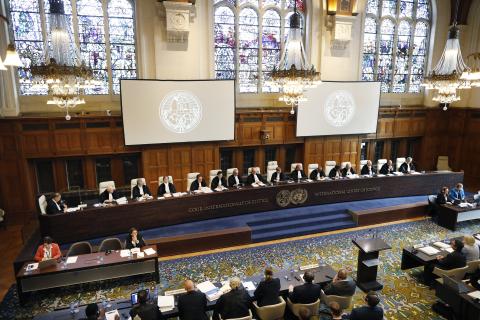
Legal attempts have also faced obstacles: in 2010, the UN Committee on the Rights of Migrant Workers recommended that Algeria return the seized property. In 2018, a new decision went in the same direction. Hamid and his association tried to file a complaint with the International Criminal Court, but it was not competent. Another attempt was made with the International Court of Justice (ICJ) in The Hague, qualifying the acts as crimes against humanity. “We later understood that a complaint had to be filed first on Algerian soil.” But the most effective path would be for the Moroccan State itself to bring the case to the ICJ. “Today, the matter is therefore in the hands of the State,” he observes.
“Loyalty and sacrifices for the homeland also encompass what thousands of Moroccans living in Algeria endured in 1975”
On November 21, fifty years after the tragedy, Hamid Al Atillah, as president of the Association for the Defense of Moroccan Victims of Forced Exile from Algeria, sent a letter to King Mohammed VI. In this formal letter, he begins by congratulating the sovereign on the diplomatic success achieved with the adoption of United Nations Security Council Resolution 2797 on the Sahara, before drawing a parallel with the Black March. “On the occasion of this great victory, we reaffirm that loyalty and sacrifices for the homeland also encompass what thousands of Moroccans living in Algeria endured in 1975,” he writes, recalling that these families were expelled precisely because they had defended the territorial integrity of the Kingdom.
In his letter, he details the violations suffered: “These Moroccan citizens were forcibly and systematically removed from their homes on the day of Eid al-Adha. Their rights and property were confiscated, their salaries and pensions brutally cut off.” He mentions the torn-apart families, the forced disappearances, and asserts that these acts “constitute serious violations of international law” and are “qualified as crimes against humanity, imprescriptible.”
Last resort
Hamid asks the king for five things: to officially adopt this humanitarian cause, to charge Parliament and the government with opening a formal debate and publishing a document condemning the crimes committed, to use diplomatic mechanisms to demand that Algeria acknowledge this crime and clarify the fate of the disappeared, to work toward ensuring justice for the victims, and to include this case in school curricula and the national memory. He even proposes instituting a national day of commemoration, similar to Unity Day, decreed on October 31.
“In fifty years, no Moroccan official has publicly condemned these acts or expressed solidarity with us”
“Over the past two years, we have knocked on every possible door, in Algeria as well as in Morocco,” he explains. Last year, his association sent a letter to the House of Councillors requesting a simple official condemnation. “I also recently wrote to the National Human Rights Council of Amina Bouayach. In fifty years, no Moroccan official has publicly condemned these acts or expressed solidarity with us,” he laments.
Hamid admits that he has “forgotten himself” by dedicating his life to this cause. For him, the essential thing is that this story be passed on: “This tragedy should be taught to students, so that no one forgets. Moroccan-Algerian relations went through a dark episode, and its consequences must be explained.” He concludes: “The most important thing is not the money or the property left there. That comes and goes. The most important thing is to restore the dignity of the victims and their children, who are also victims.”
Written in French by Ghita Ismaili, edited in English by Eric Nielson


