

December 16, 2025, 10 a.m. The bell of the Casablanca Stock Exchange rings. SGTM begins trading. Within minutes, order books go into overdrive. Trading platforms become saturated. Brokers call back their clients. Very quickly, behind the scenes, the scale of the event becomes clear: 171 billion dirhams in demand for an offering of 4.8 billion, representing an oversubscription of more than 35 times. A rare sight on the Casablanca market.
Three weeks later, SGTM boasts a market capitalization of 54 billion dirhams and triple-digit performance, with the share price quickly climbing above 900 dirhams. In just a few sessions, the company has changed scale, immediately establishing itself among the market’s heavyweights. A success story? Yes. But not by chance..
Initial public offerings, capital increases, mergers and acquisitions… behind every major financial transaction in Morocco, a handful of investment banks are at the helm. Who are these architects operating in the shadows? How do they work? A closer look at a discreet ecosystem… pic.twitter.com/MA15WUFcKc
— TelQuel (@TelQuelOfficiel) January 14, 2026
Before the bell
Behind the spectacle of the listing, there were months of invisible work. Investment bankers who valued the company, calibrated the size of the transaction, chose the timing, tested investor appetite, negotiated the price range, organized roadshows, adjusted the messaging…
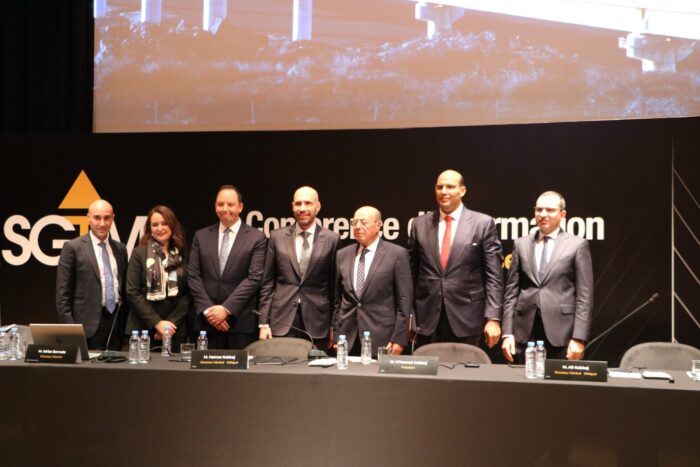
When the bell rang, the essentials had already been decided elsewhere. In meeting rooms where no one films, around financial models no one sees, with decisions no one comments on.
Behind every transaction on the Casablanca Stock Exchange lies the same discreet ecosystem: a handful of investment banks that structure, advise, and shape
SGTM is not an isolated case. The year 2025 marks the strong comeback of Morocco’s financial market: the MASI up more than 27%, a succession of IPOs, capital increases mobilizing several billion dirhams… And behind each transaction, the same discreet ecosystem: a handful of investment banks that structure, advise, and shape.
Who are these architects operating behind the scenes? How far does their scope of intervention extend? And what role do they play, concretely, in reshaping capital and financing the growth of Moroccan companies?
The small world of major deals
After years dominated by bank lending, the stock market is once again becoming a credible, visible, and sought-after source of financing. In 2025, market capitalization exceeds 1,040 billion dirhams, and trading volumes reach 161 billion
BMCE Capital, Attijari Finances Corp, Valoris Group, Red Med Capital… the same names keep coming up. Subsidiaries backed by major banking groups, independent firms established for over twenty years, or new entrants like Tessera Capital, launched at the start of this year by Tariq Sijilmassi, the former head of Crédit Agricole du Maroc, whom he left in 2022 after nearly ten years at the helm. This shift by a heavyweight of traditional finance into investment banking is anything but anecdotal. It says something about the moment Morocco’s capital market is going through. After years dominated by bank lending, the stock market is once again becoming a credible, visible, and sought-after source of financing.
In 2025, market capitalization exceeds 1,040 billion dirhams, trading volumes reach 161 billion, and the indices deliver one of their best performances of the decade. The primary market keeps pace: three IPOs and three capital increases alone mobilize more than 10 billion dirhams over the year.
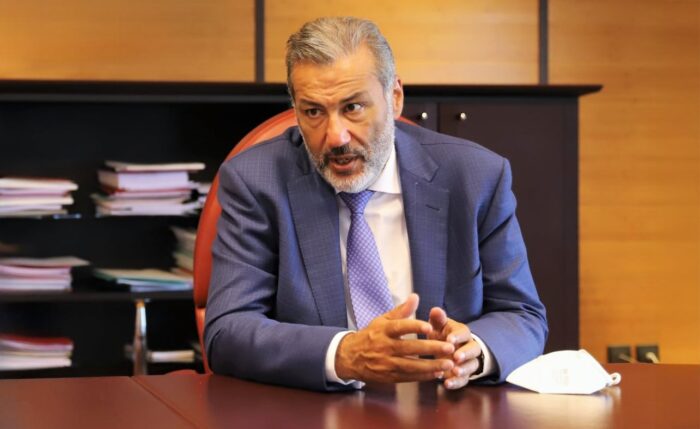
“A financial transaction doesn’t start with a bell or a prospectus. That’s just the storefront,” explains to TelQuel an investment banker active on the local market. “The real work begins much earlier, sometimes a year in advance, when a company has to make structuring choices: debt or equity, public market or private placement, now or later. Our role is to value the company, model several scenarios, test the real appetite of investors, and constantly arbitrate between profitability and the sharing of power, between visibility and control. By the time the transaction becomes public, the essentials have already been decided,” he adds.
The regulars’ club
And it is often the same players who come back. For SGTM, the largest transaction of the year, Attijari Finances Corp was selected as financial advisor. Cash Plus, which went public in 2025 for 750 million dirhams, turned to CFG Finance and BMCE Capital. As for Vicenne, the smallest of the three with 500 million dirhams, it chose CFG Finance and Valoris Corporate Finance.
Capital increases follow the same logic of concentration. TGCC, which raised 2.2 billion dirhams in 2025, entrusted the operation to Attijari Finances Corp, CFG Finance, and Valoris Corporate Finance. The previous year, Akdital returned to the market for 1 billion dirhams, advised by CFG Finance and BMCE Capital. Stokvis Nord-Afrique, for its 170 million, had chosen BMCE Capital Conseil.
These mandates carry significant weight. Financially as well. “Compensation is calculated as a percentage of the transaction amount,” explains an investment banker. “For an IPO or a capital increase, we generally talk about around 1 to 3% of the deal size, with a sliding scale depending on size. On a 5 billion dirham transaction, you don’t charge 3%. But on a 200 million deal, it’s possible,” he specifies.
In a market where three IPOs a year already count as a busy year, securing even a single mandate on a major transaction can therefore represent a significant share of an investment bank’s annual revenue.
The new guard: independents
Alongside subsidiaries of major banking groups, another category of players has established itself in the Moroccan market: independent investment banks. West Capital Partners, founded in 2017 by Anas Guennoun; Ascent Capital Partners, launched in 2010 by Mehdi Berbich and Abdellatif Imani; Burj Finance, created in 2011 by Salma Benaddou…
Lean structures, often five or six people, which have captured a growing share of mergers and acquisitions over the past decade. And for good reason: they offer what large institutions sometimes struggle to guarantee.
“Company heads want to be assured of confidentiality and discretion. In a small investment bank, our business never leaks to the press,” explains an independent investment banker
“Company heads want to be assured of confidentiality and discretion. In a small investment bank, our business never leaks to the press,” explains an independent investment banker. First advantage.
The second lies in the absence of conflicts of interest: no lending department likely to intersect with a deal, no asset management arm holding a stake in a potential target, no hierarchical layers complicating decision-making. “We’re in pure, hard-core advisory,” our interlocutor sums up.
Third advantage: seniority. In these structures, those involved are not employees but partners, often former senior executives from finance or industry. The client deals directly with the decision-maker, from the first meeting to closing. A level of proximity that large investment banks, with their layered teams, cannot always offer.
Some have chosen to specialize. Burj Finance, for example, has positioned itself in venture capital and startup support — a segment still embryonic in Morocco but undergoing rapid structuring. Others bet on their ability to operate beyond borders. “We’re known for our networks. Our aim is to carry out a lot of cross-border transactions,” confides an industry practitioner.
West Capital Partners thus won the West Africa Deal of the Year award in 2021 for its role in Dolidol’s acquisition of Nigeria’s Mouka. Ascent Capital Partners, the exclusive member of the international IMAP network for Morocco and West Africa, deploys teams in Casablanca, Dakar, and Abidjan.
These strengths have struck a chord, particularly in private equity and family successions. “It’s a matter of trust, built through proximity, networks, and expertise. And that’s where track record matters,” our interlocutor continues. Because beyond financial engineering, the profession mobilizes hybrid skills: “The financial aspect is almost secondary. There’s strategy, taxation, a lot of legal work, but above all psychology.” A proximity to the role of business lawyer, with one key difference: “The investment banker acts on all sides of the transaction.”
“It’s a very promising market. Today, I have a human resources problem,” confides this investment banker
The sector is attracting interest. “It’s a very promising market. Today, I have a human resources problem,” confides this banker. But the profession remains lightly regulated. No professional body, no barriers to entry. “It’s easy to get into this business. Staying in it and surviving is another matter.”
The AMMC grants investment advisor status on a voluntary basis — West Capital Partners and Ascent Capital Partners have recently obtained it — but the real selection is done by the market itself: “The value of an investment banker is the number of transactions they complete. It’s a highly reputation-driven profession. A successful investment banker is one who can impose a fixed fee.” A frenzy that should go hand in hand with a move upmarket: “We’re in a phase of market sophistication. Regulation will follow.”
Debt over equity: the Moroccan rule
The growing number of IPOs gives a sense of the terrain on which investment banks operate. Morocco’s financial market is прежде all a debt market: in 2024, companies raised nearly 101 billion dirhams through bonds and debt securities, far outpacing equity transactions. The total outstanding debt in circulation now exceeds 1,100 billion dirhams, dominated by government issuances, according to the latest available figures from the Moroccan Capital Market Authority (AMMC).
On the stock market side, investors remain predominantly institutional: funds and professional asset managers account for nearly 37% of volumes on the central market, through mutual funds (OPCVM), ahead of retail investors. In concrete terms, this means that no transaction can be improvised. Every fundraising must be carefully calibrated for demanding investors, attentive to pricing, timing, and the robustness of the structure. A playing field where financial engineering takes precedence over headline effects.
Multiple hats
This discreet power does not operate in a regulatory vacuum. In Morocco, the professions that gravitate around investment banking are among the most tightly regulated in the financial system. But one essential nuance must be made: not all of them fall under the same legal framework.
An investment bank, in the strict sense, is not a single legal category under regulation. It does not hold a license as such. Rather, it is a set of activities carried out through several distinct entities, often subsidiaries of investment banking groups, some of which are strictly regulated, while others fall under pure advisory services. In other words, it is not investment banks themselves that are licensed, but the building blocks that make them up, each under the supervision of the AMMC.
Who does what?
First building block: brokerage firms. They hold a legal monopoly over the execution of transactions involving financial instruments listed on the Casablanca Stock Exchange. They are the ones who place orders, distribute securities during IPOs, take part in capital increases, provide market making, or support share buyback programs. Access to the stock market is impossible without this license issued by the AMMC.
Second pillar: asset management companies, licensed to manage collective savings through mutual funds (OPCVM) or discretionary portfolios on behalf of institutional investors such as pension funds, insurance companies, and public funds. Their logic is not transactional but patrimonial: asset allocation, risk management, and long-term returns.
Third category, often less visible but central to major transactions: financial investment advisors (CIF). They are authorized to advise issuers in public offerings, IPOs, capital increases, or complex financial structures. Here again, the activity is strictly regulated and subject to registration with the AMMC.
Finally, in the background, account custodians, responsible for safekeeping securities, maintaining securities accounts, and tracking transactions. An invisible cog, without which no financial operation can materially be completed.
Strategic advisory, off-market
Alongside these strictly regulated professions, the historic core of investment banking remains financial and strategic advisory, carried out upstream from the market. This is where mergers and acquisitions take place: divestitures, acquisitions, equity stakes, restructurings, family successions, or capital reorganizations.
These transactions do not, as such, fall under an AMMC license. They are conducted off-market, without stock market execution or capital raising, within a private contractual framework. An investment bank can therefore advise on an acquisition or a sale without operating a brokerage firm or an asset management company.
It is on this terrain that some of the most structuring deals are carried out, in Morocco and elsewhere. In 2023, Attijari Finances Corp advised Al Mada on the acquisition of a majority stake in Patisen, a Senegalese agri-food group. More recently, Red Med Capital structured a 700 million dirham fundraising for Africa Feed&Food, enabling the agri-food group to access capital markets through a private placement. Discreet, over-the-counter transactions that nonetheless reshape capital balances in Morocco and across Africa.
When everything is under the same roof

The boundary shifts as soon as a transaction intersects with the capital markets: takeover bids, squeeze-out offers, asset contributions to a listed company, capital increases linked to an acquisition… At that point, market rules apply and regulated professions come into play. Examples abound. In 2022, Attijari Finances Corp advised Veolia Environnement on the public takeover bid (OPA) followed by the squeeze-out offer (OPR) for Lydec, for an amount of 2.5 billion dirhams. In 2023, the same bank assisted Holmarcom in its offer to purchase shares in Crédit du Maroc.
An investment bank is therefore not a brokerage firm. Nor an asset management company. Nor a financial investment advisor. But major Moroccan investment banks often rely on these entities, or work in close coordination with them, to offer a complete chain: strategic advisory, financial structuring, market access, placement of securities, post-transaction follow-up…
This model explains why certain players dominate major transactions (see profiles p. 52). Not because they “do everything,” but because they know how to orchestrate distinct professions, regulated or not. Each within its own scope, at the right time.
Understanding financial jargon
IPO (Initial Public Offering): an initial public offering (IPO) of a company for the first time.
Capital infusion: the issuance of new shares to raise funds in order to finance growth or strengthen equity.
Public takeover bid: an offer aimed at buying the shares of a listed company in order to take control of it.
Squeeze-out offer: a transaction allowing a company to be delisted following a public takeover bid.
ECM (Equity Capital Markets): activities related to equity fundraising (IPOs, capital increases).
DCM (Debt Capital Markets): activities related to fundraising through debt instruments.
Bond issuance: financing through borrowing from investors, with repayment at maturity and interest payments.
Private placement: a fundraising carried out with targeted investors, without a public offering.
Valuation: the estimation of the financial value of a company or an asset.
Book building: the phase during which investors’ purchase intentions are collected in order to set the price of a transaction.
Prospectus: a regulatory document presenting the company, the risks, and the terms of the transaction.
Free float: the portion of a company’s share capital that is actually available for trading on the stock market.
Discretionary management: portfolio management entrusted by investors to a licensed professional.
OPCVM: a collective investment scheme that allows investment in financial markets.
Private equity: equity investment in unlisted companies.
M&A (Mergers and acquisitions): advisory services for company buyouts, divestitures, or mergers.
Written in French by Safae Hadri, edited in English by Eric Nielson


