

TelQuel: What advancement does 5G offer compared to 4G?
5G offers greater bandwidth. It can reach up to 380 megabits symmetrically (upload and download simultaneously, editor’s note) and up to 2 gigabits downstream (in download, editor’s note). In other words, this means that 5G can multiply the speed of 4G by ten or more, with 4G speeds ranging between 40 and 50 megabits — or even 100, depending on the frequency used. What also changes is latency, meaning the signal’s transit time between the antenna and the operator. That of 5G is extremely low, allowing real-time applications without delay, unlike what we are used to seeing with 4G and 3G.
For this, specific antennas are required, whose compatibility is described as “upward,” meaning that they also support 4G and other technologies. These antennas also make it possible to adjust the connection speed according to the object or person connected. With 4G, the antenna emits a uniform signal that covers a perimeter of about 10 km. The signal intensity is the same regardless of the object. A meter that transmits four pieces of data per month and a camera that sends images continuously receive the same signal strength, regardless of their actual needs. With 5G, the signal adapts to the connection speed and the data transmitted by the connected object or phone. There is a modulation of speed according to the target, which was not possible with 4G.
What technological applications are made possible by this technology?
5G is truly the technology suited to the Internet of Things (IoT, for Internet of Things, editor’s note). I’m talking here about detectors or signaling devices such as traffic lights. These connected objects communicate continuously. With a 5G network, they will be able to transmit information almost instantaneously.
There will also be the possibility of launching projects such as smart electricity and water meters. With smart meters, readings are much more frequent and are done automatically. This allows citizens to monitor their water and electricity consumption daily, but also, for example, to detect if there is a leak.
On their phones, consumers will benefit from much higher speed and lower latency: for entertainment, Netflix and BeIN will be much faster. In telemedicine, it will be possible to record one’s pulse or blood pressure, information transmitted in real time to a centralized analysis and alert service. The more you increase speed, the more you reduce latency, and the more new services you can offer. One can imagine, for instance, playing a piece of music remotely with an orchestra — something impossible with current technology because of excessive latency.
Where are we in the rollout of these towers?
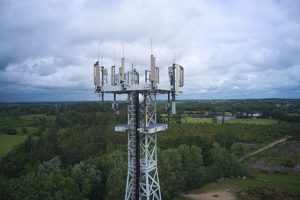
Currently, it has been concentrated in the six cities hosting the matches of the AFCON (Africa Cup of Nations) and the World Cup. The antennas were first installed around the stadiums, then in the rest of these cities. In a second phase, this coverage is planned to be extended to the entire kingdom, which will be covered by about 20,000 antennas. However, 5G covers a much smaller area than 4G (about 5 km compared to 10 km), so the number of antennas will need to be increased to cover the territory.
Is there really any point in launching 5G with the current level of coverage?
The commercial launch of 5G was scheduled according to the AFCON calendar. It was necessary to follow this timeline to show that Morocco is ready to host the event. The operators began deploying 5G antennas more than a year ago, but until now they had been operating only in 4G or 4G+.
So the Moroccans who benefit the most live next to the stadiums?
Yes, because they will have the 5G signal more frequently. If they move a bit away from the stadiums, the phone will automatically switch back to 4G. When you are within the range of a specific antenna, the “5G” symbol appears on your phone, even if it does not actually support this technology. But that doesn’t necessarily mean you have better connectivity. To check, you need to do a “speed test” on a website. If you see that the download speed is very high, it means you are indeed connected to 5G. The Moroccans who benefit the most are therefore those who live near an antenna and have a 5G-compatible phone.
Seeing the “5G” symbol appear does not necessarily mean benefiting from multiplied connectivity?
No, because of another particularity of 5G. Today, antennas have been deployed, but that does not mean that the operators’ backbones, which are the information-processing cores, are fully equipped with this technology. If the signal’s path is not entirely handled by 5G, neither the speed nor the latency specific to this technology can be achieved. However, the operators’ entire backbones are not yet adapted.
What do you think of the offers that have been put on the market by the operators?
The operators have launched their offers, and normally, the rate is the same as for 4G. However, these offers will need to be adjusted, because 5G encourages your phone to consume a large amount of data in a very short time. People will use up their plans much faster and will feel like they are being scammed. The operators will have to expand their data capacity. A concrete example: a 50-dirham recharge for 7.5 gigabits valid for one month. With 5G, capable of devouring 4 gigabits in less than five minutes, this offer loses all meaning. The data quota per recharge must increase. Especially since all contracts have automatically switched to 5G. Some users who now have access to 5G and see their data consumption rate increase did not necessarily ask for this change.
Written in French by Marin Daniel Thézard, edited in English by Eric Nielson


