

In 2024, Moroccan courts registered 16,985 requests for marriage authorization involving minors. Of these, 10,691 were accepted, an acceptance rate of 63%. A year earlier, in 2023, 20,192 applications were registered and 12,629 authorizations issued (62.5%).
On paper, the 17% drop in the volume of registered applications might lead us to hope that the phenomenon is on the wane. However, the reality is more nuanced: the drop in the number of applications filed is accompanied by a slight rise in the acceptance rate, which means that the courts are still validating a significant proportion of marriages involving minors. These official figures, published by the Superior Council of the Judiciary (CSPJ), show that magistrates remain permissive for the time being.
Above all, the figures reveal that almost all applications concern girls (over 98%), mainly minors aged 16 and 17. For 17-year-olds, the acceptance rate is over 70%, for 16-year-olds it’s around 53%, and for 15-year-olds it’s over 13%. Only for those under 15 does the acceptance rate drop drastically, to an almost symbolic 1.67%. The closer the minor is to the age of majority, the more likely the courts are to validate the union.
But while the figures reflect a certain protective caution towards the youngest, they also underline the trivialization of marriages at 16-17, which are presented as exceptional but remain commonplace.
« The High Council of the Judiciary had recommended to magistrates that they should not accept marriage applications from minors under the age of 17. In some regions, these guidelines are clearly not respected, » said family law lawyer and community activist Khadija Rouggany, during an interviewed with TelQuel.
Early marriage and extreme poverty: a vicious circle
Data from the CSPJ reveal the social roots of the phenomenon. In particular, the link between the lack of schooling among minors and the approval rate of judges. Applications concerning minors who have not attended school have an acceptance rate of 64.26%, while those concerning young people who have attended school see this rate drop to 48.36%.
« By taking girls out of school and marrying them off at an early age, we accentuate the vicious circle of violence and extreme precariousness »
Similarly, the vast majority of applications (over 96%) concern people with no professional activity. Of these, 63% were granted authorization, compared with nearly 60% for those in work. Last but not least, as Rouggany points out, geography also plays a role: although applications are submitted in urban centers, they are particularly numerous in certain rural areas where customary unions are still practiced.
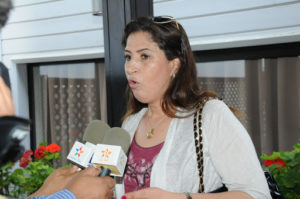
These figures enable us to draw up a typical profile of minors whose marriages are validated by the Moroccan justice system: young girls aged 16 to 17 who are often school dropouts, economically vulnerable and living in rural areas. « Rather than talking about under-age marriages, I prefer to talk about forced marriages of under-age girls. They are the first victims. By taking them out of school and marrying them off at an early age, we accentuate the vicious circle of violence and extreme precariousness », said Rouggany.
The report also notes that the family sections of the courts (the ones that handle these cases) issue authorizations at an average rate of 60 to 70%, depending on the jurisdiction, which reflects significant local variability, but also a general trend towards validation.
« Differences between regions range from around 20% of favorable decisions in major cities to over 70% in some provinces, and up to 81% in Errachidia, revealing a lack of harmonization in the application of the law and a direct correlation with social and cultural precariousness, » points out Najat Anwar, President of the Don’t Touch My Child Association.
« Poverty and dropping out of school are fundamental factors in the marriage of girls »
This raises an essential question: beyond reforming the legal arsenal, how can we promote access to education and economic alternatives for underage girls, in order to reduce recourse to marriage as a « way out » for poor families? Khadija Rouggany begins by pointing out that « the law is a very important instrument for providing an immediate solution to an urgent problem. The pedagogical dimension of the law implies that it educates people and influences their behavior ». But she warns: « It’s not enough to change the law. Change can only be structural. Poverty, as well as the problem of dropping out of school, are fundamental factors in the marriage of girls ».
International commitments flouted
By ratifying a number of international conventions, Morocco has committed itself to precise child protection standards. On June 21, 1993, the country ratified the Convention on the Rights of the Child (CRC) and the Convention on the Elimination of All Forms of Discrimination against Women (CEDAW). Under the CRC, « every human being below the age of eighteen years » is considered a child.
« As long as the derogatory article in the Family Code authorizing the marriage of minors remains in force, Morocco cannot be considered to be in full compliance with its international commitments »
This definition sets a clear age framework for the rights and protections that the State is committed to guaranteeing. CEDAW also contains a clear and binding provision on child marriage: article 16.2 states that « the betrothal and marriage of a child shall have no legal effect », and calls on signatory states to take « all necessary measures, including legislation, to set a minimum age for marriage » and to make the registration of marriages compulsory. By ratifying these conventions, Morocco has thus agreed to comply with precise international rules aimed at preventing and eliminating the practice of child marriage. However, « as long as the derogatory article of the Family Code (the final decision rests with the judge who hears the application, editor’s note) authorizing the marriage of minors remains in force, Morocco is not fully complying with its international commitments », said Anwar.
Rouggany adds: « Morocco cannot use a regional specificity to circumvent the ban on child marriage. Because, in this particular case, the most elementary rights of little girls are being flouted. »
An analysis of court rulings and trends in 2023 and 2024 highlights the gap between these commitments and practices. Granting marriage authorizations, by way of derogation, to minors close to the age of majority, in significant numbers, poses a difficulty in interpreting international obligations: the letter of the conventions calls for preventing the marriage of people under 18 and making such marriages legally null and void, while national judicial practice, in the absence of a stricter legal framework on derogations, continues to offer a formal mechanism of exception.
Reforming the Moudawana is not enough
The 10,691 marriage authorizations for minors granted in 2024 therefore pose a political challenge: how to reconcile respect for international commitments with the constraints imposed by territorial realities? The answer is neither purely judicial nor purely legislative. It involves a transversal arsenal: targeted educational policies to keep girls in school, economic measures to reduce the vulnerability of families, public campaigns to change social representations of early marriage, and strict procedural rules to limit the scope of judicial derogations.
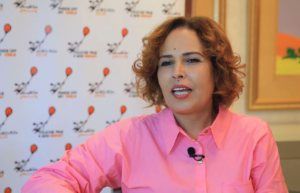
Najat Anwar recommends tackling the problem at its roots: « It is possible to take concrete steps to eradicate the phenomenon, especially in poor families. Firstly, by introducing and enforcing a clear legislative reform prohibiting marriage before the age of 18, with no possibility of exemption; by offering better economic protection in the form of allowances conditional on school attendance; by guaranteeing access to boarding schools and school transport in rural areas, and possibly by offering scholarships for young girls attending school ». She adds, « We also need to multiply educational and vocational alternatives such as second-chance schools, as well as free training for vulnerable teenage girls. »
Several players, NGOs and specialists have come up with a timetable of actions to be implemented between now and the next revision of the Family Code. Anwar is mobilizing her association « through active lobbying of parliament and public institutions, as well as strategic appeals to the courts to try and create protective jurisprudence. »
« As long as the girl has not reached the age of 18 to be legally able to make autonomous decisions, any sexual intercourse practiced on her is rape; a rape legitimized by the Moudawana »
A road strewn with pitfalls, believes Khadija Rouggany: « Unfortunately, when we see the number of authorizations granted in certain courts, we understand that the issue of forced marriage of underage girls is not fully understood and integrated by the judiciary ». « On the one hand, the child is not capable of giving consent regarding the future of her sexual life and sexual health. On the other hand, as long as the girl has not reached the age of 18 to be legally able to make autonomous decisions, any sexual intercourse practiced on her is rape ; a rape legitimized by the Moudawana », insists the lawyer.
Pending a truly national strategy…
We also need to assess whether the drop in formal applications in 2024 is not a sign of an increase in unregistered unions. In other words, doesn’t the drop in the number of applications for early marriage reflect a growing recourse to customary or informal marriages? This raises the risk of a total withdrawal of minimum legal protections for minors who are now married, but invisible in official statistics.
Public debate and political will also need to take international commitments as their compass and not just as an element of language. These normative texts constitute legal levers that NGOs and children’s rights advocates can exploit to demand legislative and procedural readjustment. In the meantime, judicial practice gropes between the obligation to protect children and the need to take social realities into account. The response requires the State to adopt a coherent, cross-sectoral and territorialized strategy. « Firstly, Morocco needs a clear and assertive political will. Secondly, this political will must be consistent with the social and economic realities of the most vulnerable categories. And finally, this political will must have a strategic, global and inclusive dimension », emphasizes Rouggany.
The data in the report by the High Council of the Judiciary provide a solid factual basis for a much-needed public debate. They show that what is at stake is not just legal, but also social, economic, cultural and political. Morocco, bound by long-standing international commitments, has the necessary instruments to take action. However, they need to be mobilized in a coordinated fashion, with clear objectives and effective control mechanisms. Until then, these derogations will continue to shatter the lives of thousands of children.
Written in French by Amine Belghazi; Edited in English by AngloMedia Group.


