

With a climate favorable to solar and wind energy, Spain has many advantages for positioning itself in the green hydrogen market. For its part, Morocco can rely on its substantial resources, with solar irradiation levels about 15 to 20% higher than Spain’s, and a vast territory. These advantages give the kingdom more competitive green electricity, a crucial foundation for developing green hydrogen.
But the two countries can also complement each other. As a key economic partner for the kingdom, “Spain represents an extraordinary ally in terms of green hydrogen,” emphasized Samir Rachidi, director of the Institute for Research in Solar Energy and New Energies (IRESEN), in an interview with TelQuel. “The Spanish have a great deal of technical skill and expertise. Moreover, our two countries get along very well, I think there is great complementarity between us,” he added.
A hydrogen transport network
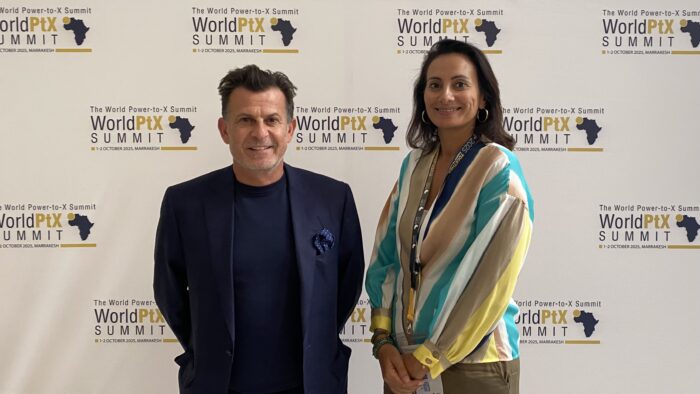
The Europeans, however, remain more advanced in terms of procedures, explained Philippe Esposito, president and co-founder of the Madrid-based renewable energy company DH2 Energy.
Regarding its project near Huesca in Aragon, in northwestern Spain, DH2 Energy is currently in the financial investment decision (FID) phase, after completing the initial stages of preliminary studies, known as Pre-FEED and FEED, and will therefore be able to begin construction of its hydrogen plant as early as next year.
In Morocco, the most advanced project, Chbika, has just completed the Pre-FEED phase.
Another undeniable advantage for Spain remains its geographical position, which will give it access to the European Hydrogen Backbone (EHB) project. Led by European gas infrastructure companies, this hydrogen network is expected to reach 58,700 km, connecting more than twenty European countries by 2040.
A strategic infrastructure, “because one of the major challenges posed by hydrogen is its transport,” explained the president of DH2 Energy, adding that “today, the lowest-cost method of transporting it is through pipelines.”
However, the construction of a special pipeline linking Morocco and Spain to transport hydrogen is not yet on the agenda and will likely depend primarily on geopolitical considerations.
The question of biomass for aviation
As for the uses of green hydrogen, aviation is often cited as a potential off-taker, with derivatives of green hydrogen: e-SAF (electro-sustainable aviation fuels). However, Philippe Esposito points out that for these e-SAF, carbon dioxide (CO2) is captured and then re-burned. These synthetic fuels therefore require biogenic CO2, he adds, meaning primarily sourced from biomass. “In Morocco there are a few biomass plants, but not many. To produce e-SAF, it would be necessary to import biogenic CO2, and that is not so simple. In practice, I have doubts about how to import large quantities of biogenic CO2,” Esposito explained.
A challenge also highlighted by the director of IRESEN, who considers this requirement “unrealistic.” He would like Morocco to be able to use “CO2 from natural gas, from thermal power plants, because it’s CO2 that is already there” for the development of these e-SAF, which could be essential for Europe.
Need to import from Morocco
“We need Moroccan hydrogen”
By 2030, the European strategy aims to produce 10 million tons of renewable hydrogen and to import an equal amount. “European production will be very low compared to demand, even in the long term. We therefore need Moroccan hydrogen,” stated the DH2 Energy representative, citing the kingdom’s land potential.
In terms of land, the Moroccan Offer has indeed made 300,000 hectares available to entrepreneurs for their projects, particularly in the southern provinces.
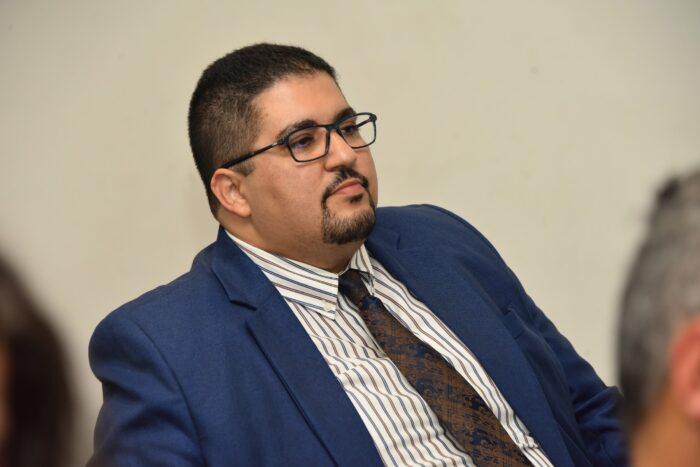
“I think that 20% of green hydrogen production will go to the local market, mainly for the OCP group and its fertilizer activities. The rest is for export, and for us, export means Europe,” explained Samir Rachidi. For his part, Philippe Esposito considers the phosphate giant a “tremendous opportunity” for the kingdom, as a “major consumer of ammonia, and also an importer of ammonia today, a guaranteed off-taker,” but one that above all would allow the development of know-how.
Rachidi, however, qualifies the possibility of OCP becoming a guaranteed off-taker, specifying that it “already works with its own partners,” notably for its project in partnership with Engie.
For its exports, however, Spain represents an “enabler,” a catalyst for Morocco, according to the director of IRESEN. “We also need to support Spain in its dialogue with Europe for better connectivity. It is a key link, an important and strategic pivot for Morocco. I think both countries understand this, both politically and, above all, from a business perspective,” he notes.
Another local market in Morocco?
Also present in Mexico and Portugal, DH2 Energy expressed its interest in Morocco by submitting its application to the Moroccan Agency for Sustainable Energy (Masen), highlighting another Moroccan advantage: a potential local market, beyond OCP. “Since Moroccan electricity is still mostly carbon-based, I think it would be interesting to be able to supply hydrogen to these plants, and substitute coal to produce electricity that would be completely green,” he explained.
“I think there are extraordinary opportunities in Morocco to decarbonize electricity”
According to data collected by Amin Bennouna, a renewable energy expert, electricity production from coal amounts to 27,245 gigawatt-hours (GWh) in 2024, or more than half of Morocco’s total energy production of 42,000 GWh last year.
The Spanish company is therefore interested in off-takers such as Taqa Morocco, the National Office of Electricity and Drinking Water (ONEE), and major electricity producers. “I think there are already extraordinary opportunities to act within Morocco to decarbonize,” Esposito concluded.
Written in French by Salomé Krumenacher, edited in English by Eric Nielson


