

Seventeen years after its launch, the Green Morocco Plan (PMV), a pillar of Moroccan agricultural policy is being closely examined by the nation’s representatives. The thematic working group chaired by Abderrazzak Ahlouch has been multiplying hearings to evaluate, with supporting data, this program that has profoundly reshaped the countryside. Behind the official narrative of the PMV’s success, researchers and economists are calling for a more clear-eyed reading of a model that has become a symbol of unequal development.
Since its restructuring on April 23, the thematic working group on the evaluation of the PMV (-2026) has held more than a dozen meetings with stakeholders in the agricultural sector. After several weeks of parliamentary recess, two new meetings were held on October 15 — first with the Comader (Moroccan Confederation of Agriculture and Rural Development), and then with the Moroccan Agency for Investment and Export Development (AMDIE).
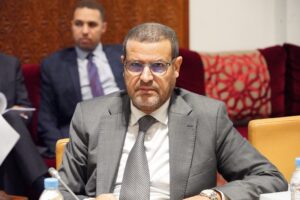
The rapporteur of the group, Abdessamad Haiker (PJD), details the progress of the working group: “We have held more than a dozen meetings with officials, including the Minister of Agriculture, the Agricultural Development Agency, central directorates, the Hassan II Institute of Agronomy and Veterinary Medicine (IAV Hassan II), and the National Agency for the Development of Oasian and Argan Zones.”
The deputies intend to go further than a simple administrative review. “We still have many meetings to hold — at least one with each of the nineteen interprofessional federations, since they are the core group involved in implementing the PMV,” explains Haiker. The schedule is tight: the parliamentarians want to gather all the data before the end of the year, despite the overlap with discussions on the 2026 Finance Bill, which promise to be heated in light of the wave of protest from the GenZ212 movement.
“We must move quickly, but seriously. We are fully aware of the importance of the work we are doing, as this is a vital project linked to food sovereignty, the emergence of a rural middle class, and the considerable budgets that have been allocated to it,” emphasizes the rapporteur of the working group.
A foundational, but uneven plan
“At the heart of the rural issue lie enormous social inequalities, and therefore class interests that stand as obstacles to any reform”
Launched in 2008 by the Ministry of Agriculture, under the direction of a certain Aziz Akhannouch, the Green Morocco Plan aimed to make agriculture a lever for the Kingdom’s socio-economic development. With a strategy based on two pillars: the first devoted to high-performing agriculture focused on exports and high-value sectors; the second oriented toward support for solidarity-based and subsistence agriculture.
According to official figures, the plan is said to have created hundreds of thousands of jobs, significantly increased agricultural added value, and mobilized over 150 billion dirhams in investments. Infographics published by the ministry highlight increased yields, the modernization of irrigation systems, and the growth of exports.
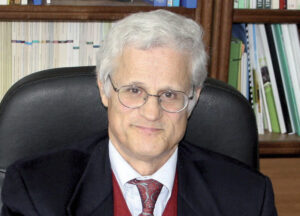
But for Professor Najib Akesbi, economist and former professor at the Hassan II Institute of Agronomy and Veterinary Medicine, it is a “schematic and misleading plan.” In his analysis, published by the journal Economia, he argues “that at the heart of the issue of agriculture and the rural world in Morocco, there are enormous social inequalities, and therefore class interests that are the true obstacles to any reform and any salvaging change.”
According to Najib Akesbi, large farm operators and agro-export companies have largely benefited from subsidies and aggregation programs, while the majority of small farmers have been left behind.
The economist reminds us that 70% of Moroccan farms have an area of less than two hectares. The model remains marked by the duality between modernization and precariousness.
The law of numbers
This structural critique resonates with the work of Habiba El Mazouni and Zakaria Kadiri, who analyzed, in their own studies, how the PMV was conceived and evaluated. In their studies (2021 and 2024), they describe an agricultural policy dominated by quantification: statistics have become the main instrument for legitimizing public action, the two researchers point out. They note that 97% of press articles published about the PMV rely on numerical performance indicators.
This governance by numbers has resulted in a rhetoric of performance, at the expense of understanding social realities. The researchers emphasize that agricultural statistics, produced by the ministry, are often used without context and without debate.
“Statistics,” they note, “are never neutral.” They act as a rhetorical weapon, an instrument of persuasion that conceals the structural contradictions of the model.
Thus, massive quantification has sometimes replaced real evaluation, performance has substituted analysis, and statistics have replaced politics. This observation echoes Akesbi’s view: the PMV has largely been evaluated according to a productivist model. “Seeking to increase productivity is a matter of common sense, but trying to do so with past methods in a context that has changed greatly — starting with natural resources, whose degradation has become alarming — is to program failure coupled with repeated ecological disasters,” the economist argues.
The researchers also highlight the difficulty of accessing public data. The 2016 General Agricultural Census, though completed, has never been published in full. The figures released vary from one institution to another: according to the ministry, the plan created 342,000 jobs in the ten years since the PMV’s launch; according to an economist cited in the report by the two researchers, the agricultural sector, on the contrary, lost nearly 277,000 jobs over the same period.
A media success, the absent critique
In their article for the scientific journal Alternatives Rurales, El Mazouni and Kadiri examined the media coverage of the PMV. Their analysis of 130 articles published between 2016 and 2020 shows that the press largely echoed institutional narratives, without genuine debate.
“The media coverage of the PMV remains informative and descriptive. Journalists reproduce the ministry’s or MAP’s press releases without critical perspective,” they observe.
”We cannot base our analysis solely on the statements of the actors we have approached. We need official and verifiable data to assess the real impact of the plan.”
This “depoliticization” of agricultural policy is reflected in a uniform vocabulary: “achievements,” “advances,” “investments,” “gains,” etc., and in the invisibilization of rural realities. The agricultural world is presented as homogeneous, and small farmers, laborers, or rural women appear only rarely.
Even the question of sustainability is reduced to the promotion of drip irrigation, a technical symbol of water savings, whose ecological effects remain debated — without opening a real debate on the environmental consequences of the PMV.
The parliamentary working group agrees that the challenge of evaluation goes beyond compiling numbers. “We have sent specific questions to the ministry in order to obtain written answers. We cannot base our analysis solely on the statements of the actors we have approached. We need official and verifiable data to assess the real impact of the plan,” acknowledges Abdessamad Haiker.
Toward a rewriting of the rural model?
The deputies are also considering field visits. The thematic working group has scheduled visits to farms, centers, and institutes in order to confront discourse with reality. The final report, expected in 2026, should cross-reference these observations with official data.
Haiker also advocates for a methodological opening: “We must also rely on researchers, independent experts, and even specialized journalists who know the field.”
In a country where agriculture employs nearly a third of the active population and accounts for around 10% of GDP, this evaluation marks a significant political moment. For the first time, Parliament is taking ownership of a program long presented as untouchable. The question remains whether the parliamentary report will be able to go beyond the trap of numbers, denounced by researchers, to propose a new vision… a vision that would allow the development of agriculture that is fair, sustainable, and socially inclusive.
In absolute terms, the PMV has undeniably transformed the face of Moroccan agriculture, with modernized infrastructure, boosted exports, sustained growth, and more. But behind this picture, questions remain: who really benefits from this modernization? What proportion of the rural population feels its effects? And what has been its cost to natural resources?
The ongoing evaluation could finally put words and numbers to these contradictions. Because at its core, more than a public policy program, the PMV has become a mirror of a societal choice: an agriculture measured by yield and productivity, where many now call for it to be measured in terms of equity, sustainability, and spatial justice.
Written in French by Amine Belghazi, edited in English by Eric Nielson


