

If Moroccan migrants initially went to France, it was for historical reasons linked to the colonization of North Africa. But from France, future MREs often moved to other northern and western European states with no historical links to Morocco or the Maghreb, such as the Benelux countries (Belgium, Netherlands, Luxembourg) or the German-speaking countries.
Why did this happen? The answer can be summed up in one word: industry. Indeed, northwestern Europe began to industrialize progressively from the threshold of the 19th century, with England leading the way. This industrial progress soon spread to the rest of the continent, notably Belgium and Germany. Paradoxically, France, the first country to welcome Moroccans, was still dominated by rural life until the 1950s.
So how did the Moroccan neo-migration to Northern and Western Europe come about?
Rifans and Chleuhs, the pioneers
Geographer Daniel Noin (1930-2021), one of the pioneering French researchers on Moroccan migration, began studying the phenomenon in the mid-1960s. It was during this period, in 1966 to be precise, that the Moroccan government carried out a population census. Based on data from the Moroccan Ministry of the Interior, Noin estimates that 4% of the rural male population from the Rif, Souss and Jbala regions headed for traditional European destinations.
While France draws 58% of this demographic substrate, Germany recovers 13%. A not insignificant figure, since it tied with Belgium, another major host country for Moroccan migrants at the time. But Moroccan exile in Germany has a particular color. First and foremost, it was the inhabitants of Nador and the surrounding region who went there.
Then, as in other Western countries, the Moroccan diaspora diversified in terms of gender, age and origin. From coal miners to construction and steel workers, the profile is slowly shifting towards students and women. The same goes for the sociological profile: we’re gradually moving from Moroccans coming from rural areas to migratory flows increasingly coming from urban areas. So why isn’t Germany part of the classic Moroccan migration circuit?
Germany, a nation apart in the post-war years 1939-1945
Germany’s social, economic and cultural context is fundamentally different from that of other Western European countries. Until 1989 and the fall of the Berlin Wall, the country was divided into two nation-states: the capitalist, Atlanticist Federal Republic of Germany (FRG), and the communist, Soviet-oriented German Democratic Republic (GDR). This division was a direct consequence of the Second World War and the ensuing Cold War. The world was split into two blocs: one state-based, in the sense of a nationalized economy run by the Communist state, and the other liberal. Unsurprisingly, Moroccan migrants were mainly to be found in West Germany, which was more industrialized and prosperous than its eastern counterpart.
In 2023, Germany’s MREs celebrated the 60th anniversary of the agreements between Rabat and Berlin on the transfer of workers to West Germany, signed in 1963. The year more or less corresponds to that of the signing of other agreements between Morocco and Western European countries. Most of this migration took place between the end of the 1950s and 1973. During this period, with the exception of southern European countries such as Spain and Portugal still under the yoke of military dictatorships, the countries of Western Europe began and ended their Trente Glorieuses almost simultaneously.
Moroccan workers were mainly employed in coal mining. Let’s not forget that, in the post-war era, we were in the Europe of coal and steel. And the subsoil of the Old Continent abounded in these strategic raw materials, which had been exploited intensively since the early 19th century. That’s why the first Moroccans set their sights on German Länder (regions) such as Hess, the Ruhr and North Rhine-Westphalia, rich in mining pits.
The move of Moroccan workers to West Germany was financed by the host country. The residence permit, generally for one year, was renewable according to production forecasts. Migrants from the Kingdom received language courses and were trained by the employers themselves. From the mid-1970s onwards, the flow of direct migrants gradually dried up. Nevertheless, Moroccans continued to flock to Germany in the 1980s and 1990s, through family reunification and student visas.
Today, the count has stabilized at around 130,000 Moroccans living in the German Republic. This figure does not take into account the children of Moroccans born on German soil who have obtained de facto German nationality under the rules of jus soli. « More than a quarter of the community was born in Germany and naturalized. After demanding that Moroccans give up their original nationality, the Germans settled for jus soli and thus implicitly recognize dual nationality », writes Moroccan writer Zakya Daoud in The Moroccan Diaspora in Europe (La Diaspora marocaine en Europe (2011).
MREs in Viking country
Germany may be the northern European country that welcomes the most Moroccan immigrants, but it’s not the only one. To a lesser extent, Scandinavian countries such as Denmark and Sweden, where Moroccan immigration is still relatively recent, have also admitted Moroccans.
In Denmark, which has a population of just 5.5 million, and where Islam is strongly criticized, there are 20,000 Moroccans living abroad. Since the early 2000s, Moroccans, like other non-EU nationals, have faced an increasingly cold reception in Denmark. In 2009, immigrants who wanted to leave Denmark were offered the sum of 100,000 kroner (13,000 euros, equivalent to 137,000 dirhams).
Sweden has also been hit by the same socio-political malaise: the rise of the extreme right, which blames migrants for the problem. With a surface area roughly equivalent to that of our country, this Scandinavian kingdom is home to no fewer than 35,000 Moroccans. The first arrivals of Moroccans living abroad in Sweden date back to the late 1970s. These were mainly Rifans who went to work in industry. It’s no coincidence: Sweden is a heavyweight in areas such as iron extraction and wood processing, as well as other raw materials. The international success of the Ikea retail chain is a case in point. The automotive industry is another magnet for migrant workers.
In recent decades, however, the socio-professional landscape has changed somewhat. Most Moroccans now work in the tertiary sector, particularly in hotels, cleaning and transport.
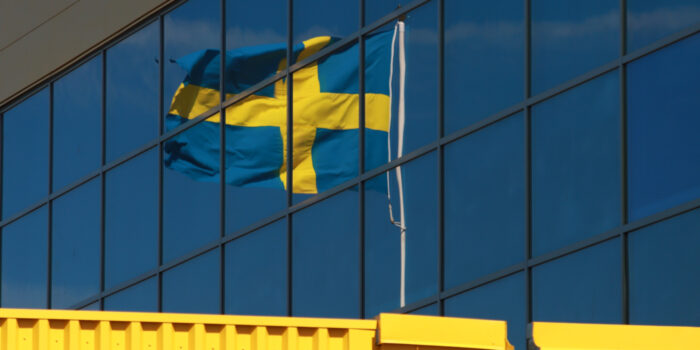
There is also an interesting Swedish specificity to highlight. Since the 1970s, Moroccan immigration to Sweden has been fueled by numerous political opponents of King Hassan II’s regime, notably Marxist-Leninist activists. And with good reason: Sweden readily offered asylum to all political activists threatened with imprisonment in their home countries. The most famous of these was probably Ahmed Rami, a former soldier involved in the attempted coup d’état in Skhirat in 1971. Finally, since the late 1990s, the Moroccan diaspora has been fueled by family reunification and numerous white marriages.
A little further west, in the UK, the authorities estimate that 100,000 Moroccans live in England, Scotland, Wales and Northern Ireland. Half of them live in England, 80% of them in London and its suburbs. Closer to home, Gibraltar, a British overseas territory, is home to over 1,000 Moroccans.
Spatial and social diversification
The presence of Moroccans in the countries of northern and western Europe clearly demonstrates the diversity of Moroccan emigration outside the traditional channels that predominated until the mid-1970s. This spatial diversification was not without social diversification. Today, a significant proportion of the Moroccan diaspora is qualified, even highly qualified, unlike when migration began in the 1950s. Back then, future MREs were drawn exclusively from the urban and rural proletariat. In technical jargon, this is what we call the « global classes ».
In a study commissioned in 2007 by the Ministry in charge of MREs, in collaboration with the International Organization for Migration (IOM), the authors point out that« as Moroccan migration spread geographically, it became increasingly socially diversified. Today, in the same country, we find ordinary workers, skilled workers, foremen, professionals, middle managers and technicians, small building contractors, fruit and vegetable wholesalers, retailers and senior executives of large companies ».
Thus, geographical distribution seems to go hand in hand with greater socio-professional versatility. This was particularly the case from the 1990s onwards, when many baccalaureate holders who had come to pursue their higher education ended up settling permanently in various European countries. In the 21st century, the profile of the Moroccan migrant has completely changed compared to that of his or her parents and grandparents in the mid-20th century. Far from being an isolated group, Moroccans are very much in tune with modern globalization, which has turned the world into a tiny global village.
Written in French by Farid Bahri; edited in English by AngloMedia Group.
[frame]


