

In the presence of King Mohammed VI and his guest, French President Emmanuel Macron, a memorandum of understanding was formalized on October 28 for the creation of a Moroccan-French investment accelerator.
The protocol, with a budget of 300 million euros, was signed by Mohamed Benchaâboun, Director General of the Mohammed VI Investment Fund (FM6I), Rémi Rioux, CEO of the French Development Agency (AFD), Isabelle Bebear, Director of International and European Affairs at Bpifrance, and Marie-Laure Mazaud, CEO of STOA.
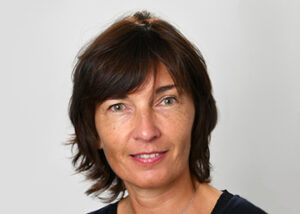
She explained to TelQuel the agreement that will establish a 50-50 joint venture between Morocco and France. The STOA fund she leads is an impact fund, created in 2017 by the Caisse de Dépôts et Consignations and the French Development Agency (AFD). It specializes in investments in infrastructure and energy, with more than half of its investments directed towards Africa.
The agreement signed during the French president’s state visit further strengthens the group’s presence on the continent.
TelQuel: What areas are covered by the agreement you signed with the Mohammed VI Investment Fund?
Marie-Laure Mazaud: This agreement has several components, but I’ll focus here on the part relevant to STOA, which is support for infrastructure development under public service delegation. This can involve privatization or concession agreements to support the recovery and development of infrastructure. This is part of our core activities.
We are already active in Morocco through investments we’ve made in BLS, a transport and logistics operator, as well as in the Oncorad group, a medical group specializing in oncology and radiology. We are also exploring other opportunities; for instance, we submitted a bid for the cable transport project in Tangier.
What areas does your group plan to bring its expertise to?
The idea behind this partnership with the Mohammed VI Investment Fund (FMVI) is to support development in infrastructure related both to renewable energies and green hydrogen. This support will also extend to the areas of transportation and desalination, with a view toward Morocco’s hosting of the 2030 World Cup.
So, does your support only extend to large companies?
Not necessarily. We can also work with mid-sized companies, including Moroccan ones, and in partnership with international funds. But the main idea with FM6I is to ensure complementarity in all aspects related to making projects bankable, supporting governance, and addressing climate impact, among other things.
The goal is to support projects so that they meet international standards, particularly those of the World Bank. This partnership will also serve as a foundation for sharing our resources and experience, leveraging them to accelerate infrastructure development. In fact, there will be team support, experience sharing, and a focus on identifying the right projects that will help foster this environment.
Will the joint investment accelerator be open to private investors?
We are in a joint venture and are investing jointly, leveraging our participation. I am also in the process of transforming the company into an asset management firm. The idea is to raise funds from third parties and to be supported by private investors.
What are the next steps for the effective realization of this joint venture?
The next steps are, of course, identifying a pipeline and finding the first projects we can bring to life. We’re still in the early stages, so it’s too soon to give specific dates. I believe we’ve moved quite quickly in Morocco so far, and we’re exploring all the opportunities available.
One thing is certain: the teams need time to do thorough groundwork and create the right conditions for the project’s success. Given the deadlines, particularly with the World Cup, there are indeed key areas where we can make rapid progress. We bring seven years of international experience, which we’ll share with the teams we’ll be working with.
Written in French by Amine Belghazi, edited in English by Eric Nielson


