

Archaeological discoveries have multiplied across Morocco in recent years. From the oldest Homo sapiens fossils discovered at Jbel Irhoud to the the oldest human fossils recently unearthed in Casablancarecently and the wealth of socio-cultural findings undercovered at the Pigeons Cave in Taforalt, Moroccan archaeology has increasingly captured the attention of the international scientific community.
“In recent years, we have seen strong support and a very clear vision for developing the field of archaeology and heritage sciences in Morocco”
To sustain this momentum, l’Institut national des sciences de l’archéologie et du patrimoine (INSAP) has been undergoing a major restructuring process since mid 2023. At the initiative of the Ministry of Youth, Culture and Communication (MJCC), archaeological research has been made a priority . “Over the past four years, we have seen strong support and a very clear vision for developing archaeology and heritage sciences in Morocco” INSAP Director Abdeljalil Bouzouggar told TelQuel.
Home to Africa’s Only Ancient DNA Laboratory
The transformation is already taking shape on the ground. Within the coming months, and possibly even weeks, INSAP is set to unveil its new facilities. Originally housed in a 1,000 squaremeter building, the institute will soon expand into a 6,000 square meter complex featuring additional offices and classrooms, a library, and new laboratories.
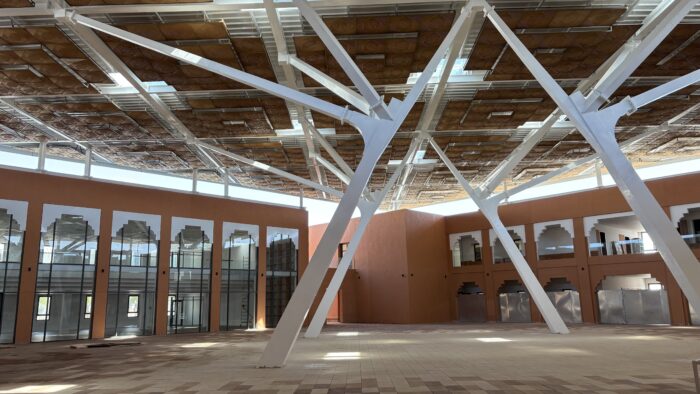
Among the most significant additions is a molecular biology laboratory dedicated to the analysis of ancient DNA. According to INSAP, it will be the only laboratory of its kind in Africa specializing in fossil DNA. “We will be able to study population dynamics, that is, migration patterns from the territory we now call Morocco to other regions, and vice versa” explains Bouzouggar. The research is particularly relevant given Morocco’s position between Africa and Europe, along the Mediterranean basin, which he describes as “one of the cradles of civilization” and a historic crossroads of human migration.
The institute will also house a laboratory dedicated to archaeological dating techniques. It will specialize in luminescence dating (the production of a light signal without heat, ed.), using both optically stimulated luminescence (OSL) and thermoluminescence (TL), methods capable of dating materials that are hundreds of thousands of years old.
OSL, for example, allows researchers to determine the age of a fossil by identifying the last time quartz grains in the surrounding sediment were exposed to sunlight. Thermoluminescence, meanwhile, measures the time elapsed since a material was last exposed to intense heat, meaning that this technique can be used to date objects such as heat treated flint tools or ancient pottery that has been fired or subjected to prolonged exposure to the sun.
High-Tech equipment
The director of INSAP also highlights the installation of a laboratory equipped with a scanning electron microscope. “This microscope will allow us to make high-magnification observations as well as analyze what we observe, including its physicochemical composition” he explains. Other equipment will enable the characterization of materials by determining their physical and chemical composition. “Some monuments are deteriorating, so they need to be restored and preserved. To do this, we need to understand the composition of the materials so that we can reproduce them” explains the scientist.
Other specialized disciplines, including traceology, which studies wear marks on ancient objects; anthracology, which analyzes charcoal remains; and carpology, which focuses on seeds and other plant remains, will also benefit from new equipment.
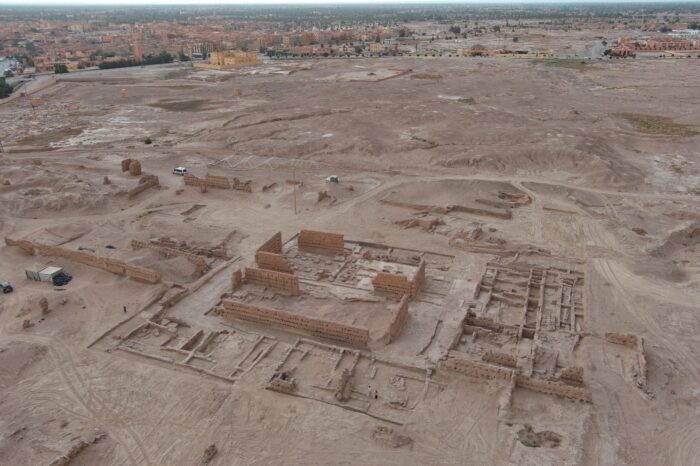
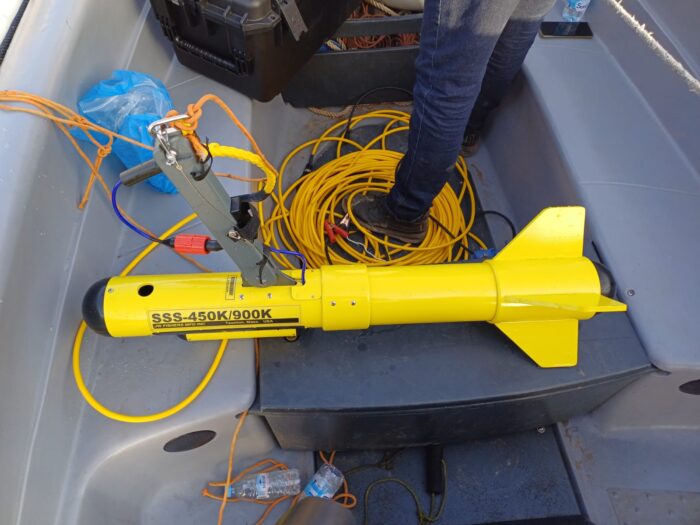
Beyond its laboratory facilities, INSAP is also equipped with a range of mobile units designed for field research. Among them are geophysical survey systems capable of detecting buried archaeological structures without excavation. Bouzouggar also points to the institute’s side-scan sonar technology, used to explore underwater environments. “This equipment helps identify shipwrecks and ancient port sites. It has already been deployed in the regions of Rabat, Essaouira, and Dakhla” he says. The institute has also, for less than a year, been operating LiDAR-equipped drones. These systems make it possible to map areas covered by dense vegetation and reveal archaeological remains concealed beneath forest canopies, offering researchers a powerful tool for identifying previously hidden structures.
Featured training programs
“Morocco is rich in monuments and history. We need heritage managers and experts”
Prior to the establishment of these new laboratories, the institute focused on recruiting and training the specialists who will run them. With support from the ministry, INSAP first hired the technicians and researchers needed to staff the new facilities. “For the past two years, technicians have been undergoing specialized training to work in the genetics and dating laboratories” Bouzouggar told TelQuel. At the same time,Other doctoral students are also being trained abroad as part of their preparation for their doctoral dissertations. “Machines are important, but the most important investment is in people” he adds.
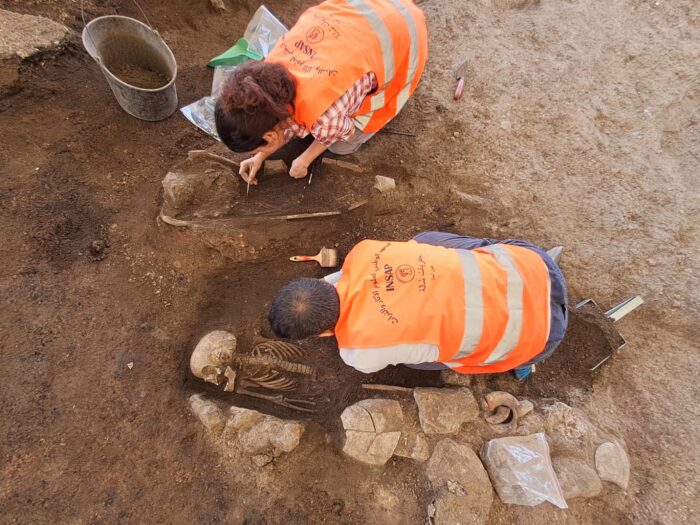
INSAP has also broadened its training offerings. “First, we increased student intake. In 2022, for example, only six first-year students were admitted through the entrance examination. Today, that number has risen to 32” says Bouzouggar. He also mentions the introduction of new career-oriented bachelor’s degree programs that lead directly to jobs in archaeology, anthropology, or cultural mediation. “For the first time in Morocco, we have established a track called ‘Underwater Archaeological Heritage’ to develop underwater archaeology along the coasts or in lakes” he adds.
Regarding the master’s program, the institute’s director mentions the launching of a professional master program focused on museology and heritage professions. “This has allowed us to attract more students. Because there is demand, with career opportunities ” he explains. Between 2011 and 2015, only two INSAP graduates were hired by public and semi-public institutions, whereas between 2022 and 2025, that number rose to 48, the scientist notes. “Ultimately, there really are career opportunities. I always tell the students: let’s turn the past into the jobs of tomorrow ” he adds.
The institute’s director thus refers to galleries, museums, monuments, and historic sites. “There is a demand because Morocco is rich in monuments and history. We need managers and heritage experts ” he confirms.
Continental Strengthening
INSAP also aims to position itself as a continental hub. “In its development, the institute supports not only national research but also research across the continent. We welcome African students at nearly every level, from bachelor’s and master’s programs to doctoral studies” explains the directeur. He adds that the institute is currently training Guinea’s first archaeologist.
By strengthening its ties with counterpart institutions abroad, INSAP hopes to facilitate the exchange of expertise and knowledge. “We have much to learn from other research institutions in Africa, Europe, and the Americas” says Bouzouggar. Rejecting any notion of competition or rivalry, he instead emphasizes the importance of collaboration and knowledge-sharing.
Since its founding, INSAP has maintained a strong culture of international exchange with universities and research centers. Bouzouggar credits this openness to the vision of the institute’s first director, Joudia Hassar-Benslimane, who established partnerships with a range of academic institutions from the outset. “That has allowed us to enrich our knowledge, exchange ideas, and strengthen training opportunities” he adds.
Maintaining international collaborations
For years, INSAP has partnered with universities and research institutes in France, Italy, the United Kingdom, the United States, and elsewhere. These international collaborations have enabled the development of expertise in a range of specialized fields. While the institute’s new equipment will now allow many analyses to be conducted on-site, Bouzouggar insists that this should not diminish the importance of academic partnerships.“Even though we are now equipped, we must continue this international cooperation. Beyond the equipment, there is the expertise, the experience, and the exchange between researchers and students” explains the INSAP director.
These exchanges of expertise have helped Morocco establish itself on the global archaeological stage. “Today, Moroccan expertise is firmly established. In fieldwork, archaeological excavations, and the application of new technologies to archaeology, Morocco has developed strong capabilities. Now, our goal is to catch up in laboratory research as well, that’s new for us” explains INSAP directeur.
In addition to these international partnerships, Morocco now has substantial technical and human resources. In total, 19 new positions have been created, including around ten researchers, as well as engineers and laboratory technicians. “We now have the financial and human resources to work in lesser-known regions, such as southeastern Morocco or the Moroccan Sahara” Bouzouggar emphasizes.
Written in French by Salomé Krumenacher, edited in English by Amina Kadiri


