

The case came to light in October 2023, when Jacques Leveugle arrived in Vizille, in France’s Isère department, where he owns a small house and regularly stays with his brother. As was their habit, the two men set out on a hike.
Left alone at the house, Leveugle’s nephew became curious about the number of USB drives his uncle had left in his room. On one of them, he found a folder titled Memoirs. When he opened it, he uncovered thousands of pages in which Leveugle described, in detail, the crimes he had committed across eight countries, including Morocco.
This is an extraordinary case of sexual predation. Jacques Leveugle, a 79-year-old former educator, is accused of assaulting 89 minors since the 1960s across five continents and eight countries, including Morocco. A French prosecutor has issued a call for witnesses to identify others pic.twitter.com/LOdxEJhvnJ—
TelQuel (@TelQuelOfficiel) February 24, 2026
No wife, no mistress
Jacques Leveugle was born in 1946 in Annecy to an ordinary family. At the age of 21, he began what investigators describe as a decades-long pattern of sexual abuse, targeting adolescents between the ages of 12 and 17. Passionate about literature, he dreamed of becoming the literary heir to André Gide or Montherlant.
He never completed any of the training programs he enrolled in, whether to become a teacher or a nurse. Without obtaining a formal qualification, he was unable to practice in France. However, the training he did receive allowed him to work abroad and, above all, gave him access to the young people who would become his victims. To date, investigators have identified 89.
Friends and acquaintances, both in France and abroad, say they never knew him to have either a wife or a mistress. Leveugle also rejects the label “pedophile” insisting instead on describing himself as a “pederast”. During questioning, one of the statements he repeatedly made to investigators was that “a pederast can contribute something to humanity.”
As he moved across Europe, South America, Africa, and Asia, he frequently changed his appearance. Presenting himself as an intellectual or scholar, he relied on his confidence and eloquence to gain the trust of the minors placed in his care.
In 2010, he set his sights on Khénifra, where he lived until his arrest, making frequent trips to France
His first destination abroad was Algeria in 1967, where he worked as a tutor. He later lived in Germany, Switzerland, Morocco, Niger, the Philippines, southern India, Colombia, and New Caledonia. In 2010, he settled in Khénifra, where he remained until his arrest, while continuing to travel regularly to France.
Horrified by the contents of the Memoirs, Leveugle’s nephew handed the USB drives over to gendarmes in Vizille, who sought assistance from investigators in Grenoble. Following his arrest, Leveugle showed no apparent remorse for his actions. He also voluntarily confessed to the murder of his mother in France’s Yvelines department in 1974 and the killing of his aunt in Bern, Switzerland, in 1992.
Just one complaint in 60 years
One of the case’s greatest mysteries is how Leveugle managed to evade justice for so long. According to the French Public Prosecutor’s Office, only one complaint was ever filed against him over six decades. Submitted by a victim in France in 2016, the case was ultimately dismissed for lack of sufficient evidence.
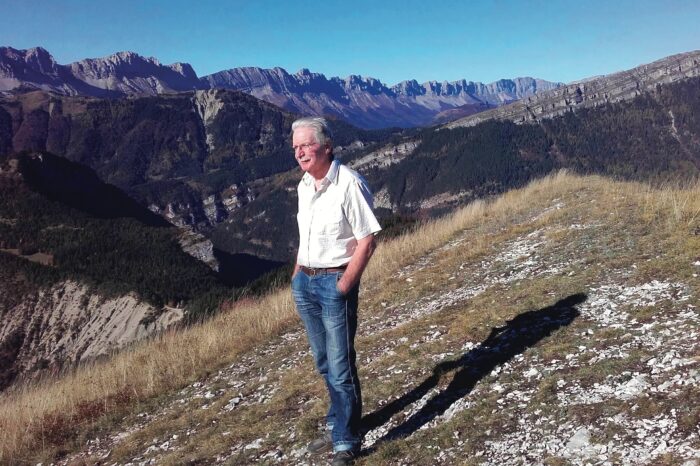
At the time, Leveugle was living freely and was active in Morocco’s Middle Atlas region, particularly in Khénifra. According to TelQuel‘s sources, Moroccan victims ;believed to account for a significant share of the total number of alleged victims; have so far been slow to come forward.
Legal uncertainty also surrounds the case. Leveugle could be released because the charges against him are time-barred under French law. His advanced age, 79, may also weigh in his favor. Should he be extradited, and if the French authorities were to approve such a request, the question remains: where would he ultimately stand trial?
Regarding Morocco, the lead investigator, Gendarmerie Colonel Serge Procédès, said French investigators are expected to travel to the kingdom in the near future. “This could be done through the mechanism of letters rogatory provided for in the judicial cooperation agreements between the two countries” a security source told TelQuel. Under this framework, French investigators would work alongside their Moroccan counterparts under the supervision of the Public Prosecutor’s Office.
Written in French by Mohammed Boudarham, edited in English by Amina Kadiri


