

[This article is an archive published in March 2025]
“Pathetic” “This level of insanity is beyond comprehension” “When you don’t have a history, you make one up by stealing your neighbor’s. It’s faster” “When falsification becomes an official mode of communication” Between Morocco and Algeria, the online war over cultural heritage is at its peak.
February 21, 2025, marked an incident that reignite tensions between internet users in the two neighboring countries. In a promotional video posted on its X account, the Algerian Ministry of Defense paid tribute to the country’s martyrs and outlined its vision of a “new Algeria” centered on preserving national memory and identity.
The issue? Among the images accompanying the narrative were shots of the Ksar of Aït Benhaddou, an iconic Moroccan site in the province of Ouarzazate that has been listed as a UNESCO World Heritage Site since 1987.
#وزارة_الدفاع_الوطني pic.twitter.com/K8g9gmsmi7
— وزارة الدفاع الوطني الجزائرية (@mdnGovDz) February 21, 2025
The post quickly drew criticism from Moroccan users, who quickly added a context note, a feature introduced on X after its acquisition by Elon Musk that allows users to flag “potentially misleading” content. The note denounced “a new attempt to appropriate Moroccan heritage. A troubling confusion that adds to a series of appropriations already observed”
“Dima Maghrib”
Defenders of Morocco’s cultural heritage are plentiful on social media. On X, TikTok, Facebook, and Instagram, accounts devoted to the cause continue to multiply, and related topics frequently trending. Many of these cyber activists identify with the Moorish movement, a movement founded in 2020 that describes itself as nationalist, conservative, and a protector of Moroccan heritage.
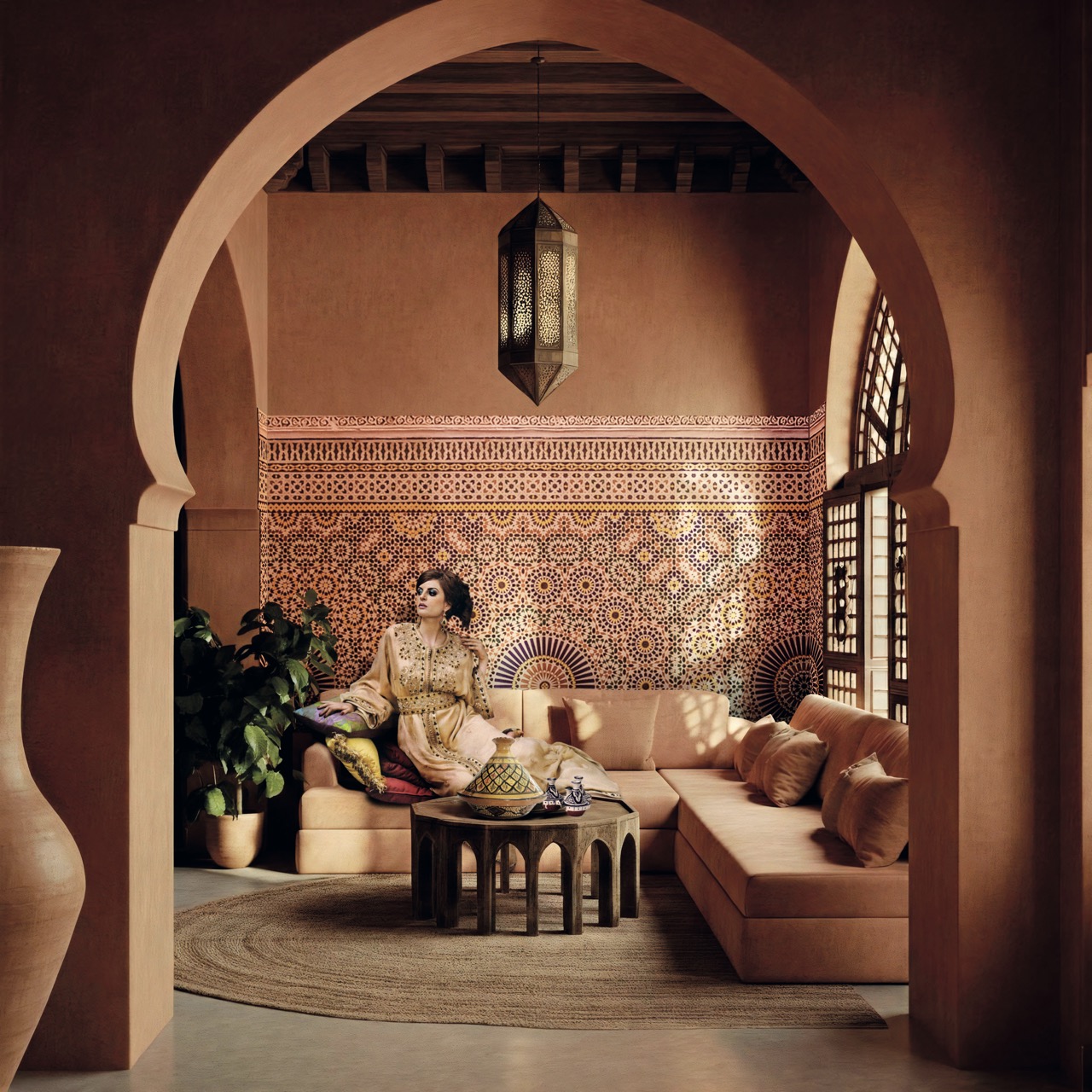
The movement is behind the creation of hundreds of accounts dedicated to everything linked, directly or indirectly, to Moroccan heritage. Babouches, gazelle horns, the Sahara, tagine, couscous, caftans, copperware, Hassan II, chaâbi…nothing is off limits.
“The official logo of the Africa Cup of Nations, which will be hosted by the Kingdom of Morocco, highlights zellige, an ancestral art and heritage that Algeria has tried to claim as its own, but to no avail… Dima Maghrib” declared the Morocco First account, which surpasses more than 10,000 followers on X (update: more than 13.000 at the meantime (24 June, 2026)). Similar accounts exist on the Algerian side, including Djazair Culture, which frequently accuses Morocco of stealing Algerian heritage.
Who are these people, and why are they so active online? To answer that question, one must look at the political context. According to Ali Moutaib, president of the think tank Global Governance and Sovereignty Foundation, these virtual clashes intensified after Abdelmadjid Tebboune came to power in 2019, followed by Saïd Chengriha’s rise as chief of staff of the People’s National Army.
“Since 2021, we have witnessed a sharp rise in hostility from the Algerian regime, an escalation of political and diplomatic tensions marked by the severing of relations with Morocco, the closure of its airspace, and, above all, a relentless propaganda campaign,” he emphasizes.
Designated Enemy
The goal of the Algerian government “is to mobilize domestically against the designated external enemy, namely Morocco, and currently France, to prevent another Hirak-style uprising.”
According to Moutaib, the Algerian government has a “very clear objective”: manipulating information and fueling internal hostility. “The goal is to mobilize domestic opinion against a designated external enemy, namely Morocco, and currently France or others, in order to prevent another Hirak-style uprising, which worries them greatly” he elaborates.
In his view, attacks on Moroccan heritage are part of a broader strategy. “Beyond politics, diplomacy, and the military sphere, there is also a desire to establish a comprehensive narrative and demonstrate that Algeria possesses a rich history and historical depth” he says.
“Even Bouteflika, at that time, supported the decision to bring in Moroccan artisans to renovate the Mechouar Palace in Tlemcen because of their expertise” recalls Ali Moutaïb
He describes the current approach as a “reversal” from the 1970s, when Algeria embraced socialism and progressivism. At the time, Algerian television had no difficulty referring to Moroccan caftans or harira. “Even Bouteflika, at the time, supported the decision to bring in Moroccan artisans to restore the Mechouar Palace in Tlemcen because of their expertise” he recalls.
Today, however, influencers, television hosts, and online trolls have been mobilized to wage what he calls an “information war” centered partly on cultural heritage. As a result: the caftan has become, on Algerian television and social media, “exclusively Algerian” according to Moutaib.
Historian and political scientist Nabil Mouline believes that Algeria’s appropriation of Moroccan heritage is part of “a strategy of nation-building and political legitimization”
Historian and political scientist Nabil Mouline argues that Algeria’s appropriation of Moroccan heritage “is not simply a misunderstanding or a coincidence” Rather, it is “the product of a deliberate strategy rooted in a logic of nation-building and political legitimization”
Since independence, he says, Algeria has “had to come to terms with a fragmented history, marked by the absence of a strong central state before colonization and by a national memory largely shaped by the experience of the anti-colonial struggle”
In this search for identity, appropriating elements of Moroccan culture serves to reinforce a coherent and autonomous national narrative while challenging Morocco’s historical influence in the region.
A “Political Necessity”
The objective is“twofold,” says Nabil Mouline,“first, to establish cultural sovereignty by claiming exclusive rights to certain markers of Cherifian identity, in order to distinguish itself from its western neighbor and assert its own uniqueness. Second, there is a soft power dimension in which culture becomes a lever of influence and an instrument of international projection” he explains.
By claiming widely recognized traditions, crafts, and culinary heritage, Algeria seeks to position itself as a central hub of the Maghreb while minimizing Morocco’s historical and civilizational influence, says the historian, who is also a CNRS researcher in France.
Here, the issue goes beyond mere cultural rivalry.“It is, in reality, a fundamental process: the crystallization of selfhood: that deep awareness of oneself as a unique and independent entity” he notes.
For Algeria, whose national identity was forged through rupture and postcolonial reconstruction, the reinterpretation or appropriation of the past is a political necessity. Morocco, meanwhile, bases its claims on centuries of dynastic continuity and statehood that transcend borders, he explains.
According to him, social media only exacerbates this conflict by amplifying tensions and outrageous oversimplifications. “Behind every debate over a dish, a piece of clothing, or a tradition lies the question of narrative sovereignty. Who tells the story? Who imposes their vision of the past? This battle is far from trivial; it shapes the present and molds the future” he adds.
Digital Armies
Both Algeria and Morocco are believed to mobilize individuals to lobby on social media. In the realm of culinary heritage, Ali Moutaib points to a curious examplea: a website called Taste Atlas, which had named Algerian cuisine the best in the Maghreb and the Arab world in 2024/2025 and the 21st best in the world, far ahead of Morocco’s, which was ranked 38th. 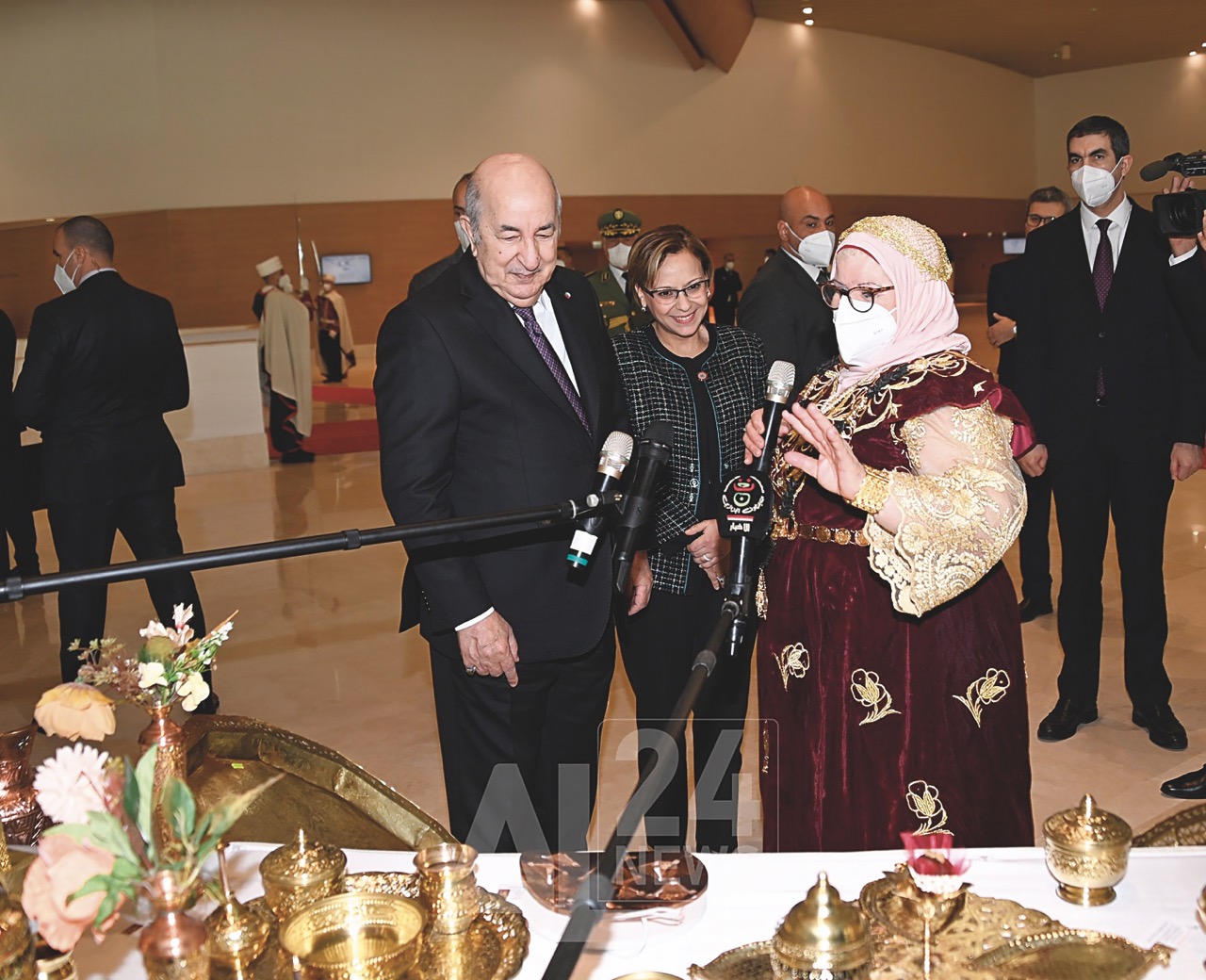
Algerian President Abdelmadjid Tebboune stated that it was imperative to “develop and protect Algerian heritage by classifying it as intangible cultural heritage safeguarded under” UNESCO. This is because, according to him, it is vulnerable “to theft and attempts at appropriation.”On X, this website, which bills itself as a global atlas of traditional dishes, local ingredients, and authentic restaurants, founded by Croatian journalist and entrepreneur Matija Babić, has over 120,000 subscribers.“There is no confirmation, but this site is neither a media outlet nor a recognized food critic; rather, it is a company that, through its narrative of culinary rankings, is pushing for the appropriation of Moroccan dishes under the Algerian flag,”notes the strategic intelligence trainer.
The platform, founded by Croatian journalist and entrepreneur Matija Babić and described as a global atlas of traditional dishes and local ingredients, has more than 120,000 followers on X (update: more than 150.000 at the meantime (24 June, 2026)). “There is no confirmation, but this site is neither a media outlet nor a recognized food critic; rather, it is a company that, through its narrative of culinary rankings, is pushing for the appropriation of Moroccan dishes under the Algerian flag” he notes.
Even if this theory remains unproven, he warns that Morocco must “be careful in the long term that this does not lead to the theft of Morocco’s cultural heritage”
Alongside this lobbying, both countries are reportedly mobilizing their cyber forces to defend their respective cultural heritages.“That’s all part of the game. Every country in the world that engages in propaganda does this. There are people (government officials) who are paid to constantly tweet and post on Facebook, either to project a positive image of their country or to attack the adversary” notes researcher Rachid Achachi.
He also believes it would not be surprising if cyber soldiers on both sides (Morocco and Algeria) were exacerbating tensions “who are only making matters worse”. “Perhaps there are even foreign agents from other countries who have an interest in maintaining these rivalries and tensions that add fuel to the fire. These are what we call trolls and bots” he says.
A War Between Diasporas
But what about those genuinely committed to the cause, such as members of the Moorish movement? According to the geopolitical analyst Achachi, who has been observing these “heated exchanges” for years, many of the people driving them do not live in Morocco but in France, Belgium, and elsewhere.
“Some of the Moroccan youth in Europe have taken refuge in a form of exaggerated patriotism, as if to compensate for the rejection they feel in Europe” says Rachid Achachi
“They are Moroccans of the world, not Moroccans of Morocco. And most of them don’t even speak the Moroccan dialect; they know just a few rough words. And when you dig a little deeper, you find that the emergence of this movement coincides with the rise of a certain far-right movement and a certain form of racism in Europe” he explains.
As a result, some young Moroccans in Europe “have taken refuge in a form of exaggerated patriotism, as if to compensate for the rejection they feel in Europe” he believes.
Researcher Rachid Achachi sees this as “away of reconstructing their identity so that they no longer feel like outsiders in a community. And the fact that they cling to the superficial aspects of culture, that is, zellige, tajine, caftans, and so on, is a symptom of their profound ignorance of Moroccan identity and history”
“A zléigi is someone who would rather fight to the death for zellige than say a single word about rising prices, unemployment, or journalists in prison…”
He also believes that these young people “have only these artifacts and totems to identify with Moroccan identity.” By contrast, he continues, when you talk to Moroccans about Morocco, the fact that Algeria seeks to “ strip us of our cultural identity” bothers them a little, but they do not “feel it with the same intensity, the same rage”
In Morocco, he further notes, there’s even a term that’s been coined to describe these “Moorish” people: the “zléigias”. “A zléigi is someone who would rather fight to the death over zellige tiles than say a single word about rising prices, unemployment, or journalists in prison…” explains the geopolitical analyst and columnist.
So none of that matters to them. And on the Algerian side? “It’s the same thing. There are probably Algerians in Algeria who have other fish to fry, like unemployment, socioeconomic problems, and so on” he emphasizes.
In his view, there is certainly a Moroccan-Algerian battle on social media, but it’s mainly being waged from abroad. Conversely, within North Africa, the battle is “real” but it’s taking place primarily between states.
Battle at UNESCO
One of the institutional confrontation between the two countries occurred on December of 2024 at UNESCO in Paraguay during discussions surrounding the inscription of eastern Algeria’s ceremonial women’s costume on Algeria’s list of intangible cultural heritage.
More specifically, the Algerian nomination focused on the traditional skills associated with the making and adornment of the gandoura and the melehfa. Yet, a few months earlier, Algeria had included in its nomination file a photo of the Moroccan Ntaâ caftan, which originates from Fez.
Ahmed Skounti, an anthropologist, professor at the National Institute of Archaeology and Heritage Sciences (INSAP) in Rabat, and a consultant to UNESCO, had reviewed the nomination file. “I read it and sent my comments to Morocco’s permanent delegation to UNESCO. Of the ten photos that were supposed to accompany the dossier, the Algerians used one featuring the caftan. It was this photo in particular that Morocco contested. But the application itself makes no mention whatsoever of the caftan” he notes.
Morocco had, in fact, lodged an official protest as soon as it became aware of this. On December 3, before the members of UNESCO’s evaluation body, Permanent Representative Ambassador Samir Addahre emphasized that this photo had been included in the Algerian file inan “inexplicable and malicious manner” and “out of context with the element submitted for inscription”
He also regretted that the Moroccan caftan, which is itself undergoing the 2025 inscription process, had become “unfortunately the target of attempts at appropriation, just like other elements of Morocco’s living heritage”
The diplomat did not stop there. This attempt “likely stems from a need to compensate for a lack of historical depth, which has led the nominating state to invent and take liberties with factual heritage realities”
Morocco’s protest was upheld, while Algeria’s nomination was accepted without the contested image. The following day, the Ministry of Culture, headed by Mohamed Mehdi Bensaid, announced that Morocco had succeeded in “thwarting a new attempt by Algeria to illegally appropriate Moroccan intangible cultural heritage”
According to the ministry, this represented “a first in UNESCO’s history” made possible by the presentation of “solid evidence” in coordination with Morocco’s Permanent Delegation.
Morocco currently has 15 elements inscribed on UNESCO’s List of Intangible Cultural Heritage, including malhoun, tbourida, argan-related knowledge and practices, and Gnawa culture.
“When countries get along well, it’s better to submit joint nominations; that is the very spirit of the UNESCO Convention, as was the case with couscous, which was inscribed in 2020”
These elements also include joint nominations submitted with other countries, as is the case for the knowledge, skills, and practices related to the production and consumption of couscous, inscribed alongside Algeria, Tunisia, and Mauritania. The same applies to falconry, henna, and Arabic calligraphy.
“When countries get along well, it’s better to submit joint nominations, that’s the very spirit of the UNESCO Convention, as was the case with couscous, inscribed in 2020. Fortunately, this was done before the crisis (between the two countries, ed.). It was a time when there were still avenues for dialogue and consultation” laments Ahmed Skounti.
A universal issue?
The battle over cultural appropriation is not limited to Morocco and Algeria. Other countries are also disputing the ownership of similar elements of their cultural heritage, such as Turkey and Greece, Azerbaijan and Armenia, and the two Koreas.
Despite UNESCO recognition, protecting heritage remains difficult. For Ahmed Skounti, a consultant to this UN agency, all matters related to cultural appropriation should be addressed within a different framework.
“In any case, UNESCO conventions do not provide legal protection. They offer a kind of recognition that this heritage exists in a given country, but nothing prevents it from existing, or having existed in the past, in another country” states the anthropologist.
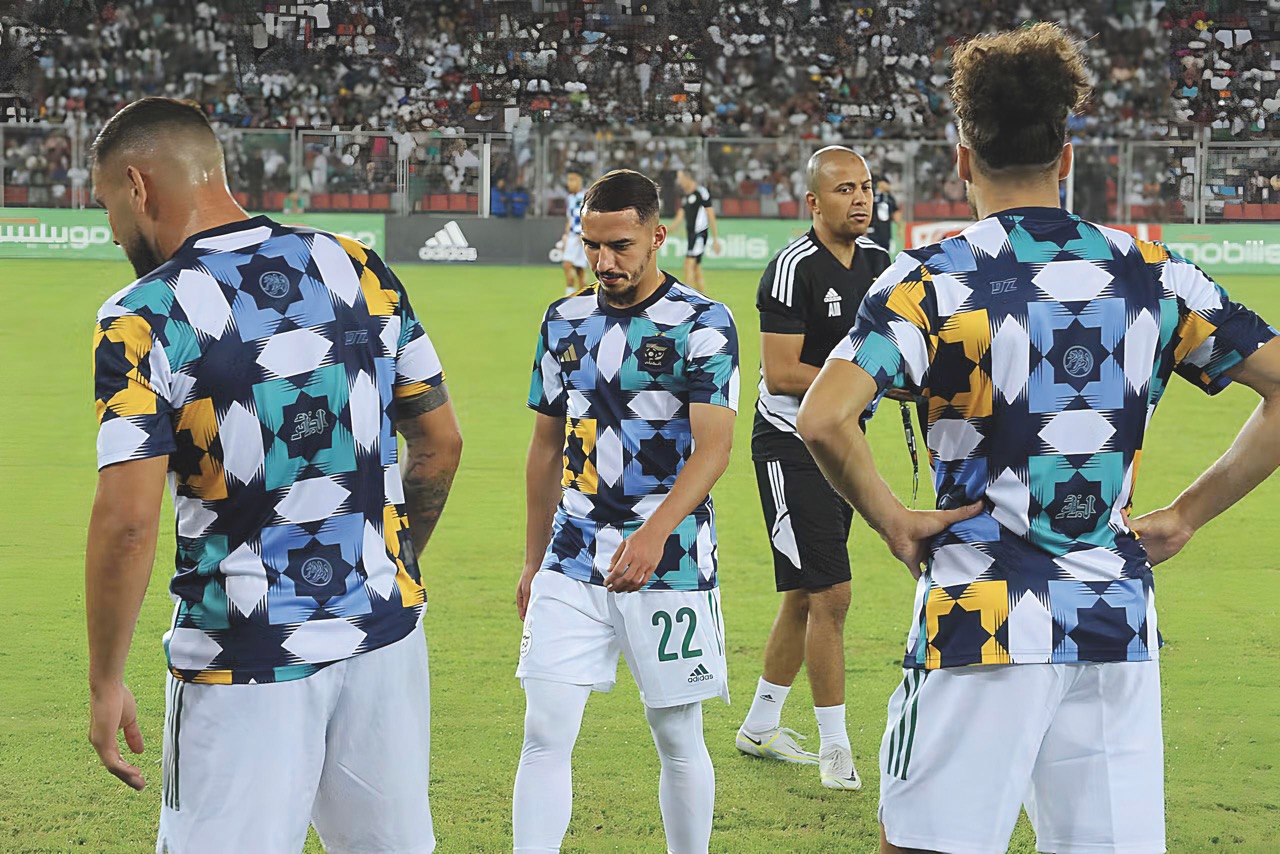
In his view, such issues should instead fall under the World Intellectual Property Organization (WIPO). For his part, Rachid Achachi criticizes the Ministry of Culture, and the government more broadly, for failing to act proactively.“Instead of waiting for Algeria to challenge us over the zellige they used for their soccer jerseys, let’s submit applications to UNESCO for all of our heritage” he laments.
Morocco has nonetheless taken steps in recent years. In April 2024, Mohamed Mehdi Bensaid held a working session in Geneva with WIPO Director General Daren Tang to discuss the protection of Moroccan cultural heritage and way of life, including zellige.
In February of 2025, both houses of parliament adopted a law dedicated exclusively to safeguarding national heritage. According to Bensaid, the legislation is intended to counter “any attempt at usurpation and illegal appropriation” It also comes as Morocco prepares to host the 2030 FIFA World Cup and seeks to showcase the richness and authenticity of its heritage.
This is a“real step forward” says Nabil Mouline. According to the historian, the new legislation reflects a rising awareness of the importance of heritage as a pillar of Moroccan society. This “shared foundation of identity transcends divisions and strengthens national cohesion” But “as ambitious as it may be, this law has value only if it is translated into action” warns the political scientist.
He also warns that“without rigorous scientific research, accessible popular works, education, and intergenerational transmission, the law risks remaining a dead letter.”
[box template= »normal »]
UNESCO: A Lengthy Process
Morocco’s efforts are driven by what is at stake and by the lengthy nature of the inscription process. “In principle, the procedure itself, not counting the preparatory work at the national level, takes a year and a half for a decision to be made” explains Ahmed Skounti, a consultant with UNESCO.
Governed by the 2003 Convention for the Safeguarding of the Intangible Cultural Heritage, the process requires that the element be recognized as part of a community’s living heritage. Extensive documentation, including videos, testimonies, and evidence of transmission, must be compiled.
Each nominating State must complete a UNESCO form demonstrating that the element remains alive, is transmitted across generations, and holds significance for the community concerned. Safeguarding measures and letters of consent are also required. Applications must be submitted by March 31 each year.
Next comes the review phase, during which the application is examined by an evaluation body composed of experts. The final decision is made during an annual session by the Intergovernmental Committee for the Safeguarding of the Intangible Cultural Heritage, which decides whether or not to inscribe the element on the list.
The inscription of an element on the UNESCO list is particularly useful “for soft power, securing resources for cultural diplomacy, and enhancing international visibility, and can have positive repercussions on the country’s policy” explains Ahmed Skounti, although, in his view, the “main motivation should be the safeguarding of heritage” [/box]
[box template= »normal »]
The Battle on Social Media: What Are Bots and Trolls?
In internet jargon, a troll is someone who deliberately provokes and fuels conflict online through inflammatory or offensive comments. Their aim is often to trigger emotional reactions or derail discussions.
Their goal is often to elicit emotional reactions or to derail a discussion from its original topic. This is the case, for example, when someone posts hateful comments under an article to anger readers.
A bot, short for robot, is an automated computer program capable of performing tasks online. While some are useful, others are malicious, such as social bots that spread misinformation or artificially amplify certain opinions. For example, an automated Twitter account that reposts political messages in large quantities to influence public opinion.
“Bots are algorithmic computers that produce tweets in abundance, but with an algorithm that steers them in a patriotic direction. And then there are trolls—people whose sole purpose is to stir up hatred in debates and discussions”explains researcher Rachid Achachi.[/box]
Written in French by Ghita Ismaili, edited in English by Amina Kadiri


