

“Some people believe that women are made only to get married and have children. Do you share this opinion?” It was this sentence that ignited the debate. The topic appeared among several essay options offered to first-year baccalaureate students during the regional French exam held on June 1. Candidates were asked to write a ten-point essay defending their position with arguments and examples.
A few hours after the exam, the question began circulating on social media, provoking confusion, criticism, and outrage. For many critics, the issue lies less in the debate itself than in the wording of the prompt, which they see as trivializing a traditional and restrictive view of women’s role in Moroccan society today.
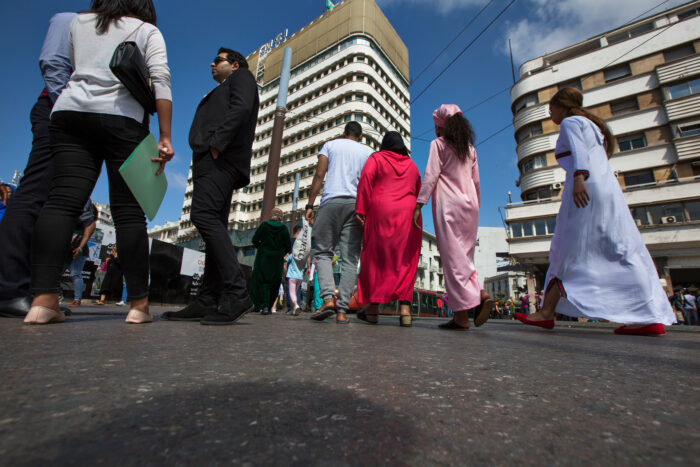
At the Ministry of National Education, however, officials insist on placing the question in context. According to a ministry source contacted by TelQuel, exam topics are prepared by le Centre national des examens et des concours (CNEE), the body responsible for designing and organizing national and regional exams. The committees involved include educational inspectors, teachers, and ministry officials.
“The question (regarding the controversial French baccalaureate topic, ed.) was intended to prompt students to express their perception of women’s place in society, their independence, their participation in the workforce, and the roles assigned to them”
“For this exam, candidates are offered several essay topics, and they then choose the one on which they wish to be evaluated,” the source explains.
According to the ministry, the prompt was designed to stimulate reflection and argumentation. “It is above all an open-ended question aimed at encouraging students to express their views on women’s place in society and defend their opinions, particularly regarding women’s independence, their participation in the workforce, and the social roles assigned to them,” the same source adds.
A question “from another era”
Civil society actors, however, see the matter very differently. On June 3, an open letter signed by dozens of figures from the nonprofit, media, political, and cultural spheres was made public. Among the signatories were former minister Nouzha Skalli, sociologist Soumaya Naamane Guessous, Parti du Progrès et du Socialisme (PPS) Secretary General Nabil Benabdallah, as well as several feminist organizations.
The text denounces what it describes as “a question from another era suggesting that women are made solely to marry and bear children.” Its authors argue that the wording of a national exam is never neutral and inevitably reflects a particular worldview. In their view, presenting such a statement as a legitimate topic for debate risks normalizing a patriarchal mindset that has historically excluded women from education, political decision-making, and public life.
“The question tends to reinforce a patriarchal view of society as well as sexist stereotypes. It is a question that has now been rendered obsolete by reality”
The signatories are therefore calling for greater vigilance in the drafting of exam questions, along with systematic reviews through the lens of gender equality.
Among them is Najat Razi, a feminist activist and member of l’Association Marocaine pour les Droits des Femmes (AMDF). For her, the controversy is not about whether such issues can be debated, but about the framing of the question itself. “We believe this wording reinforces a patriarchal vision of society and perpetuates sexist stereotypes. Reality itself has already made this question obsolete,” she told TelQuel.
Razi points out that Moroccan women are now present in every sphere of economic, political, and social life. Simply posing the question, she argues, grants legitimacy to a restrictive conception of women’s role. “Our objection is not to debate itself. It is perfectly legitimate to discuss social roles or equality. What troubles us is the way the question is framed,” she emphasizes.
For Razi, vigilance remains essential precisely because advances in gender equality cannot be taken for granted. In her view, certain public discourses continue to fuel forms of discrimination and violence against women.
School as a vehicle for equality
La Coalition Marocaine pour l’Éducation pour Tous (CMEPT) also weighed in on the controversy. In a statement released on June 5, the organization said it was “dismayed” by what it sees as evidence of the persistence of conservative currents opposed to progress on equality issues. Speaking to TelQuel, CMEPT president Khadija Yamlahi placed the controversy within the broader debate over the modernization of Morocco’s education system.
“Schools and universities must instill the principles of gender equality as well as human rights values”
According to her, the profound technological, social, and economic changes observed on a global scale require a overhaul of teaching and assessment methods. However, she believes that the reforms undertaken so far have not sufficiently transformed the fundamental aspects of the system. “Schools and universities must instill the principles of gender equality and human rights values,” she asserts.
For the association leader, exam topics should encourage students to develop critical thinking, analysis, and reasoning skills rather than reproduce traditional representations of male and female roles.“This question gives the impression of a step backward. It feels like taking one step forward only to take two steps back,” she says.
Education expert Abdenasser Naji, president of l’Association Marocaine pour l’Amélioration de la Qualité de l’Enseignement (AMAQUEN), argues that the controversy deserves a more nuanced reading. According to him, the debate reflects two legitimate concerns. On one hand, he says, human rights advocates are justified in fearing that “the binary framing of the exam reinforces latent patriarchal patterns, preventing students from distinguishing between imposed motherhood (understood as an alienating biological determinism) and chosen motherhood, conceived as a role of intellectual leadership.”
On the other hand, he argues that “certain contemporary neo-feminist currents” might also view the question as an opportunity “to move the condition of women beyond traditionalist debates and elevate it to the level of political and sovereign choice.”
Naji does not, however, excuse the wording itself. In his view, the issue lies not in the topic being discussed, but in the way it is formulated. “The wording must move away from rigid dichotomies and instead focus on the concepts of agency and intellectual empowerment,” he argues.
Social guardianship
What matters, he says, is not where a woman exercises her role, but “the nature of her presence: whether she acts through free choice, grounded cultural awareness, and intellectual tools that allow her to shape her own path, whether that means leading a company or raising a generation at home, or whether she remains subject to coercion and social guardianship.”
The controversy comes at a time when Morocco has been engaged for months in a broad national debate over reforming the Family Code. Although the broad outlines of the future Moudawana have already been presented, the final text has yet to be published. Questions surrounding marriage, family structures, parental responsibilities, and gender equality therefore remain central to public debate.
For its part, the Ministry of National Education has not officially responded to the criticism surrounding the exam topic. In a press release summarizing this year’s exam session, the ministry of Mohammed Saad Berrada praised the organization of the exams, progress in digitization, anti-fraud measures, and the mobilization of educational stakeholders. The controversy itself, however, was not mentioned. This year, a total of 570,696 students sat for the unified regional exam for the first year of the baccalaureate.
Written in French by Ghita Ismaili, edited in English by Amina Kadiri


