

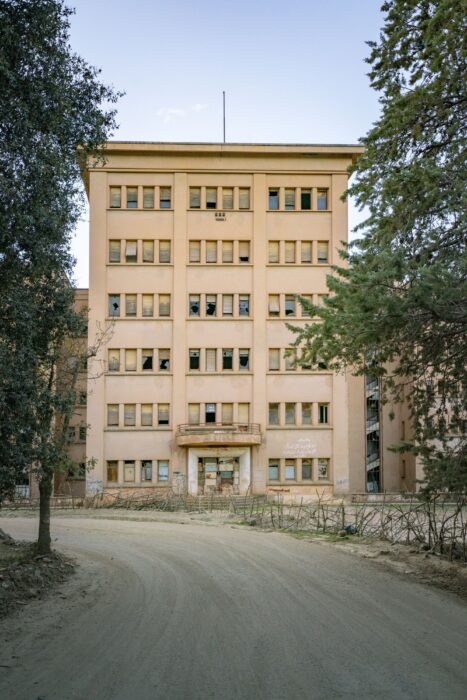
Like a Sleeping Beauty frozen in time, Bensmim seems today to be waiting for a buyer capable of breaking the spell and awakening it from its long slumber. Opened in 1955 halfway between Azrou and Ifrane, the sanatorium was long the cornerstone of the fight against tuberculosis in Morocco.
This infectious disease is transmitted by Koch’s bacillus, which most often attacks the lungs. In the kingdom, the history of this disease is closely linked to that of colonization. Due to a lack of data, the prevalence of this disease prior to 1912 is not well understood, but it is widely accepted that the spread of tuberculosis closely followed the progression of European immigration into the country.
Much like the emergence of new variants during the COVID-19 pandemic, colonization is believed to have facilitated the spread of previously unknown strains of the bacillus among a population that had previously been exposed to it only rarely and was therefore less resistant. Mortality from the disease skyrocketed from the start of the protectorate and became a major public health issue—which it remains today, with 35,000 cases detected in 2023 throughout Morocco.
Madame Lyautey’s Dream
The idea of building a sanatorium in Morocco dates back to the very beginning of the Protectorate and is attributed to Madame Lyautey. Born Inès de Bourgoing (1862–1953), this trained nurse reportedly suggested, during a trip to Azrou in 1918, that the region’s excellent climate be harnessed to build a facility there to treat tuberculosis patients. The idea was appealing but remained unacted upon for a long time, mainly due to the high cost of transporting construction materials to this remote region.
It was not until 1943 that the Hélios Sanatorium, the first facility of its kind in Morocco, finally opened within the walls of a former hotel in Azrou. The 40 beds available to Dr. Bonjean quickly proved insufficient to cope with the resurgence of the disease after World War II. In 1945, a budget was approved for the construction, in Bensmim, of a larger building that would accommodate both Moroccan and French patients. The project was entrusted to the architects Sage, Roussin, and Secret.
An eight-story ocean liner
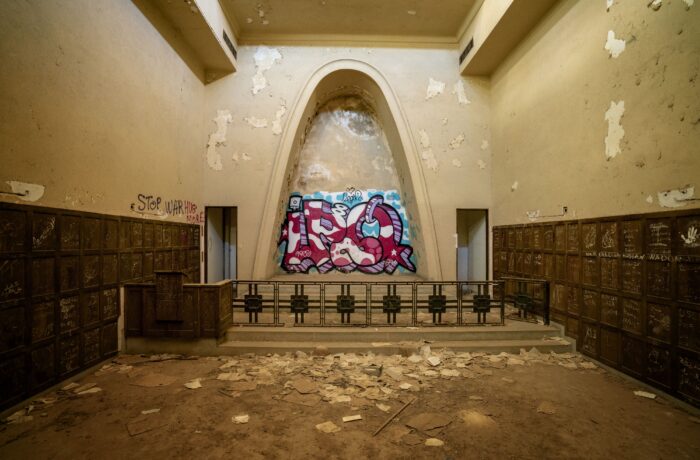
Although construction took ten years, from 1945 to 1955, the result lived up to expectations. The sanatorium was a veritable small town: a sort of 8-story ocean liner, 185 meters long, with a total capacity of 370 beds. In addition to modern medical facilities, it was also equipped with various recreational spaces: libraries, a games room, a radio studio, and a large auditorium that occupied the central space of the building’s south facade.
Dominated by a massive floor-to-ceiling window, the auditorium seems to be the heart of the building—as if the entire sanatorium had been designed around it. To ensure guests could attend performances without any risk of infection, two boxes were located at the rear and on the left side. Finally, to accommodate religious diversity, there was also a chapel, a mosque, and a synagogue. On a wall on the first floor, a motto attributed to Pasteur, in French and Arabic, reads:“I do not ask you what your race, nationality, or religion is, but what your suffering is.”
From the moment it opened, the sanatorium became the spearhead of the fight against tuberculosis in Morocco—and remained a national symbol, even after independence. A stamp bearing its image was even issued in 1958. But as the years passed and advances in antibiotic treatments drove the disease back, the costs of maintaining such a building became increasingly difficult to justify.
1975: The Closure of a National Symbol
In 1975, after 20 years of loyal service, the decision was finally made to close the sanatorium, which then gradually faded into obscurity. Abandoned and neglected, the building was stripped of its furniture and equipment. Only the seats in the movie theater escaped the looters’ greed. A strange oversight, unless it was out of deference to the many ghosts said to still haunt the sanatorium.
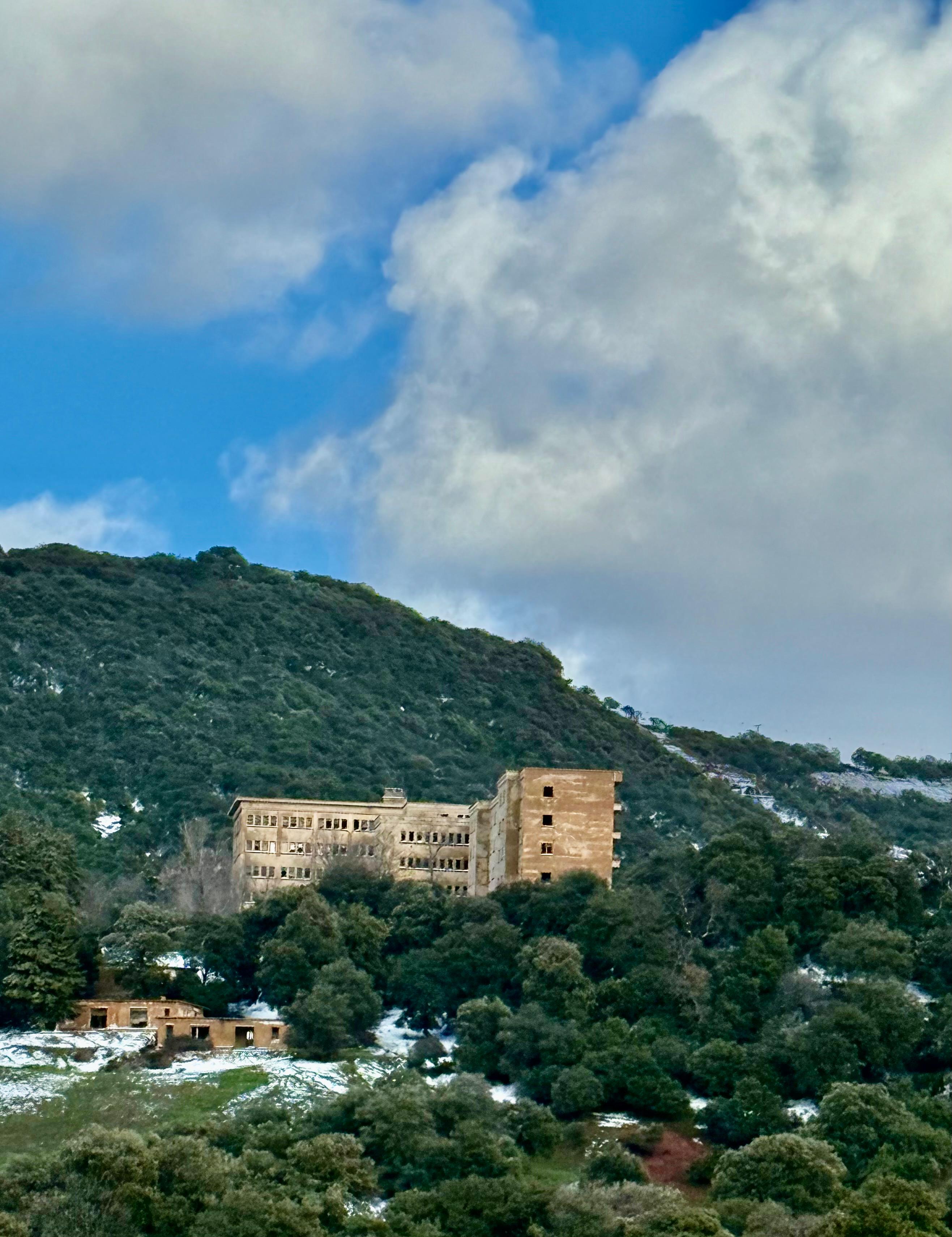
Fifty years of abandonment have left their mark, but the building remains structurally sound. Given its condition and exceptional location, it would be a shame to let such a heritage site be lost. Moreover, the site and the region are perfectly suited for a hotel, suggesting a promising renovation project. In 2016, its renovation was even announced, a budget allocated, and a call for bids issued… but the project never came to fruition. What happened? It remains a mystery.
While waiting for her Prince Charming, our Sleeping Beauty receives regular visits from urban exploration enthusiasts—known as “urbexers”—from Morocco and beyond. Although we are still far from the standards of this discipline as practiced in the former Eastern European countries, exploring the sanatorium remains a unique experience. Few Moroccan sites can rival Bensmim in terms of its location, size, and state of preservation.
The corridors seem endless, the nooks and crannies multiply endlessly; it is easy to get lost here, to be swept up by the unique atmosphere of this former hospital and to imagine the lives, hopes, and sufferings of the patients. Every gust of wind that rushes through the building, every door that slams in the silence sends a shiver down the visitor’s spine.
But Bensmim deserves more than to be merely a playground for urban exploration enthusiasts. Rooted in the history and landscape of Azrou, the former sanatorium is a sleeping giant—a heritage site that deserves more than just a glance. It deserves to be awakened.
Written in French by François Beaurain; edited in English by AngloMedia Group.


