

Today, the aeronautics sector employs nearly 26,000 people—operators, wire technicians, engineers… Every morning, a large number of them pass through the gates of MidParc. Just twenty kilometers from Casablanca and a stone’s throw from Mohammed V Airport, this industrial zone has become the place where a future written in capital letters may be taking shape.
In 2005, when McKinsey released its report on Morocco’s future “global trades,” aeronautics was not included. Too complex. Not enough jobs
Here, parts that will fly at 10,000 meters altitude are manufactured: Safran engines, Boeing wiring, or components for Airbus.
Yet in 2005, when McKinsey consultants delivered their report on Morocco’s future “global trades,” aeronautics was not among them. Too complex. Not enough jobs. No chance. How did this industry, deemed impossible for the country, become one of the kingdom’s technological showcases?
Morocco has managed to establish itself, in twenty years, in one of the most closed industrial sectors in the world. Through discreet battles, relentless lobbying, and technological gambles. A look back at its ascent.
📑 Sommaire : https://t.co/KxYqIz8OWz
🛎 Abonnement :… pic.twitter.com/Lqy7ovFuR4— TelQuel (@TelQuelOfficiel) November 24, 2025

The forgotten genesis
The story begins during the reign of Hassan II. Or rather, at its twilight. In the spring of 1999, the leaders of Royal Air Maroc and a handful of executives from SNECMA, the future Safran, lavishly inaugurated the fruit of their first collaboration.
Their joint venture, SMES (for Snecma Morocco Services), had just set up at Mohammed V Airport; the co-enterprise was tasked in particular with ensuring maintenance of CFM56 engines. These remain to this day among the most widespread in global aviation: they can be found notably on Boeing 737 aircraft.
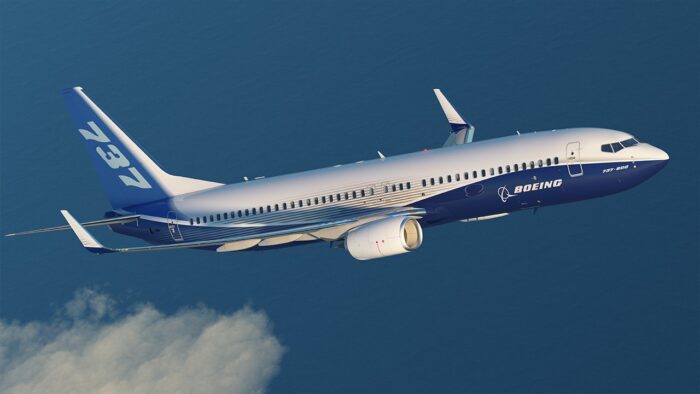
The project is modest; only a limited number of engines could at the time pass through the hands of SMES experts. But the structure placed Morocco on the map of global aeronautics; it was the only one of its kind on the African continent.
“We sensed there was potential, but no one imagined what would follow”
“We had to start somewhere,” a source who took part in the negotiations tells us. “We sensed there was potential, but no one imagined what would follow,” our source continues.
The impression would be confirmed in 2001. In Seattle, on the sidelines of a summit dedicated to aeronautics, RAM officials decided to test the golf clubs of an American green with senior Boeing executives. Not for the pleasure of a few swings, but to breathe life into the embryonic aviation ecosystem created two years earlier. The leaders of the national airline had a clear objective in mind.
Legend has it that after a few rounds of golf, and a reminder of the long collaboration between RAM and Boeing, a deal was sealed
A few months earlier, the Malaysian government, after intense negotiations with Boeing, which supplies the aircraft for Malaysia Airlines, had succeeded in obtaining the installation of a Boeing component factory on its territory. And Morocco, through RAM, fully intended to take inspiration from this experience.
Legend has it that after a few holes, and a reminder of the long collaboration between RAM and Boeing, a deal was sealed. The leaders of the national airline and the American manufacturer agreed on the establishment of a Moroccan joint venture specializing in aircraft electrical harnesses.
A third player well known in Morocco joined the capital of this joint venture: Labinal, a Safran subsidiary specializing in electrical systems. The machine was set in motion; what remained was to ensure its emergence.
The battle to integrate the Emergence Plan
In the mid-2000s, Morocco undertook a fundamental shift. With the first Emergence Plan of 2005, the country broke with the idea that development depends solely on macroeconomic balances. For the first time since the 1980s, the state sought to rely on an explicit industrial strategy.
The approach of the McKinsey teams, invited to design the plan, was rigorous: one hundred fifteen industrial branches were analyzed in detail, sometimes grouped into coherent families. Their potential was assessed not only in terms of competitiveness, but also logistics, technological complexity, energy intensity, availability of raw materials, and geostrategic trends.
The teams also analyzed offshoring dynamics within a radius of 400, 800, and 1500 kilometers around Tangier. The goal was to understand what might come from Southern Europe, migrate toward Turkey, shift to Eastern Europe, or move to Asia. For each sector, Morocco’s chances were evaluated objectively and comparatively.
In the first version of the 2005 report, aeronautics did not immediately appear as a priority, as it was not considered a possible source of “Morocco’s global trades.” The main hesitation was employment volume: projections did not exceed 3,000 positions, far too few for a country seeking large reservoirs of jobs.
Other sectors were considered more relevant: textiles, still a dominant giant; agribusiness; automotive; and, in a more political sense, crafts
Other sectors were considered more relevant: textiles, still a dominant giant; agribusiness; automotive; and, in a more political sense, crafts, vigorously promoted by its supervising minister Adil Douiri.
At the time a rising star of the Istiqlal Party, he wanted to make it a symbolic sector, one that generates jobs and carries value and cultural content. This choice, sometimes described as iconoclastic, illustrates the highly political nature of the trade-offs in the first Emergence Plan.
An additional milestone was laid in 2004. That year, King Mohammed VI inaugurated the Matis Aerospace factory, a visit heavy with symbolism in a sector still marginal. Appointed Minister of Industry a few weeks later, Salaheddine Mezouar kept that image in mind.
He traveled a few months later to France to discover Safran’s facilities, then visited Matis in Morocco, where he observed firsthand the organization, quality, and above all the industrial discipline of the Moroccan teams. This trip convinced him that aeronautics deserved its place in the national strategy.
According to many observers, it is Hamid Benbrahim Andaloussi—former commercial director of RAM—to whom credit is due for Salaheddine Mezouar’s shift toward aeronautics
Salaheddine Mezouar was strongly supported by discreet but persistent lobbying. According to many observers, it is Hamid Benbrahim Andaloussi—former commercial director of RAM—who is credited with driving Mezouar’s shift toward aeronautics.
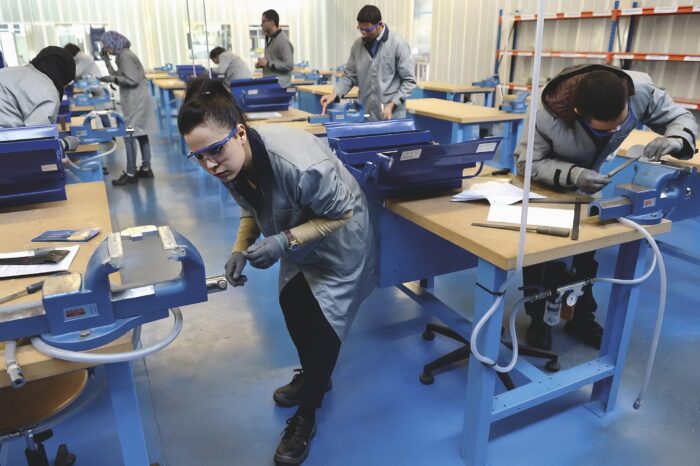
With the Minister of Industry overseeing the Emergence Plan, Salaheddine Mezouar, he argued that Morocco already had the beginnings of an ecosystem thanks to Matis, RAM’s longstanding maintenance operations, and the long-established relationships with Safran. Hamid Benbrahim Andaloussi also emphasized the importance of training: a system capable of producing skills that meet aeronautical standards was essential.
The idea gradually took hold: without dedicated training, there can be no sustainable aeronautics industry
He was the one who carried the project for the first public–private training partnership in this industry: the Institute of Aeronautics Professions (IMA), which would later become one of the keys to Morocco’s credibility.
Hamid Benbrahim Andaloussi’s approach aligned with a political intuition beginning to emerge: if Morocco wanted to attract technological industries, it had to demonstrate that it was capable of training operators, technicians, wire specialists, fitters, and engineers to international standards. The idea gradually took hold: without dedicated training, there can be no sustainable aeronautics industry.
The choice of aeronautics did not come without resistance. The McKinsey consultants tasked with supporting the structuring of the plan did not believe in the sector’s potential
The choice of aeronautics did not come without resistance. The McKinsey consultants tasked with supporting the structuring of the plan did not believe in the sector’s potential. Several actors recall being told at the time that aeronautics “would never become a global trade” because of the technological complexity of its supply chain.
According to a specialist in the sector, the first debriefing meeting even caused astonishment, so clearly did the assessment rule out the industry. But the political and industrial choice eventually prevailed: aeronautics ultimately joined the list of Morocco’s global trades.
Training and infrastructure: the two structuring breakthroughs
Ahmed Reda Chami became Minister of Industry in 2007. He took up the Emergence Plan and consolidated the mechanisms needed to support aeronautics. Two structuring breakthroughs then occurred. The first concerned training.
On February 13, 2009, a partnership agreement was signed in the presence of King Mohammed VI between the ministries of Employment, Industry, and Finance, and GIMAS (the Moroccan Aerospace Industries Group) for the creation of the Institute of Aeronautics Professions (IMA). The company IMA SA was created the same year. The first stone was laid in January 2010, and a delegated management agreement was signed in April of the same year to transfer management to IMA SA.
After two years of construction and preparation, the IMA was inaugurated by King Mohammed VI on May 6, 2011, with a total investment of 113.5 million dirhams. The OFPPT was excluded from management for unofficial reasons of “cultural incompatibility” with the requirements of the aeronautics industry.
More clearly, from the GIMAS perspective, the OFPPT was not considered capable of carrying a project of this scale. The IMA adopted a model inspired by the French Union of Metallurgy Professions, with a board of directors chosen to create emulation: one representative of the state, one representative of the private sector, and one representative of the Ministry of Vocational Training.
The second breakthrough concerned infrastructure. Around Mohammed V Airport, CDG and MedZ created an integrated industrial platform: MidParc, a free zone designed as a “turnkey” space. Large industrial players purchase their land directly; SMEs go through MidParc SA, which builds and rents out the facilities. Each factory is allocated land reserves for potential expansion.
Within a few years, more than 20% of the factories established chose to expand their footprint. The IMA and MidParc function like two pieces of the same whole: the former produces talent, the latter absorbs it. The former creates skill; the latter provides immediate industrial opportunities. An industry actor summarizes this logic: “The IMA is not a school. It’s a provider of talent.”
Goldsmithing and industrial consolidation
Appointed Minister of Industry in October 2013, Moulay Hafid Elalamy had to manage a sector then in full takeoff, and he intended to accelerate its altitude. The message to his teams was clear. A former official from the Ministry of Industry says that Moroccan aeronautics was presented as an “industrial goldsmithing,” where each part must be manufactured, inspected, and traced according to standards of almost artisanal precision.
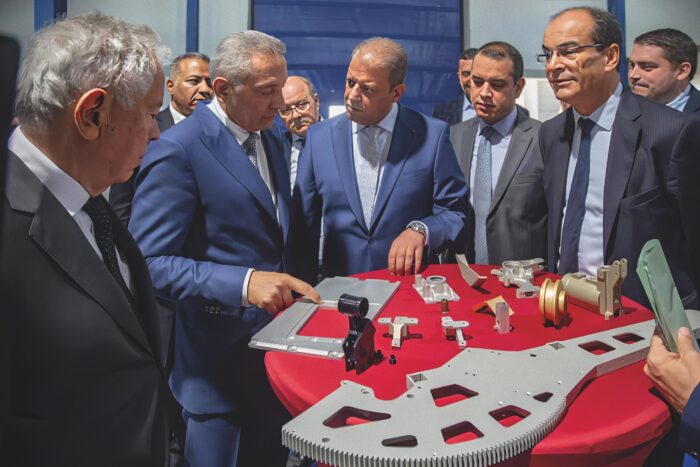
“The aerospace industry long operated like shipbuilding: five or ten aircraft were manufactured per month. Today, fifty or sixty must be produced. This ramp-up is pushing aircraft manufacturers to look for ‘best cost countries’ capable of offering quality, reliability, logistical connectivity, and optimized costs,” he tells us.
Morocco was beginning to attract the attention of major manufacturers. It had trained talent, a connected logistical platform, rare political stability, and an ecosystem capable of delivering “zero defect” at a sustained pace.
The consolidation of the sector also involved occasionally unexpected episodes, revealing the maturity reached by the Moroccan industry. One of them concerns an aeronautics manufacturer, Figac Aero, whose investment decision briefly pitted Morocco against Poland, where the company, through its parent group, already had a presence. On the Polish side, the goal was to expand an already existing factory, an advantage seemingly considerable compared to Morocco, which was proposing an entirely new installation. Poland could also highlight the experience of its teams, established processes, and acquired certifications…
The final decision was entrusted to the manager of the Polish factory—a company executive who knew perfectly the industrial needs of the group and who, logically, should have defended the extension of his own site. The American shareholders attempted to convince him to oppose Morocco’s selection: they argued that the Kingdom would not be suited to the company’s needs.
But the manager, wary of these claims, decided to verify them himself. He traveled discreetly to Morocco, visited Nouaceur, evaluated its infrastructures, examined the proximity to Mohammed V Airport, and inspected the already operational facilities of other engine manufacturers and equipment suppliers present on site.
His verdict surprised everyone. Not only were Morocco and Nouaceur perfectly suited, but the platform offered decisive advantages: immediate proximity to an international airport, an integrated free zone, the presence of an already mature aeronautics ecosystem, and above all a school, the IMA, which guaranteed a flow of talent trained to international standards.
Morocco prevailed. This episode illustrates the maturity reached by the Moroccan site, capable of convincing even the person who should have been its natural opponent. The victory is all the more remarkable as it runs counter to typical industrial logic: expanding an existing factory is normally the safest and least costly option.
The Pratt & Whitney Canada factory opened its doors in 2024 at MidParc. It marked a new milestone in the upgrading of the Moroccan aeronautics industry and confirmed that the kingdom is no longer merely an offshoring destination, but a strategic industrial partner.
A global industry?
In the end, has aeronautics become one of Morocco’s global industries? The question divides. Some observers still say no because of employment volume: the sector today directly employs 26,000 people.
Other industry actors say yes, because Morocco has become an indispensable contributor to global value chains; the companies established there are long-term; the quality of local production is recognized by aircraft manufacturers; and industrial players choose Morocco as a base for growth.
In twenty years, the sector has become one of the kingdom’s technological showcases
In twenty years, the sector has become one of the kingdom’s technological showcases. The inauguration on October 13, 2025, by Mohammed VI, of a Safran engine assembly line in Morocco (the first site outside France) is further proof of this. An industry official concludes on the kingdom’s place in the aeronautics landscape: “Morocco assembles engines and produces aeronautical structures. No one can seriously claim that it hasn’t become a global player.”
Written in French by Yassine Majdi and Salomé Krumenacher, edited in English by Eric Nielson


