

If folkloric tales are the pillars holding up a society, then Scheherazade and her Arabian Nights are the foundation of Islamic Civilization. Through music, the OPM has brought her stories back home.
It may have been a first.
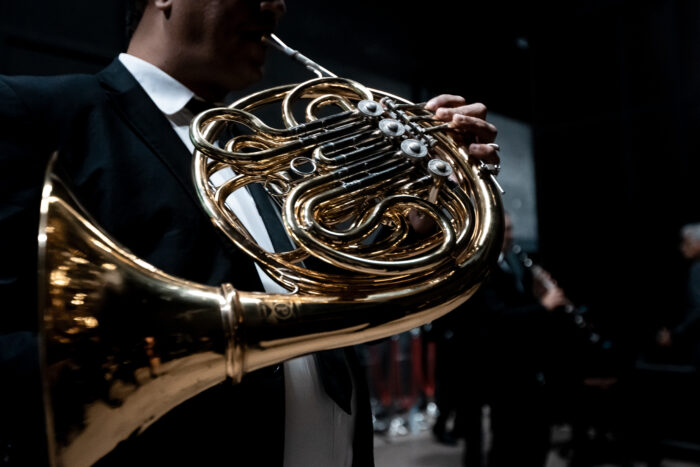
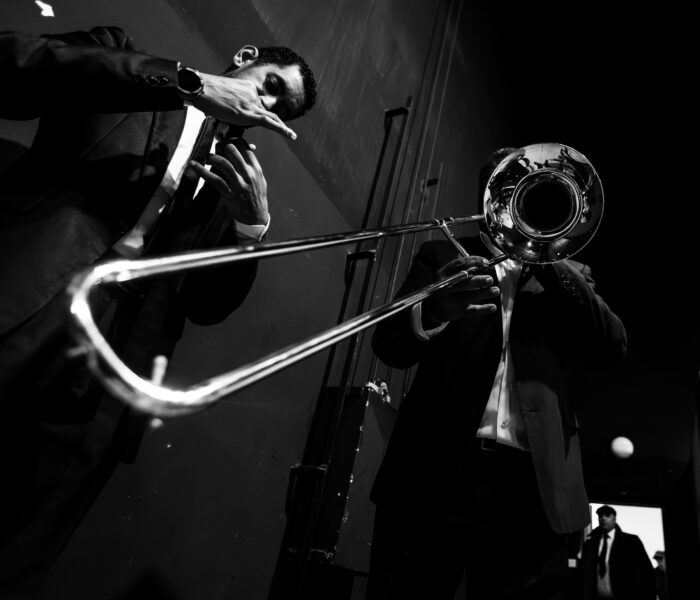
On Tuesday evening, Scheherazade by Nikolai Rimsky-Korsakov was presented by the Philharmonic Orchestra of Morocco at the Muhammad V Theatre in Rabat. The full-house audience witnessed a unique interpretation of this popular orchestral piece—not your typical orchestral performance, but a creative musical reinterpretation blending ancient storytelling and traditional instrumental interludes.
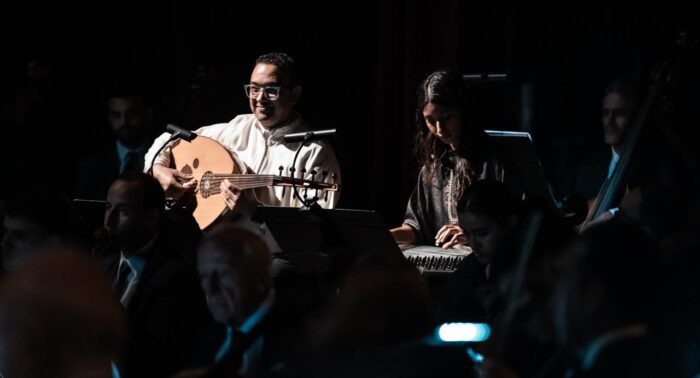
“Inspired by the oriental influences already present in the original score, this work has been enriched with a few notes of oud and qanun, to evoke our diverse musical styles and underscore the profoundly Moroccan dimension of this reinterpretation,” said concertmaster Farid Bensaïd, President and Founder of the Foundation Tenor for Culture. “This creation, which aims to remain true to the composer’s spirit, is the result of a long process undertaken by the teams at the Foundation Tenor for Culture and the Philharmonic Orchestra of Morocco.”
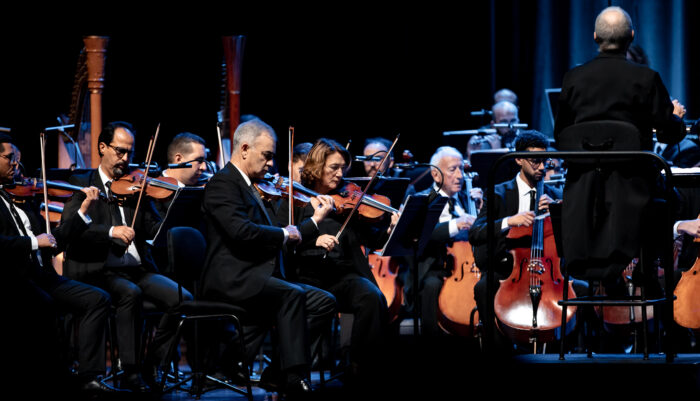
The interpretation featured Hiba Mekkaoui on the qanun and Driss Nigra on the oud—two traditional instruments central to music throughout the Islamic world. Both musicians improvised on themes from Rimsky-Korsakov’s original scores. One theme by Rimsky-Korsakov evokes the soothing voice of Scheherazade telling stories with a violin solo supported by harp. The qanun and oud gave the same serenity with a more oriental touch.
In Classical Arabic as deep and mysterious as the oceans on which Sinbad sailed, the melodious voices of Sakina Lafdaïli and Hayat Abou Ell Haja narrated brief tales that saved the life of a cunning and courageous young woman, Scheherazade.
Scheherazade was the lovely and virtuous daughter of the Vizier, who volunteered to marry the bloodthirsty Sultan Shahriyar. Betrayed by his wife, Shahriyar vowed never to trust a woman again. He married a virgin each night and instructed his Vizier to execute her the next morning. His kingdom was struck with terror. Her father didn’t want to kill his own daughter and tried to dissuade her. But Scheherazade had a plan.
On her wedding night, she told Shahriyar a captivating story and stopped before the end. He waited until the next night. And another night. Until three children and 1,001 nights later, the Sultan’s madness was cured and they lived happily ever after. Or so the myth goes.
 Rimsky-Korsakov was a Westerner, a Russian, yet his Scheherazade captured the beauty and significance of oriental tales that deserve to be remembered. Today, Muslim children know Grimm’s tales such as Hansel and Gretel, Cinderella, and Little Red Riding Hood. But Scheherazade’s stories—Ali Baba and the Forty Thieves, Aladdin and the Magic Lamp, and Sinbad the Sailor—are equally fascinating and perhaps even better bedtime stories.
From Morocco to Afghanistan to Indonesia, the stories of Scheherazade are still with us. If folkloric tales are the pillars holding up a society, then the story of Scheherazade and her Alfi Layla wa Layla, or Arabian Nights, are like the foundation of Islamic Civilization.
The OPM ended the concert by playing La Valse by Maurice Ravel—a modern turn on the traditional waltz using dark and sometimes discordant tones as it reaches dizzying heights. This upbeat finale showcased the talent within the OPM under the energetic direction of visiting Maestro Wolfgang Doerner.
There will be another performance in Casablanca on Friday (5 december) and a final performance in Tanger on Sunday 7 december .


