

Co-written by researchers Rida Lyammouri and Fadoua Ammari, the study by the Policy Center for the New South, published on June 13 and entitled « China and Russia address the Question of the Moroccan Sahara: Towards a Convergence of Strategic Interests » provides an in-depth analysis of the evolution of Beijing and Moscow’s respective positions on the Sahara issue.
According to the study, a dynamic of pragmatic rapprochement around Morocco is taking place, dictated less by ideological affinities than by economic, diplomatic and geopolitical considerations.
China, « a partner of choice »
In recent years, SinoMoroccan relations have gone from strength to strength. « King Mohammed VI made a state visit to Beijing in 2016, during which a SinoMoroccan ‘strategic partnership’ was established », recalls geopolitical expert Rida Lyammouri in a statement to TelQuel. While Beijing’s political stance on the Moroccan Sahara remains measured, its economic interests in Morocco continue to grow, « providing an incentive context for stability and conflict resolution. » China is therefore seeking to maintain a delicate balance between discreet support for political compromise and respect for its principles of non-interference.
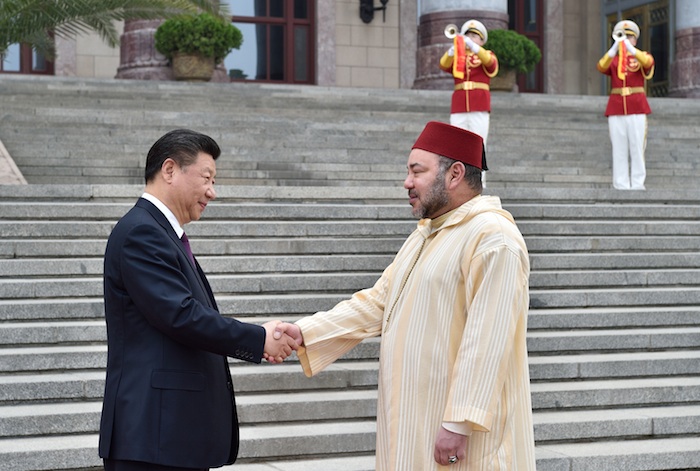
On the economic front, « China sees Morocco as a partner of choice for its strategy in Africa and the western Mediterranean », notes Lyammouri. In 2023, trade between Morocco and China reached a record level, nearing $8 billion, « consolidating China’s position as the Kingdom’s third-largest trading partner and first in Asia. »
« China is aware that a resolution of the Sahara conflict within the framework of autonomy under Moroccan sovereignty could contribute to regional stability and the security of their investments. »
« This dynamic is part of China’s wider strategy to integrate Morocco as a logistics and trade platform within the Belt and Road Initiative , taking advantage of the Kingdom’s free-trade agreements with European and American markets », according to Lyammouri.
For China, the stability of the Sahara issue is an economic and geopolitical imperative: « China is aware that a resolution of the conflict within the framework of autonomy under Moroccan sovereignty could contribute to regional stability and the security of their investments », emphasizes Lyammouri.
In multilateral forums, this pragmatism is reflected in votes in favor of UN resolutions that emphasize the need for compromise and realism, without explicitly recognizing Moroccan sovereignty – an ambiguity calculated to appease Algiers.
Moscow’s prevarications
On the Russian side, the same quest for balance is evident, albeit with different emphases. Indeed, « since 2016, the Russian position has continued to evolve subtly », according to Lyammouri. On the one hand, Russia remains a long-standing ally of Algeria and « maintains a balanced official line so as not to compromise this relationship », analyzes the expert. « On the other hand, it now values its ‘friendship’ with Morocco and has adjusted its behavior in the Security Council accordingly, » he adds.
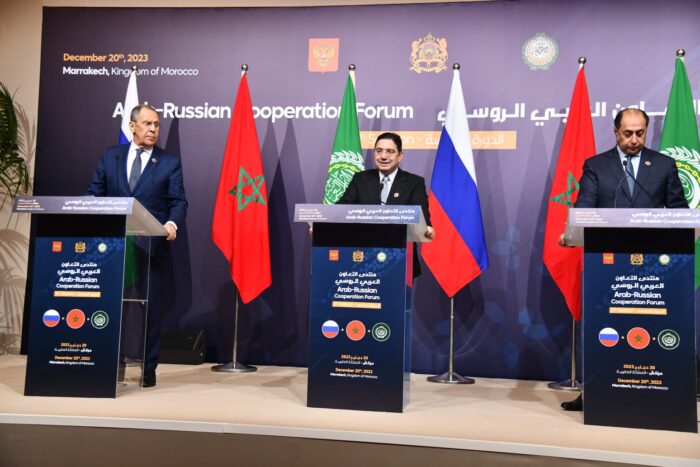
« As Russian Foreign Minister Sergei Lavrov noted in January 2025, Moscow wants to ‘help the Moroccans resolve the Sahara issue’ and is posing as a potential mediation partner, » Lyammouri recalls. In concrete terms, this new stance was reflected in a change of vote at the UN. This Russian abstention, used for example in the 2021 and 2023 resolutions renewing the UN Mission in the Sahara (MINURSO), reflects Russia’s desire « not to upset its new partnerships with Rabat while maintaining an understanding with Algiers. »
However, Moscow does not hesitate to express its disagreements diplomatically. In October 2023, Russia abstained on a US draft resolution extending MINURSO, and even denounced the text as « unscrupulous » for not incorporating Russian proposals.
In particular, Moscow regretted that the explicit reference to a referendum on self-determination had been diluted in favor of general terms such as « realism » and « compromise. » Despite these vehement reservations, « abstention – rather than a veto or a negative vote – enabled the resolution to be adopted, reflecting Russia’s desire not to compromise the ongoing UN process, while marking its reservations about the strategic orientation promoted by Washington, » explains Lyammouri.
Economic opportunities
Beyond the diplomatic game, Russia is also exploiting the economic opportunities offered by maintaining the status quo. The fishing industry is a perfect illustration of this logic. Indeed, after the European Union suspended the application of its fishing agreement with Morocco in this zone, Russia seized this opportunity « by consolidating its presence in Saharan waters and proceeding with an accelerated distribution of fishing quotas », notably in areas abandoned by European fleets following the suspension of their agreements. What’s more, « a Russian-Moroccan fishing agreement has even been extended until the end of 2024 to provide a framework for this increased cooperation. »
Revealingly, « neither the Polisario Front nor Algeria have officially protested against this agreement and the allocation of quotas to Russia, even though they usually vigorously denounce any exploitation of Saharan resources under Moroccan aegis, » said Lyammouri.
This silence is not insignificant. It is undoubtedly explained by « a desire not to offend Moscow It suggests, moreover , « a redefinition of the regional balance of power, where Russia appears to be in a position to benefit from a settlement of the Sahara question within the current framework rather than from any geopolitical upheaval. »
« Today, Russia maintains a discourse of balance, a proclaimed neutrality, a call for dialogue and a refusal of imposed solutions, but its actions demonstrate a gradual realignment of its interests. Bilateral cooperation is intensifying despite the absence of explicit Russian support for the Autonomy Plan, reflecting a shared determination not to let this dispute stand in the way of a broader strategic rapprochement, » summarizes Lyammouri.
Written in French by ElMehdi El Azhary; edited in English by AngloMedia Group.


