

Internationally, deployment of 5G technology is crystallizing the economic, technological and geopolitical tensions between East and West. At issue is fierce competition between suppliers of solutions and equipment, fueled by suspicions of interference or espionage against Chinese suppliers. Caught up in this turmoil, Moroccan operators will soon have to decide which technology solution provider to deploy, in anticipation of the fast-approaching sporting event.
Pending the launch of the call for tenders by the National Agency for Telecom Regulation (ANRT), which should be published shortly and will outline the project for 5G deployment in the Kingdom, only Orange has revealed its intention to team up with Swedish supplier Ericsson to equip itself with 5G technology.
For their part, the other two operators (Maroc Telecom and Inwi) announced on March 27 the signing of a strategic partnership for the deployment of 5G technology in Morocco. This involves an investment of 4.4 billion dirhams over the first three years, aimed at pooling the two operators’ passive telecoms infrastructures through two 50-50%-owned joint ventures.
These are « FiberCo », dedicated to the development and operation of fiber-optic infrastructures, and « TowerCo », whose mission is to accelerate the rollout of the 5G network through the construction of new towers and the renovation of existing ones. In concrete terms, the aim is to build 2,000 towers within 3 years and 6,000 towers over the next ten years. A colossal project whose success depends on the robustness of the infrastructure put in place. The choice of supplier for the two operators is one of its main pillars.
A diversified technological offering
Three major telecom equipment manufacturers stand out from the crowd: Sweden’s Ericsson, Finland’s Nokia and China’s Huawei.
In the global 5G infrastructure market, Huawei is maintaining its lead over the competition. And with good reason: Huawei’s solution is the most cost-effective, especially for countries with limited budgets.
However, the Chinese company is afflicted by a series of controversies; suspected of spying for Beijing, Huawei has been sanctioned in many countries, including the USA, Europe, the UK and Australia. These accusations, refuted by the Chinese manufacturer, have not prevented it from consolidating its position as international market leader. It possesses a market share of almost a third.
In terms of technology, the Chinese offer stands out for its integrated end-to-end product, simple to implement, but not very conducive to openness, unlike its direct competitor Ericsson, which relies on an open, scalable architecture geared towards interoperability with existing infrastructures.
Another decision presents itself: the choice of the 5G version to be deployed. Two modes exist: Standalone and Non-Standalone. The first is what we might call pure 5G, using only 5G equipment to manage speed, latency, calls and so on. This is the mode towards which Ericsson is moving, a preferred solution in developed markets. Conversely, Huawei stands out in Non-Standalone, which uses 4G infrastructures to operate, using 5G only for speed.
Meeting the requirements of the 2030 World Cup
This solution may seem an attractive one for the incumbent operator to retain, thanks to the speed of its deployment and the costs inherent in its implementation, and on the other hand to the massive experience of the Chinese supplier in 4G technology.
The other technological factor taken into account concerns O-RAN (Open Radio Access Network). This is a technology designed to open up and standardize mobile network equipment. Its main aim is to break the monopoly of closed suppliers. This solution enables operators to source compatible radio equipment components from different manufacturers. This option offers operators greater flexibility, while fostering competition and innovation.
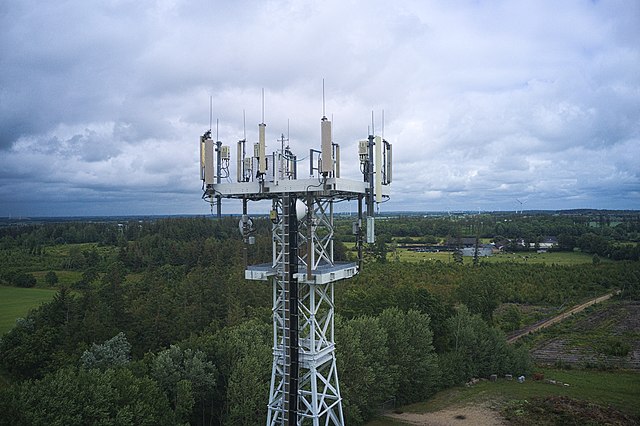
On this point, Nokia is the leader, followed by Ericsson. Conversely, the Chinese equipment manufacturer is largely absent from the O-RAN ecosystem, preferring closed proprietary systems. In fact, the choice of the Chinese equipment manufacturer exposes telephone operators to a high degree of dependence.
Beyond its desire to modernize IT infrastructure, Morocco is obliged to deploy 5G to comply with the standards required by the 2030 Football World Cup. This event, which will see enormous crowds, particularly in the urban centers hosting the matches, poses specific technological constraints and challenges.
In the jargon of 5G equipment suppliers, we speak of MIMO (Multiple Input, Multiple Output) or Massive MIMO. This refers to the number of transmit and receive antennas required to increase capacity. This parameter is particularly important in areas with very high user densities. On this point, the Chinese equipment manufacturer is ahead of its competitors. It is considered the world leader in this field.
What’s more, the use of integrated AI, notably for beamforming (wireless signal concentration and reduction of unnecessary interference), gives the Chinese competitor a major advantage, which can meet the challenges of hosting the World Cup.
Choice of supplier still up in the air
For the time being, the Maroc Telecom/Inwi consortium has yet to announce the future 5G equipment contract winner. And the choices made by the Emirati company Etisalat (e&), which controls the incumbent operator through its subsidiary SPT, are keeping the uncertainty alive. And for good reason: while Huawei was the Emirati operator’s main partner as early as February 2019 for the preparation of the launch of the public 5G network in the Emirates, it is the Swedish competitor that has been chosen for the deployment of the commercial offer in June 2021.
The same applies to Egypt, where the Emirati operator has been present since 2007 through its subsidiary e& Egypt. At Gitex Global 2024, e& Egypt signed a partnership agreement with Ericsson for the launch of 5G.
In Pakistan, things are much less clear-cut. Despite the delay in appointing an equipment supplier for 5G rollout, due to the blockage caused by the merger between PTCL-Ufone (owned by Etisalat) and Telenor Pakistan, the Chinese competitor is expected to win the 5G infrastructure contract once the administrative hurdle has been cleared. There are several reasons for this assumption: Chinese telecom equipment manufacturers Huawei and Zhongxing Telecommunication Equipment (ZTE) hold 60% of the RAN (Radio Access Network) market in Pakistan. Unlike Nokia and Ericsson, whose position in the Pakistani market remains relatively weak.
In Morocco, we’ll soon know which supplier has been selected for TowerCo’s 5G offering, once the ANRT’s call for tenders has been published. In absolute terms, operators will have to choose between the pragmatic solution – linked to costs, speed of implementation and compatibility with existing infrastructures – embodied by the Chinese offer, or make the choice of technological sovereignty and diversification, represented by the European offers.
Written in French by Amine Belghazi, edited in English by Theodore Griffin.


