

If ever there was a European country whose history intersects with that of the Kingdom of Morocco, it is Spain. No other nation north of the Mediterranean has experienced such lively and active exchanges with Morocco as the Iberian Peninsula.
Al-Andalus, deep roots
Al-Andalus, an integral part of the Maghreb al-Aqsa from the Almoravid dynasty to that of the Marinids, is a case in point. The shared adventure is far from over. The fall of Granada in 1492 brought successive waves of Spanish Muslims to Morocco and the rest of the Maghreb for two centuries. The urban memory of Fez and Tetouan bears witness to this.
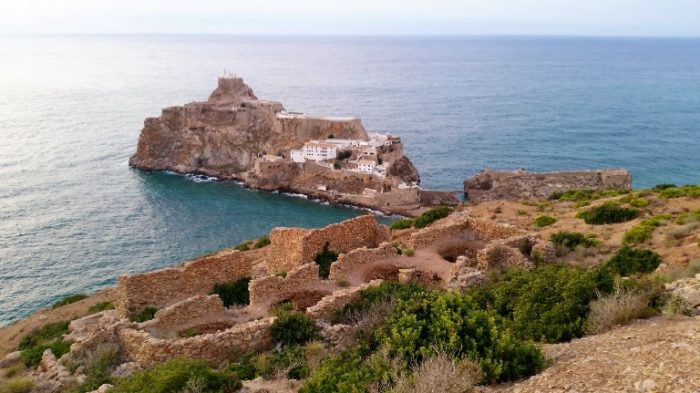
From the15th century onwards, the Spanish settled permanently in two major enclaves, Sebta and Melilia, and in minor enclaves: Penon Vêlez de la Gomera (Badis Rock), Penon de Alhucemas (Nekkor Island) and the Zaffarine Islands.
They weren’t the only Iberians to set foot in Morocco. During the 15th century and well into the 16th, several Atlantic cities came under Lusitanian rule. Mazagan (El Jadida) was the last to be liberated, under the reign of the Alaouite sultan Moulay Mohammed ben Abdallah in 1769.
The Spaniards, first immigrants
Finally, during the Tetouan War of 1859-1860, Madrid occupied the « Northern Dove » for two years, demanding astronomical war reparations, which the Makhzen eventually granted. The northern region of the Kingdom was then generally affected by Hispanic immigration.
Tangier, the diplomatic capital, came out on top, according to Spanish minister Saturnino Calderon Collantes (1799-1864): « The Christian population consists almost exclusively of Spaniards and English and, in all probability, there will come a day when the Spanish population alone will form the great majority« , he declared in 1862, as Spanish migrants flocked to Tangier and Tetouan, to the point that a few years later, there were plans to control the arrival of migrants in the north of the Kingdom, explains French historian Jean-Louis Miège, a specialist in 19th-century Morocco.
The Mediterranean plain and the Rif soon fell into Madrid’s hands too. 1913 marked the first year of the Spanish Protectorate. And let’s not forget the Moroccan Sahara: two provinces, Seguiet el-Hamra and Oued ed-Dahab, were then under Iberian jurisdiction. So how is it that, with such an intertwined history, Moroccans didn’t drop off their bundles of migrants in Spain very early on?
Just a stone’s throw from Tangier, the Iberian peninsula taunts the Moroccan coast with its jagged relief. Geographical proximity is synonymous with historical promiscuity, as the major ports of Sebta and Melilia attest. Yet Spain is one of the last countries… pic.twitter.com/dCqFVR4DZh
– TelQuel (@TelQuelOfficiel) April 11, 2025
The figure of the « Moro »: the Azrael of the Spanish
This Hispano-Moroccan mosaic, an authentic centuries-old chronicle, has obviously influenced mentalities and ethnic perceptions of the other.
In her 2015 opus Los Moros que trajo Franco (The Moors that Franco brought back), Spanish historian and intellectual Maria Rosa de Madariaga (1937-2022 ) acutely captures the infusion of the image of the Moor, i.e. the Moroccan, into the collective memory of Spaniards from Al-Andalus to the Spanish Civil War. Her reflection, carried out over a very long period of time, enables us to draw a complete and exhaustive picture of the image of the « Moro », omnipresent in the popular Iberian imagination.
For Spaniards, the Moor has represented « the knife and death » for centuries. This did not improve in the 20th century under General Franco.
« In 1936, when the militiamen, workers and peasants who were defending the Spanish Republic with arms in their hands, came face to face with the Moor, (…) the terrifying visions of the past, what they themselves had experienced or what their fathers and grandfathers had told them, appeared before them: the Ravin du Loup, the bloody setback suffered by the Spanish army on July 21, 1909; Anoual, the biggest defeat suffered by the Spanish army in Morocco (July 22, 1921); Mont Arouit. (…) Knowing the terror that the ‘Moor’ inspired in Spanish soldiers, Franco used Moroccan troops not only as cannon fodder, but also as a psychological weapon against the Spanish people, » comments Madariaga.
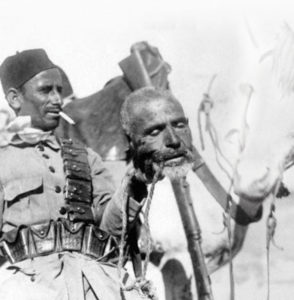
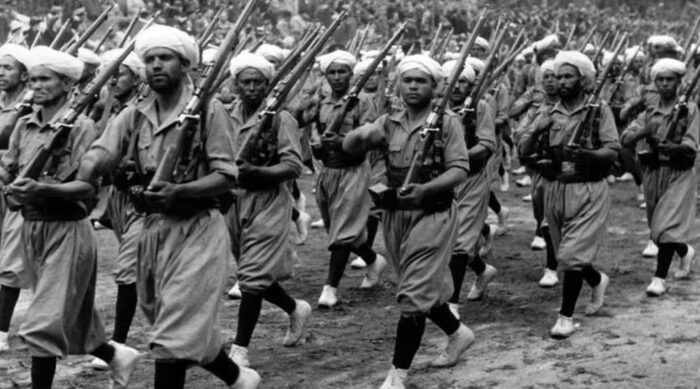
And indeed, it’s impossible to talk about Franco and the Spanish Civil War without noting that the first great wave of Moroccan migration to the neighboring kingdom was military.
« In 1936, General Franco launched the Moroccan Berbers against the Spanish republicans, like the Arab governor of Ifriqiya Moussa Ibn Noussaïr against the Visigoths in 709, and like the Almoravids and Almohads of the 11th and 12th centuries against the Christians of Castile« , historian Charles-André Julien rightly recalls in L’Afrique du Nord en marche (North Africa on the Move) (2002). Franco’s army included at least 40,000 Moroccan soldiers – twice as many, according to other sources – particularly from the Rif, a region where Franco had fought against Amazigh resistance.
Post-war Spain, a third-world country in Europe
Spain had emerged from the Civil War (1936-1939) on its knees. All economic indicators were in the red. In the 1950s and 1960s, the country’s financial situation was so cataclysmic that Madrid was on U.S. life support. Industry was in its infancy and agriculture archaic.
To give you an idea, « in 1956, there was one tractor for every 605 hectares, compared with one for every 50 hectares in France, which was far from the leader in agricultural modernization« , notes historian Max Gallo in Histoire de l’Espagne franquiste (1969). The country was truly at the back of the Western European pack.
Chronic underdevelopment led to the departure of Spaniards to other countries on the continent. A land of emigration is rarely a land of immigration. But in the early 1980s, the tide began to turn: Spain went from being a sender to a receiver of migrants.
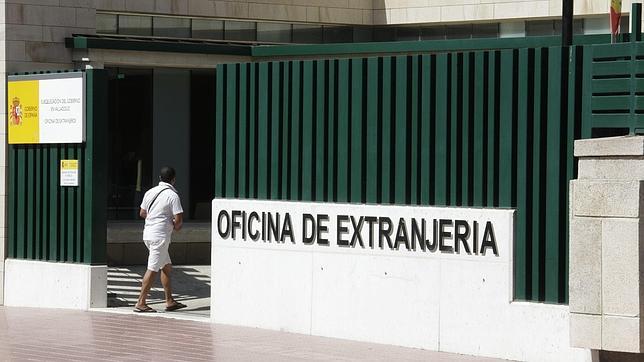
And, for once, Moroccans were in the hit parade of migrants registered with the foreigners’ offices of the various communidades or autonomous regions of the Iberian Kingdom, paving the way for a residence permit allowing people to live and work legally in Spain. However, foreigners wishing to settle in Spain face an obstacle course. It’s a journey shaped by restrictive laws since the 19th century, even though Spain was not then a welcoming country.
From land of emigration to land of immigration
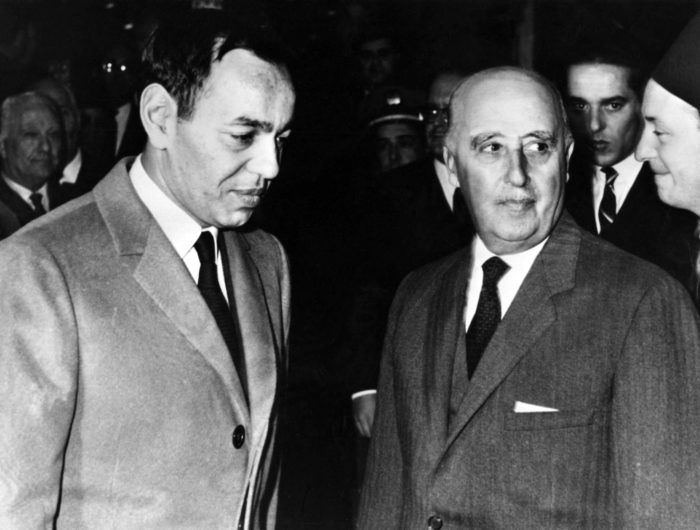
The first modern immigration law? A royal decree of 1852, which remained unchanged under Franco’s « reign ». It was subsequently amended by the Royal Decrees of 1974 and 1978, which regulated migration to Spanish territory, thereby guaranteeing the rights of foreigners.
The 1986 accession of the two countries of the Iberian Peninsula to the European Economic Community (EEC, forerunner of the European Union until 1992 and the Maastricht Treaty) profoundly altered the situation. The agreement lifted restrictions on the movement of individuals within the Schengen area. As a result, a foreigner entering the Schengen area via the port of Tarifa or Algeciras in southern Andalusia can now find himself in Stockholm or Helsinki without having to identify himself on the way.
What’s more, Madrid is beginning to take some of its orders regarding the regulation of migration from Brussels. Already in 1985, in order to bring itself into line with European institutions, Spain had enacted an organic law on foreigners. In particular, this law limits the entry of immigrant workers into the Spanish job market. Priority is given to EEC and then EU nationals, leading to de facto discrimination in hiring. As a result, Moroccan immigrants are at the bottom of the social ladder.
« The majority of economic immigrants are content to live in rented premises, or in the worst cases, in abandoned houses or vacant lots.In 1992, academics Santiago Diez Cano and Maria Paz Corredera Garcia concluded in a collective work, Logiques d’États et immigrations,that « grouping together is common, in order to cope with high rents. » It’s easy to imagine the difficult living conditions that await the MREs.
Nevertheless, Spain, with its generous Mediterranean coastline opposite the Alaouite Kingdom, is becoming a major magnet for harragas and pateras who, from Tangier or Ksar Sghir, contemplate the shoreline on the other side of the Strait of Gibraltar. Not to mention the Canary Islands off the Moroccan Sahara. And the landlocked port cities of Sebta and Melilia don’t help matters. On the contrary, they make matters worse.
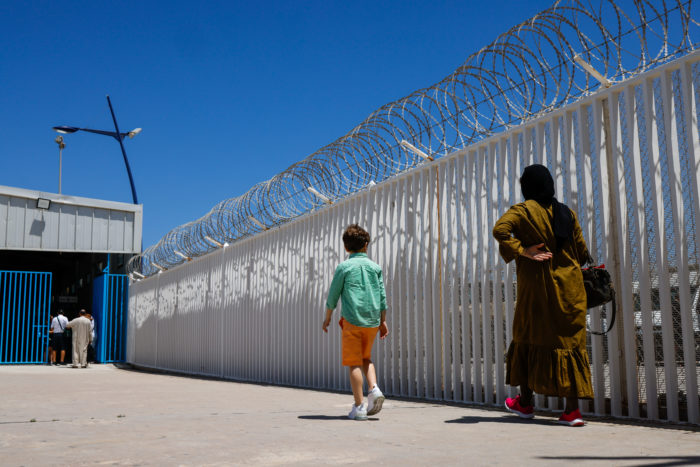
In response, from 2001 onwards, Sebta barricaded itself with a border of barbed wire and ultra-sophisticated detection equipment to deter Moroccan and sub-Saharan migration. The same goes for Melilia. Spain is no longer just a place of transition to northern Europe; it’s a land where people settle.
But beware of clichés: in 2004, Spanish police turned back more migrants from France on the Pyrenees side than from Morocco through the Strait of Gibraltar.
MREs, the second largest foreign community in just a few decades
Moroccan immigration soared in the 1980s. The statistics bear this out: while in 1990, only 16,600 Moroccan nationals were living in Spain, a year later there were more than 41,000…. And in 2021, according to figures from Spain’s National Statistics Institute (INE), there will be no fewer than 775,294.
Most of the former Western destinations of Moroccan migrants have thus been dethroned: Spain comes just after France, a country where immigration began much earlier, around 1910, and where Moroccans are the second largest foreign community. MREs are even ahead of Hispanics, who come from Spain’s centuries-old colonies, which have become the natural land of exile for Latin Americans.
It’s worth pointing out that there was one decisive factor on the eve of the 21st century. In April 1996, Felipe González’s government decided to massively regulate the entry of thousands of illegal immigrants, most of them Moroccans. It was a wake-up call: illegal immigrants from the four corners of Europe rushed to the Bourbon kingdom to be regularized, and then to be able to move freely within the Schengen area.
Unsurprisingly, the profile of this migrant population has evolved over time: « Formerly in the majority, Rifans are now outnumbered by people from the Atlantic coast and central regions (Beni Mellal, Tadla, Fquih Ben Salah). 27% come from the Tangier region and the Atlantic urban area between Casablanca and Kénitra. 90% of them are under 45, and 35.5% are women« , wrote Moroccan essayist Zakya Daoud in La diaspora marocaine en Europe (2011).
The round of « strawberry ladies
For this general overview of Moroccan migration to Spain would be incomplete without a reference to the thousands of Moroccan women who make their way to Spanish farmlands every year. Admittedly, this is a seasonal migratory movement or, in the terminology of geographers, a « circular migration« . But the fact remains that last year, in 2024, 16,000 seasonal women set foot in Andalusian fields to pick strawberries.
Their working conditions are far from brilliant. What’s more, Madrid’s migration cynicism doesn’t cut any corners. All these women have husbands and children in Morocco, to make sure they don’t settle permanently in Andalusia. « As the icing on the cake, they are vulnerable to economic and sexual abuse by their employers.
These poor working conditions attracted the attention of French-Moroccan geographer Chadia Arab, who wrote a book about them, Dames de fraises, doigts de fée (Strawberry Ladies, Fairy Fingers) (2018). And the story of the « strawberry ladies » is a far cry from being a fairy tale.

Written in French by Farid Bahri; edited in English by AngloMedia Group.


