

My first interest was the storks. I am fascinated by these majestic birds, which spend their winters in Morocco on the tops of barren trees, houses, and minarets. Their large nests rest year-round, but come spring they return to Europe and points north.
During the African Cup finals, I flew into Oujda and visited Saidia and Berkane. I was invited to the Stork Museum in Berkane — a place you may not know exists, but it is the brainchild of Abderrahmane Chemlali, a biologist I met years ago at a digital conference. He has dedicated his life to the preservation and conservation of storks. Children from Berkane and the surrounding region visit his self-funded museum in his home to learn about ecology and biology. His dream is to open a full museum to confirm the importance of storks to Morocco’s ecological history.
I opened the book and found that it was signed by the author: Abderrahmane Zenati. Two Abderrahmanes. I wondered if they knew each other.
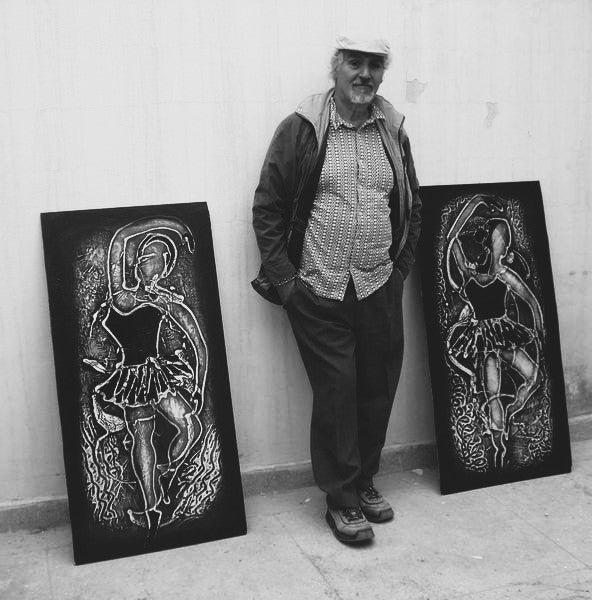
At the bookstore, I did a quick search on my phone to find out more about Zenati: an autodidact — self-educated — artist and writer who was once honored by His Majesty King Mohammed VI for his artistic contribution. Born in 1943, he would be 82 now. Could he still be alive? I wanted to find out. I love discovering Moroccan writers and promoting their work. So many don’t receive the recognition their stories about real Morocco deserve. Bookstores are full of Paulo Coelho, Jane Austen, and foreign voices. What about Moroccan writers? They deserve a prominent place on the shelves.
So I called Chemlali — and of course, he knew Zenati. Within hours, Mrs. Latifa Zenati called me. We had a warm conversation and she shared so much about her beloved husband. Sadly, he is now incapacitated by Parkinson’s disease and was not able to speak with me directly. But she graciously invited me to come visit him. He would enjoy a visit, she said. And I will. Inshallah.
“My husband was dedicated to writing. For years, he wrote every day — all day long. And at night, he would paint until two or three in the morning.”
I asked when he slept. She said he did not sleep much. He was up early most mornings simply to eat and continue writing.
Zenati wrote and self-published nearly 70 books. Latifa began sending me photographs of his covers: Cicatrice de la Mémoire, Grain de Sable, Khalti Fatna, L’homme d’argile, L’aube de maudite.
I read the first five chapters of Will the Storks Return to Oujda? It is the beginning of his autobiography. He was just a small boy when his father died, leaving eight children for his mother to raise. It was 1950, and widows in such situations were often forced to give their daughters into service in wealthy households, and their sons to apprenticeships. Poverty is cruel. Zenati was given to a man “whose look and voice were hard.”
Excerpt:
“Ecoute, my dear,” said Zenati’s mother. “You are going to stay here to work with le Maalem in order to help feed your brothers.”
I clung to her thin waist, my head raised towards her face as I wept, writes Zenati.
“Mommy, don’t leave me here… I want to stay with you… I don’t want to work… Don’t leave me here!”
This is already a deeply emotional and beautifully written book. He has seen hardship, experienced cold nights in the streets, and survived disease. After five years of apprenticeship, he developed tuberculosis. During a long hospitalization, nurses gave him paper and pens. He drew, and created art. His book is illustrated throughout with sketches of his own making.
Zenati never attended school a single day in his life. Yet he has written dozens of works in French. I teach English to students from Rabat’s private schools — children with every advantage. I tell them that reading and writing are not luxuries; that illiteracy is as cruel as poverty. The prolific life of Abderrahmane Zenati is a perfect teaching tool — a man raised in poverty who never saw the inside of a classroom, who taught himself French, who wrote nearly 70 books between long nights of painting, and who was honored by his King for his contribution to this nation.
It will be an honor to sit in Zenati’s presence. I intend to share his story and his work — in French, and in English — so that more people can find what I found at the bottom of a cardboard box, for three dirhams.


