

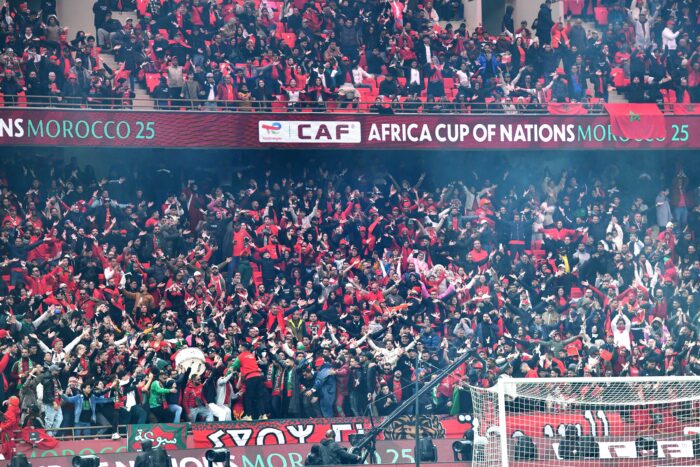
The 2025 AFCON kicked off on Sunday, December 21 at Moulay Abdellah Stadium. But far from the pitch, another match is already underway. In the host cities, activity linked to AFCON is beginning to pick up pace, driven by the gradual arrival of supporters, the succession of matches, and the rhythm typical of major sporting events.
On the ground, professionals consider the early signals encouraging. Busier cafés on match nights, restaurants extending their hours, rising demand for urban and intercity transportation, increased car rental activity: the mechanism is in motion. Not an outright surge yet, but a dynamic of acceleration as the tournament progresses.
Two speeds
In the hotel sector, this momentum is already noticeable. Reservations are coming in one after another, often in step with the most anticipated matchups, with stays stretching over several days. Even if the final figures are not yet established, the trend is clear, Lahcen Zelmat, president of the National Federation of the Hotel Industry (FNIH), tells TelQuel. “We are in a phase where the event is gradually taking hold. This is exactly what we observe during major international competitions,” he explains.
The pattern is well known to professionals. AFCON does not generate an instant spike, but rather a gradual rise in activity, paced by the sports calendar and the movement of supporters between cities. At this stage, activity is logically concentrated where the available supply can be mobilized immediately.
Casablanca and Rabat are therefore the two anchor points. The economic capital benefits from its role as an air hub and a center for redistributing flows, while Rabat, at the heart of the sports setup, with 36% of group-stage matches, captures a large share of travel linked to games and delegations. In these two cities, some establishments are already fully booked, and overall occupancy could reach, according to Lahcen Zelmat, 90%, or even 100% in the coming days, as the tournament moves into its most closely followed phases.
Elsewhere, the trend is positive but more measured. Reservations are increasing, activity is intensifying, without reaching saturation levels, the FNIH president assures. “Not all cities can, nor should, be fully booked at the same time. What matters is that the momentum is real and that it continues throughout the duration of the event,” he emphasizes.
The size of the match
Beyond the initial signals observed on the ground, the scale of AFCON’s expected economic impact is already beginning to take shape. According to tourism expert Zoubir Bouhoute, the tournament could attract between 500,000 and one million foreign visitors between late December and mid-January. This estimate is based on a ratio of 5 to 10 supporters for every 10,000 inhabitants, applied to the populations of the participating countries and to the African audience generated by the event.
At that level of attendance, expected revenues are estimated between 4.5 and 12 billion dirhams
At that level of attendance, expected revenues are estimated between 4.5 and 12 billion dirhams, generated mainly by spending on accommodation, food services, transportation, and associated services.
According to the expert, the event’s economic potential is strengthened by the participation of countries with a high GDP per capita, whose supporters have greater purchasing power. Among them are South Africa (6,480 USD per capita), Botswana (7,690 USD per capita), Gabon (6,920 USD per capita), and Equatorial Guinea (7,370 USD per capita).
These countries, although less populated than Nigeria or Egypt, are likely to generate higher spending per visitor, significantly increasing the overall volume of revenue. Conversely, more populous countries with average or modest GDP per capita, such as Algeria, Egypt, the DRC or Tanzania, will contribute more in volume, with more limited individual spending, the expert notes.
Dress rehearsal
Beyond the influx of visitors, AFCON above all imposes sustained, continuous activity that places host cities and their economic players before a very operational reality: absorbing volumes, keeping pace, and maintaining a consistent level of service over several weeks. From transportation to food service, from accommodation to local services, the entire chain is mobilized, with no room for improvisation.
“AFCON makes it possible to assess, in real conditions, the fluidity of transportation, the quality of hospitality, and the coordination between public and private stakeholders”
Thus, the issue is not limited to occupancy rates. “This type of event plays out over time. What matters is the quality of the customer experience, the consistency of service, and the ability of teams to remain efficient from start to finish,” emphasizes the president of the FNIH. A challenge that brings the focus back to human capital, training, and supervision, at a moment when the sector is moving upmarket.
The same observation is shared by Zoubir Bouhoute, who stresses the strategic importance of the current sequence. “AFCON makes it possible to assess, in real conditions, the fluidity of transportation, the quality of hospitality, and the coordination between public and private actors. These are precisely the dimensions that will be decisive for the entire tourism sector in the future,” he explains.
Lahcen Zelmat sees a lasting legacy in this. “The tourism sector does not only gain visibility. Above all, it gains infrastructure, know-how, and organizational capacity.” Roads, urban mobility, stadiums, hotel facilities, ancillary services: these investments strengthen Morocco’s offering and expand its value proposition beyond its traditional natural assets.
Morocco, the FNIH president recalls, has always possessed strong natural assets. The challenge now is to attach to them a structured, efficient, and competitive offering, capable of meeting the standards of major international events.
Written in French by Safae Hadri, edited in English by Eric Nielson


