

Stella Li’s visit to Casablanca is not insignificant. The executive vice-president of BYD Limited and president of BYD Americas, whom we met on November 15, came to take the pulse of the Chinese brand’s development in the Kingdom.
And the news is encouraging: according to a recent survey conducted by Ipsos, the results of which were revealed by Adil Bennani, CEO of Auto Nejma (BYD dealer), the Chinese brand is now the fourth most popular automobile brand in Morocco. A performance reflected in the streets of major Moroccan cities, where BYD Seal U models are multiplying.
But beyond the figures, Stella Li’s visit also made it possible to take stock of some sensitive matters, starting with the electric bus factory project signed in 2017 before Mohammed VI.
The promise of a factory
On December 11, 2017, Morocco seemed ready to take a decisive step in its energy transition. That day, at the Royal Palace in Casablanca, Wang Chuanfu, founder and chairman of BYD, signed before Mohammed VI a memorandum of understanding for the installation of an electric bus manufacturing plant in the future Mohammed VI Tanger Tech industrial city. The project was ambitious: four factories were to be built, including one dedicated to electric buses, capable of producing 400 buses and trucks, with 50 kilometers of monorails and 100 wagons. For a total investment of 13.7 billion dirhams.
But seven years later, the project is at a standstill. Questioned during her visit to Casablanca, Stella Li did not evade the issue. She mentions “funding problems” and states that “the Moroccan government was not able to push the project further.” An explanation that, while pointing to budgetary difficulties on the Moroccan side, also reveals the limits of an agreement signed with great fanfare but never carried out.
Nevertheless, the BYD vice-president is not closing the door entirely on future collaboration with the kingdom in the field of electric transport. She mentions the possibility of adopting a model similar to the one developed in Colombia, where BYD inaugurated in December 2024 its first electric bus assembly plant outside China.
In this Latin American country, the Chinese manufacturer opted for a more modular approach: a bus assembly plant using imported components, with an initial production capacity of 1,000 buses per year, expandable to 1,500 units. A model less capital-intensive than the fully integrated factory initially planned in Tangier, but one that could help revive cooperation between BYD and Morocco, provided that the issues of financing and order volume are resolved.
The file remains open, but time is running out. Between 2017 and 2025, the global electric bus market has exploded. Yet the kingdom is significantly behind in renewing its public transport fleet. And the long-envisioned Tanger Tech factory remains only a project on paper.
Charging infrastructure, the Achilles’ heel
If BYD shows ambitions for growth in Morocco, the reality on the ground imposes its limits. The country has only 600 public charging stations — compared with 40,000 in Spain and 14,000 in Portugal — a clearly insufficient number to support the large-scale deployment of electric vehicles. A bleak reality Stella Li cannot ignore.
Asked about the various pressures and obstacles limiting the development of charging infrastructure in Morocco, particularly the reluctance of certain established players, the vice-president of BYD Limited tries to sidestep the subject while addressing it pragmatically. “Our charging stations take up only half a parking space,” she begins, as an outstretched hand to gas station managers and highway operators. An argument meant to show that electric mobility does not necessarily cannibalize existing infrastructure space, but can integrate with it in a complementary way.
It should be noted, however, as revealed by a recent investigation by TelQuel, that several major projects remain blocked for lack of coordination between public and private actors. The Ratibecom group, for example, plans to deploy 1,000 fast-charging stations over five years, including around fifty at highway rest areas. But despite secured financing and partnerships with automakers, the project remains stalled, awaiting approval from Autoroutes du Maroc (ADM).
For its part, ADM states that it has installed nearly 50 charging stations on the highway network and is currently conducting a study to “identify the needs in terms of number and power of stations.” But no specific timeline has been communicated, and financing questions remain unresolved. Meanwhile, initiatives led by the Association of Vehicle Importers in Morocco (AIVAM) and the Intersectoral Professional Association for Electric Mobility (APIME), which had planned the creation of a pooled fund of 6,000 dirhams per vehicle sold, have also remained dead letters.
But Stella Li does not stop there. Aware that the debate on the charging network is also a debate on business models and power dynamics between actors, she mentions technological solutions likely to bypass current bottlenecks. She thus refers to the installation of superchargers designed for new-generation electric vehicles, capable of accepting 1,000 kW charges with recharge times under five minutes. A prospect that, if realized, could revolutionize the current equation by making charging as fast as filling up a tank of gasoline.
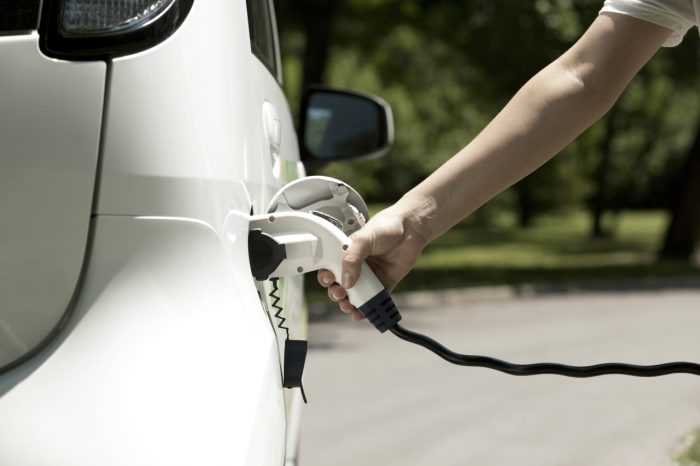
For major urban areas, Stella Li also mentions another concept: the establishment of “BYD cafés,” spaces where users could have a meal while charging their vehicle. A model already tested in other markets and aimed at transforming the constraint of charging into a customer experience, while creating a commercial ecosystem around electric mobility.
“Electric mobility is becoming established as a global standard. Morocco cannot afford to fall behind”
For BYD and other electric vehicle manufacturers, the current situation is a major obstacle. Even if the Chinese brand succeeds in winning over Moroccan motorists with its models and prices, it cannot on its own compensate for the absence of a dense, reliable and fast charging network. “Electric mobility is becoming established as a global standard. Morocco cannot afford to fall behind,” warns Omar El Hani, president of APIME, interviewed by TelQuel.
A message that Stella Li likely conveyed during her meetings with Moroccan authorities. Because beyond futuristic superchargers and BYD cafés, what Morocco truly needs to unlock the situation is a clear political will and an appropriate regulatory framework. Without such a signal, even the most advanced projects will continue to bog down in administrative twists and delays.
Diesel as an entry point
Fourth most popular automobile brand (still according to the Ipsos survey revealed by Adil Bennani), BYD can boast a remarkable breakthrough on the Moroccan market. The Seal U has thus risen to the rank of the fourth most popular SUV. An even more impressive performance given that the SUV segment remains largely dominated by diesel engines: 90% of the 165 SUV models sold in the kingdom run on diesel.
It is precisely this reality that Stella Li has integrated into her development strategy. Aware of the predominance of diesel — which she estimates at 71% of the Moroccan vehicle fleet — the BYD vice-president is not seeking to disrupt motorists’ habits. On the contrary, she intends to use diesel as a gateway to electric mobility through the introduction of models equipped with the DM-i system.
The DM-i system, for Dual Mode-intelligent, is a plug-in hybrid technology that prioritizes electric power while retaining a combustion engine for long distances. In practical terms, for most daily trips, the car is propelled by a powerful electric motor powered by the battery. The gasoline engine intervenes only for long distances, mainly acting as a generator to recharge the battery, or to provide additional power at high speed. This mode of operation, which prevents the combustion engine from running continuously, makes it possible to achieve high thermal efficiency and significantly reduce fuel consumption. The system also uses BYD’s Blade battery technology, known for its safety and durability.
For the Moroccan market, this approach presents a dual advantage. On the one hand, it allows motorists to gradually get accustomed to electric driving without worrying about range. On the other hand, it offers an immediate economic benefit by drastically reducing the fuel bill, a decisive factor in a context where diesel prices continue to rise.
This “gateway diesel” strategy is part of a step-by-step conquest logic. By offering DM-i plug-in hybrid SUVs, BYD aims to attract motorists attached to combustion engines while familiarizing them with the advantages of electric power. Once drivers become accustomed to driving in electric mode on a daily basis, the transition to fully electric vehicles becomes a natural evolution rather than a sudden break.
The results of the Ipsos survey seem to validate this approach. BYD now appears as a “top of mind” brand for Moroccan consumers considering their next vehicle purchase, an enviable position for a brand that arrived on the market only recently. Time will tell whether this momentum will be enough to sustainably boost the segment. Because without adequate charging infrastructure and without a strong political signal accompanying the transition, even the best commercial strategies risk running into the wall of reality.
Stella Li is aware of this and held numerous meetings with Moroccan officials during her visit. The message is clear: BYD is ready to invest heavily in Morocco, provided the ecosystem follows.
Stella Li, the architect of a conquest
Before becoming one of the most influential figures in the global automotive industry, Stella Li began her career at Motorola in the 1990s, working on batteries for mobile phones, reports Bloomberg Businessweek. It was there that she met Wang Chuanfu, the founder of BYD, who was then seeking to develop rechargeable batteries for the American company. Impressed by her tenacity and vision, Wang recruited her in 1996 to join BYD, then a modest company specializing in batteries for consumer electronics.
At the time, no one imagined that BYD would become a giant of the electric automobile industry. Stella Li herself acknowledges that it was not obvious. “I had no idea it was a challenge. It was only with time that I became passionate about the subject,” she says in an interview with Bloomberg Businessweek. A statistics graduate from the prestigious Fudan University in Shanghai, she first led BYD Electronics before taking the helm of BYD Auto in 2010, when the company was transitioning from battery manufacturer to automaker.
Her rise coincides with BYD’s international expansion. In 2008, Warren Buffett invested 230 million dollars in the Chinese company, validating its diversification strategy toward electric vehicles, as highlighted by the French magazine Challenges. Stella Li then became BYD’s global ambassador, tasked with convincing Western markets of the brand’s potential. Her approach? Pragmatic determination and an ability to negotiate with interlocutors as diverse as Californian lawmakers and Latin American presidents.
Now executive vice-president of BYD Limited and president of BYD Americas, Stella Li oversees the group’s expansion on all continents. Under her leadership, BYD became in 2024 the world’s third-largest automaker with 17 billion dollars in revenue, surpassing Tesla in electric vehicle sales volume, notes Bloomberg Businessweek.
Written in French by Yassine Majdi, edited in English by Eric Nielson


