

Yet another spark in a region already on the brink of explosion. Since Friday June 13, the Middle East has seen a new outbreak of violence. Targeted Israeli strikes against Iranian military infrastructure triggered an immediate response from Teheran. This renewed tension in one of the world’s most sensitive energy hotspots immediately sent shivers down the spine of the markets.
In the space of a few days, the price of a barrel of Brent crude rose from $62 to $73, a jump of almost 15 percent. The shock is perceptible, though contained. But the concern is real. « We don’t know where this is going. If other powers get involved, or if Iran closes the Strait of Hormuz, we could easily exceed $100 a barrel », warns Mostafa Labrak, Managing Director of Energysium Consulting and Secretary General of the French Energy Federation.
A fragile energy balance
For the time being, market fundamentals remain broadly balanced. The International Energy Agency (IEA), in its report on the oil market published on June 17, points out that world supply slightly exceeds demand: 105 million barrels produced daily versus 103.8 million consumed. Inventories are up (93 million barrels in May), a welcome buffer in the face of uncertainties.
But this balance is extremely fragile. Behind the figures lies the logistical risk: the closure of the Strait of Hormuz, through which almost 20% of the world’s oil supply passes – some 20 million barrels a day – would disrupt the entire supply chain. « That’s the big fear, » said Labrak. If Iran feels cornered, it could use this strategic weapon. And then prices would soar. »
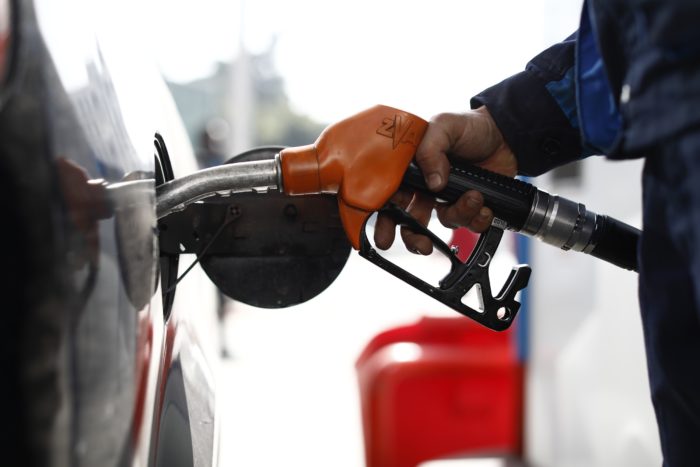
The IEA, for its part, has raised the possibility of resorting to its strategic reserves (estimated at 1.2 billion barrels), as in 2022. But this option is considered premature by the Organization of the Petroleum Exporting Countries (OPEC), which continues to believe that fundamentals remain solid, and that supply is sufficient.
« We can expect a significant rise in pump prices in the coming weeks »
In Morocco, where all refined products are imported, the impact could quickly be felt. With no refining unit since the shutdown of Samir, the kingdom is particularly exposed to fluctuations in crude oil prices. « Even if the impact will not be instantaneous, we can expect a significant rise in pump prices in the coming weeks, especially as demand will rise with the start of the vacations », anticipates the expert.
Contacted by TelQuel, fuel distributors in Morocco are already anticipating an increase of 50 to 80 centimes per liter, on both gasoline and diesel, from the end of June, if prices hold up. An increase that could also rekindle the debate on the return of direct subsidies to transport professionals, abolished since the beginning of the year, or on the constitution of a national strategic stock.
Sea freight: an exploding bill
But oil is only the first shockwave. The Israeli-Iranian conflict is also threatening international shipping routes, particularly those that pass through the Strait of Hormuz, a strategic corridor not only for oil exports, but also for many goods from Asia. This heightened geopolitical risk, combined with soaring energy prices, is driving up logistics costs worldwide.
In Morocco, where over 90% of foreign trade is carried by sea, supply chains are directly exposed. The pressure on freight is not only due to the conflict. Rachid Tahri, General Secretary of the Federation of Transport and Logistics (FTL-CGEM), recalls that « rates have already doubled in recent weeks, rising from $3,500 to over $6,000 per container. » This increase was initially triggered by the rush to stock up, following Donald Trump’s announcement of a three-month moratorium on new US tariffs. Many operators sought to import on a massive scale before the end of this period.
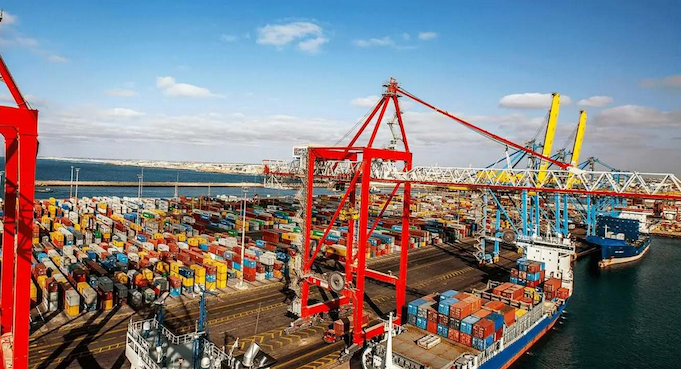
But the recent war in the Middle East could further accentuate this upward trend. Companies are anticipating a continued increase, due to fuel prices, higher insurance premiums in war zones, and the detours imposed in the event of the closure of the Strait of Hormuz. « We risk reliving a situation similar to that of COVID or the Red Sea crisis, with doubled delays and major additional costs, » warns Tahri. « And it’s Moroccan companies, both importers and exporters, who will foot the bill, » he laments.
Moroccan freight, dependent on Gulf ports and the major container routes linking Asia to Europe via the Suez Canal, could be severely disrupted if tensions spread.
Supply chains under strain
Moroccan industry, particularly in key sectors such as the automotive, agri-food and textile industries, could be one of the main collateral victims of the conflict. These sectors are highly integrated into international supply chains, and therefore particularly sensitive to logistical disruptions.
Current tensions are affecting both the cost and regularity of deliveries. On the one hand, the rise in sea freight automatically increases costs for Moroccan manufacturers. On the other hand, longer lead times and the uncertainties linked to the situation make supplies more unpredictable and weaken planning.
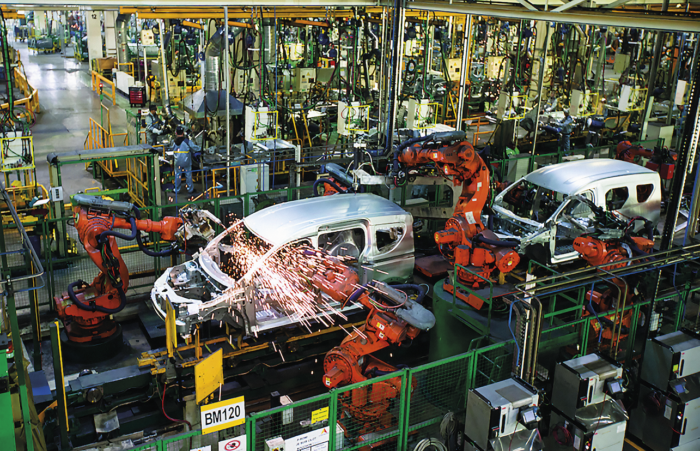
In the automotive wiring sector, where logistics cycles are extremely tight, a variation of just a few days in deliveries can be enough to disrupt assembly lines. Manufacturers contacted by TelQuel confide their concern: « We operate on very tight supply cycles. If lead times are extended by even a few days, it disrupts our lines. And if transport costs continue to rise, this could have a direct impact on our competitiveness.
Ultimately, these additional logistics costs will not remain confined to companies. Sooner or later, they will be reflected in selling prices. « Shipping lines and manufacturers alone will not be able to absorb these successive increases. At the end of the chain, it is the end consumer who will bear the cost, » warns Rachid Tahri. This pressure on prices could fuel a new inflationary surge in Morocco, in a context already marked by fragile purchasing power.
Tourism could face a slowdown
The tourism sector, which has been in convalescence since the COVID-19 crisis, fears a slowdown in the momentum achieved in recent months. Although not directly affected by the conflict, Morocco could suffer indirect psychological repercussions on certain outbound markets, notably Europe, which are traditionally sensitive to regional tensions.
Any escalation in the Middle East rekindles a perception of instability throughout the MENA region, even when the real risk remains far from Morocco.
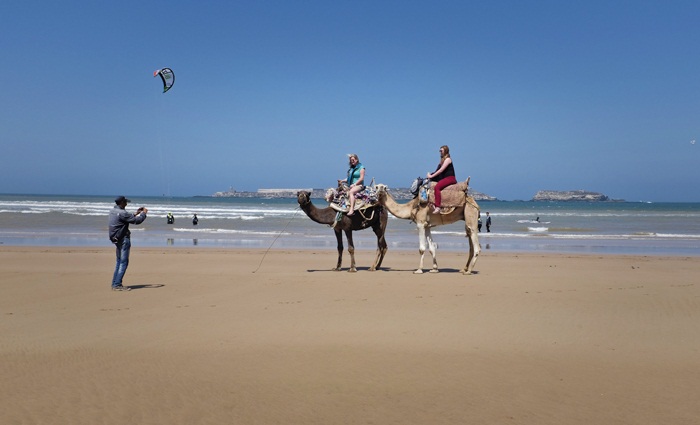
At this stage, there have been no massive cancellations or downturns in bookings. But industry professionals are keeping a close eye on the situation, for fear of a contagion effect. « Morocco is perceived as a stable destination, but any regional escalation reflects on the overall perception of the Maghreb and the Middle East. All it takes is an airspace closure or a travel alert to see one cancellation after another, » fears a hotelier in Marrakech.
Casablanca stumbles
Even the Casablanca stock exchange was not spared by the geopolitical tremors. The day after the Israeli strikes on Iran, the MASI index plummeted by 1.18%, driven by jittery investors over the fear of a widening conflict. This decline continued in the days that followed, with the index opening down 0.68% on Thursday June 19, affecting both large caps and listed SMEs.
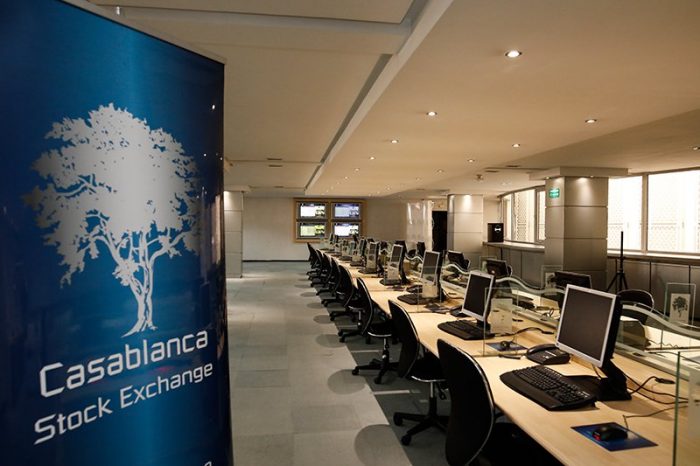
Industrial, banking and real estate stocks were among the hardest hit. CFG Bank fell by -2.76%, Jet Contractors by -2.77%, and Lafarge Holcim Maroc by -2.6%. These significant declines illustrate investors nervousness in the face of geopolitical uncertainties and the risk of regional escalation.
The markets’ reaction reflects a growing fear that military escalation in the Middle East could lead to a prolonged oil shock, destabilized trade and a surge in inflation. Against this backdrop, operators fear lasting uncertainty, adding to an international context already strained by restrictive monetary policies and falling global demand. For analysts, Morocco is not in crisis, but the markets are anticipating. And they don’t like uncertainty.
Sovereignty in question
« The Moroccan economy is too dependent to escape the domino effect of a major conflict »
Faced with this situation, there is little room for maneuver. In the short term, the key is to strengthen logistical resilience, by diversifying trade routes and consolidating strategic stocks.
In the medium term, however, the crisis has brought into sharp focus the structural vulnerabilities of the Moroccan economy, particularly its energy dependency. « We are in a situation where we are suffering more than we are acting. The Moroccan economy is too dependent to escape the domino effect of a major conflict. We have to hope for the best… but prepare for the worst, » said Rachid Tahri, for whom this crisis should prompt a thorough rethinking of our strategic autonomy.
For beyond the immediate shock, it is uncertainty that dominates. How far can this conflict spread? What economic consequences will it have on a global scale? For some observers, it’s not so much the soaring prices as the risk of an abrupt break-up that’s worrying. « As long as the conflict remains limited, the impact can be absorbed. But the slightest change – the closure of the Strait, the entry of the United States into the conflict – will have an impact on the whole world. And Morocco will be no exception, » said Labrak.
Written in French by Safae Hadri; edited in English by AngloMedia Group.


