

It’s impossible to talk about Moroccan migration to America without mentioning a man who was more of an explorer than a pioneering migrant: Estevanico, alias Mustapha al-Zemmouri. Born around 1500 in Azemmour, then occupied by the Portuguese, he was sold into slavery around 1520, eventually landing in Spain.
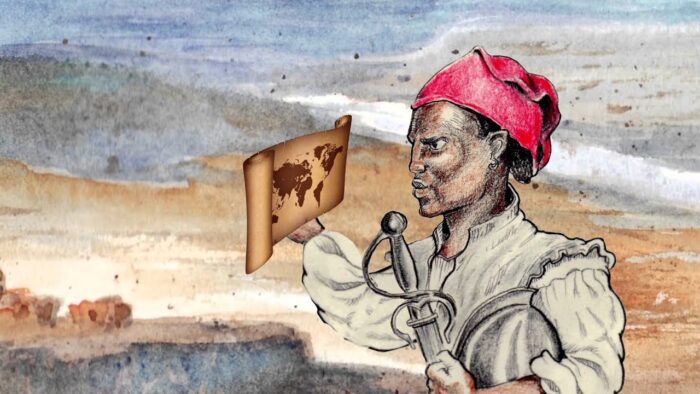
It was in this context that, in 1527, he embarked on the Narvaez expedition to colonize Spanish Florida. The expedition was decimated by hurricanes and native attacks. Only Estevanico escaped unscathed. But he didn’t stop there. He traversed part of the southern part of the future United States, Florida, New Mexico and Arizona, before being murdered by the Zuñi tribe in 1540.
From Moroccan Mazagan to Brazilian Mazagão
Beyond this extraordinary journey, another unique precedent in Moroccan migration across the Atlantic took place in the 18th century. In 1769, Moulay Mohammed ben Abdallah’s troops forced the Portuguese to abandon Mazagan, their last stronghold on Morocco’s Atlantic coast. Men, women, children and goods deserted the town.
« On March 11, 1769, in the bay of Mazagão (the Portuguese name for Mazagan), an entire city prepared to retreat. It wasn’t just an army leaving the battlefield, it was a city abandoning its vital space, an urban society separating from its stone shell. (…) Fourteen boats had been dispatched from Lisbon for this astonishing purpose: to organize an urban retreat. A city without walls, temporarily divided into fourteen floating districts, sailed towards Lisbon« , relates historian Laurent Vidal in Mazagão, the City that Crossed the Atlantic from Morocco to the Amazon (1769-1783), published in 2005.
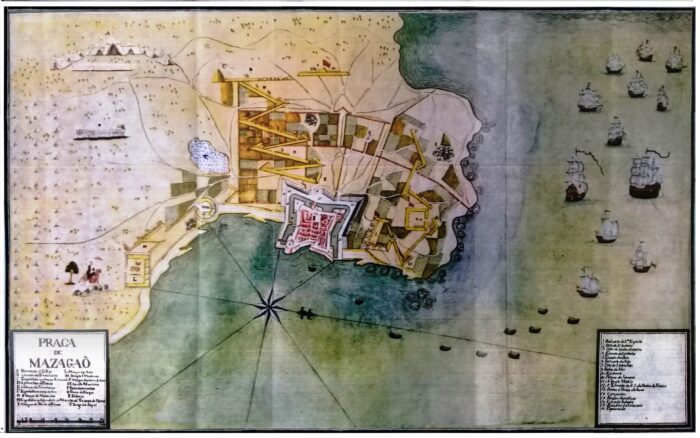
Dozens of Moroccans embarked on the adventure, though their numbers are not known precisely. An entire Moroccan town would be replicated in the Amazon a few years later, on the north bank of the Amazon River – an unprecedented experience.
The Kingdom’s Jews in America
Moroccan migration to the Americas began in earnest in the mid-19th century. The American census records the arrival of four Moroccans between 1830 and 1839. Were they Jewish or Muslim? The register is silent on this detail. In any case, the first mass Moroccan exiles to the « New World » were not Muslims, but rather Jews.
Initially, Jewish emigration was mainly to South America. Why did this happen? The most likely hypothesis is the decrease in trade between Morocco and Algeria (due to the French presence), as well as with Gibraltar, the Cherifian Empire’s commercial backyard since the signing of the Anglo-Moroccan treaty in 1856. For it was at this date that Western economic penetration began, as aggressive as it was mortifying for Morocco’s traditional economic structures. And Jews were undoubtedly an integral part of these structures.
« Faced with harsh living conditions and the shortcomings of charitable organizations, many members of the Jewish working classes tried to escape poverty and misery by emigrating to countries near and far (…) South America was also one of the main destinations for would-be emigrants. Many Tetouanese and other Jews from the north of the country often set sail via Portugal for Brazil, Argentina, Venezuela and Bolivia in search of fortune« , writes Moroccan historian Mohammed Kenbib in his book, Jews and Muslims in Morocco, their Origins to the Present Day (2023).
O Canada…
Secondly, the Second World War and the new international order that this major conflict inflicted on geosociology affected the Cherifian Empire. The creation of a Jewish home in Palestine and the proclamation of a Hebrew state in 1948 sent shockwaves through the Jewish communities of the Arab world. Many made aliyah, or migration to Israel. Others, however, opted to migrate to America.
From March 1956 onwards, the Jewish Immigrant Aid Society (HIAS), an American organization, played a leading role in the settlement of Moroccans of the Jewish faith across the Atlantic. This time, they settled mainly in North America, and particularly in Canada, a country that was partly French-speaking, enabling them to integrate more easily into the host society.
For historian Yolande Cohen, there’s no doubt about it. « Among the newcomers who settled in Quebec after 1960, Jews of Moroccan origin constituted the majority national group. With 7995 people arriving between 1960 and 1991 (according to the 1991 census), they are more than twice as numerous as Jews from Poland (4250), and even more than Jews from all other countries combined (France, Israel, etc.). From then on, language and ethnic origin, much more than religious practice, became powerful markers of their recomposed identity« , she explains in an article entitled « Juifs au Maroc, Séfarades au Canada » (2010).
Moroccan Judaism in New York and LA
In neighboring United States, Moroccans of the Jewish faith also emigrated in the years following the end of the Second World War. Their main destination was the Big Apple, already famous for its large Jewish population.
A group of young Jewish Moroccans settled in Brooklyn in 1948. They settled not to work, but to study, at the Mir Yeshiva (school dedicated to the study of Talmud and Torah) of the famous American-Belarusian rabbi Abraham Kalmanowitz (1891-1964).
Throughout the 1950s, the movement gained momentum. Moroccan Jews came to New York in droves, and a Moroccan Sephardic Judaism took shape, countering the Yiddish-speaking Ashkenazim, who were generally of Central European origin.
Around 1970, with the recession taking its toll on Europe’s healthy economies, departures to North America multiplied. Most of them settled in Los Angeles, which eventually became home to 20% of Moroccan Jews living in the United States.
Moroccan Muslims, the last to arrive
The migration of Moroccan Muslims to North America only began in the 1990s, much later than that of their Jewish compatriots.
These emigrants do not have the working-class profile of their predecessors, who headed en masse for Europe. They tend to have secondary or higher education qualifications. Another difference is that migration to the United States and Canada is not the result of an agreement or convention, as was the case for most European countries, but of individual decisions. In the 1990s, for example, Moroccan Muslims took full advantage of the opportunity to emigrate to the United States through the Green Card lottery, an annual lottery that enables thousands of people to obtain a permanent residence permit.
Another particularity: Moroccan migration to the Americas is largely female. With a clear evolution in Moroccan mores, the taboo of the female traveler emigrating alone has been broken. As a result, many Moroccan women are heading for the United States to take advantage of new career opportunities. In 2016, for example, according to the Hassan II Foundation for MREs, woman make up 41 percent of Moroccans registered with Moroccan consulates.
And since the dawn of the 21st century, some 4,000 Moroccans have settled in Canada every year. Today, some 150,000 Moroccans live in the United States, according to estimates by the Moroccan Foreign Community Council (CCME), and 100,000 in Canada, mainly in the province of Quebec.
But when compared with other emigrant minorities, Moroccans remain a residual diaspora. They account for around 0.2% of total net migration. To date, no serious study funded by the US federal government has been carried out to track Moroccan migrants and their integration into the social structures of the host country.
Nevertheless, let’s attempt to describe the contours of the situation. First of all, Moroccans of all faiths make their homes in the major metropolises, where there are plenty of jobs to be had. In urban centers on the East Coast, such as New York, and on the West Coast, such as California. Moroccans are also very present in the mid-western regions, notably Chicago.
A striking phenomenon, but not in itself surprising: their ghettoization. According to a study conducted under the direction of geographer Mohamed Berriane for the Hassan II Foundation for MREs (2021), Moroccans cluster together to create communities, much like those of African-Americans or Asians. And, since the 2020s, Moroccans have been increasingly naturalized (in Canada and the USA), which in the long term means that they blend into the American mainstream.

But while the American Dream lives on more than ever in the hearts of Moroccan would-be emigrants, Donald Trump’s return to the White House is likely to disillusion some of them, as the U.S. president pursues a resolutely anti-immigration agenda. For example, the website of the American Embassy in Morocco now warns Moroccans tempted to « cheat » or « sneak into the United States » that they could « avoid arrest », and warns them that they risk imprisonment.
Once upon a time, Ahmed al-Mansour’s golden dream
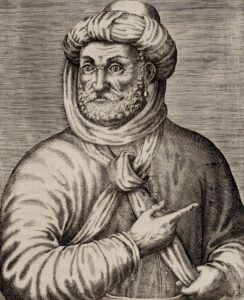
Sultan Ahmed al-Mansour (1549-1603), known as « the Golden One », was well acquainted with Madrid’s Latin colonies. Seeking to forge an alliance with Queen Elizabeth I’s England against Spain in the 1590s, he took a keen interest in South America, where he even coveted a colony. A fine tactician, he wanted to kill two birds with one stone: hit Spain hard, and bypass the Ottoman Empire, another tenacious enemy of the newly installed Cherifian Empire in al-Maghreb al-Awsat. At least, this is the very serious hypothesis put forward by Spanish historian Mercedes Garcia Arenal in her opus (not translated into French) Ahmed al-Mansour ou les débuts du Maroc moderne (2008). But the plan fell through for the simple reason that London was reluctant to engage in another direct war with Spain. In the end, Elizabeth I opted for a less onerous option for « titillating » the Spanish, that of freebooting. [/frame]
Written in French by Farid Bahri; edited in English by AngloMedia Group.


