

When the European Commission confirmed the entry into force of the Carbon Border Adjustment Mechanism (CBAM), or carbon tax, starting in 2026, many industrial players saw it as a new disguised trade barrier.
For steel in particular, a strategic product, energy-intensive, and regularly exposed to international competition, there was significant fear of seeing one of the world’s major markets close off.
Yet as the contours of the mechanism become clearer, a more optimistic interpretation is emerging. Far from being a uniform burden for Moroccan operators, the CBAM seems, for certain exporting industries, to open unexpected prospects.
A mechanism that is reshaping global value chains
In principle, the CBAM aims to apply a carbon tax at the entrance of the European market to imported products whose carbon footprint exceeds European standards. The goal is to prevent “carbon leakage”, meaning preventing European companies, already subject to the EU carbon market, from relocating their production to countries with less stringent environmental requirements.
By imposing on importers a tax proportional to the CO2 emitted during the product’s manufacturing process, Europe seeks to restore fairer and more equitable competition.
For steel, a strategic sector, the tax will target, as of 2026, countries whose factories produce more than 500 kg of CO2 per ton of steel. Yet the majority of global producers, notably Chinese, Indian, Turkish, or Russian, still rely on blast furnaces fueled by ore and coal, a highly emitting process.
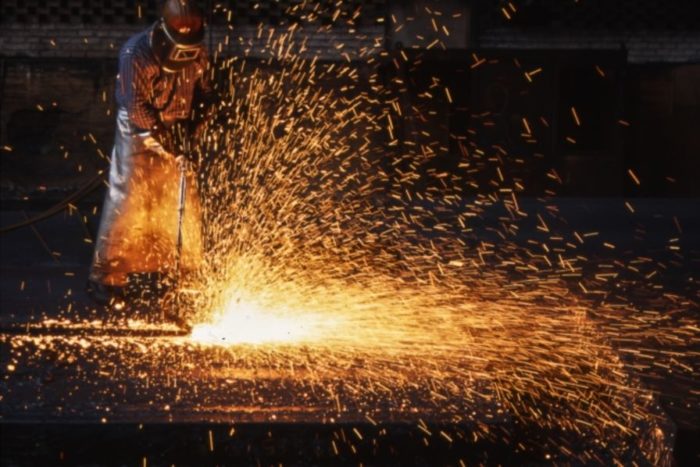
“Blast furnaces release approximately two tonnes of CO2 per tonne of steel”, recalls the general director of Sonasid, Ismail Akalay, who also heads the Association of Steelmakers of Morocco (ASM). In contrast, electric steel mills, operating with recycled scrap and electricity, emit far less: “Steel mills release approximately 800 kg of CO2 per tonne of steel”, our source explains.
In Europe, this second mode of production is now considered almost decarbonized. And it is precisely here that the Moroccan situation stands out.
A Moroccan model already low-carbon
Unlike other steel-producing countries, Morocco does not operate blast furnaces. All of its steel production relies on mills using recycled scrap. A structural advantage that already places the sector below European thresholds.
“At our level, we produce steel that is very low in CO2. Which means that every time there is a new carbon tax, it is rather good news for us, anywhere in the world”, explains a Moroccan industrial player under condition of anonymity. And he continues: “One of the reasons we are lower in CO2 than others is because we have an electric steel mill and not a blast furnace. And a good part of the electricity comes from renewable energy. This gives us a huge advantage over our international competitors with regard to the European market”.
Same story on the Sonasid side. The company claims to have one of the lowest carbon footprints in the world. “Sonasid emits less than 400 kg of CO2 per ton, because we are powered by green energy, wind and solar,” argues Ismail Akalay. “So the steel produced by Sonasid will have no problem being exported to Europe. There will be no taxes to pay,” he adds.
This performance is supported by several investments, confirmed by the “Decarbonization Projects” sheet provided by the company. Sonasid states that it will use more than 90% green electricity at its Jorf Lasfar and Nador sites in 2024, notably thanks to a 4 MW photovoltaic plant installed in Nador. To this are added industrial modernizations, heat recovery for preheating scrap metal, improvements in the preparation and cleaning of raw materials, as well as increased use of rail transport to reduce logistics emissions.
The company also highlights its strategy of fully valorizing its co-products from scrap treatment, avoiding landfilling and strengthening the circular economy of the production cycle. Added to this are the environmental product declarations (EPDs), which make it possible to quantify the carbon footprint of rebar, wire rod, and steel fiber throughout their entire life cycle, in a logic of environmental transparency now required by European buyers.
Opportunities, and limits
Nevertheless, the implications of the CBAM for Moroccan steel cannot be reduced to a simple tax exemption. Because while the mechanism theoretically paves the way for increased competitiveness on the European market, commercial reality is more complex.
“Practically no Moroccan steelmaker is going to export to the European market. They are not used to doing so,” Akalay recalls. Morocco has traditionally exported very little steel to the European Union, not for environmental reasons, but due to market structure, product types, and industrial strategy issues.
The director general nevertheless specifies that Sonasid is something of an exception: “For us, it’s a bit particular. Aside from rebar and common products, we market a special steel — prestressed steel and fiber — for which we are the only producers in Morocco. This can offer us interesting markets if tomorrow we decide to export.” For these specialized products, the CBAM therefore does indeed constitute a comparative advantage.
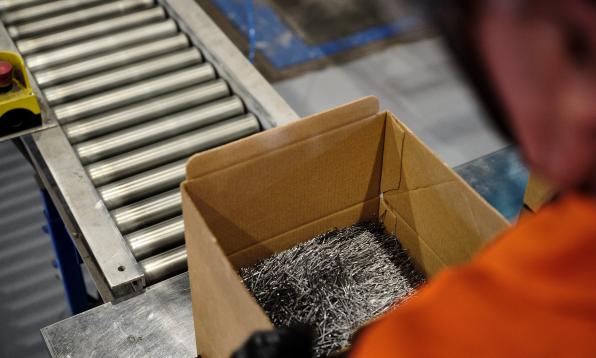
Moreover, the European market, saturated with Chinese and Indian products with high carbon footprints, is expected to see Asian imports slow after the mechanism comes into force. “These measures are mainly intended to curb Chinese and Indian imports, because they are the most invasive on the European continent,” analyzes Akalay. By reducing demand pressure on low-cost steel, Europe will de facto become a more open market for low-carbon producers.
And Ismail Akalay adds nuance. Because despite this advantage, Sonasid does not make Europe a priority. “For us, the African market is currently much more interesting than the European market,” the general director of Sonasid explains. A trend confirmed for several years by the growth of African infrastructure, particularly in West Africa, which offers far greater prospects than a mature, highly regulated European market subject to significant economic fluctuations.
Another industry player confirms the trend: “When the new CBAM mechanism was announced in 2023, and as a company that historically exported quite a bit to the European market, we were awaiting its implementation to gain a small advantage. But now, it turns out we already have strong local demand in Morocco, and the national market is our priority.”
At a time when global value chains are going green, investments in energy-efficiency solutions that meet the most demanding environmental standards could nevertheless prove decisive. Morocco, which aims to become a green-energy hub thanks to its growing production of solar and wind electricity, could turn this low-carbon positioning into a lever for industrial attractiveness.
Written in French by Amine Belghazi, edited in English by Eric Nielson


