

For some weeks now, something has been moving between Rabat and Dakar – and it’s not just a matter of protocol. The whole economic mechanism between the two countries seems to be gaining in intensity. First came the participation in October – on the King’s instructions – of Nasser Bourita, Minister of Foreign Affairs, African Cooperation and Moroccans Resident Abroad, at the « Invest in Senegal » forum, followed by his talks with Senegalese President Bassirou Diomaye Faye and Prime Minister Ousmane Sonko.
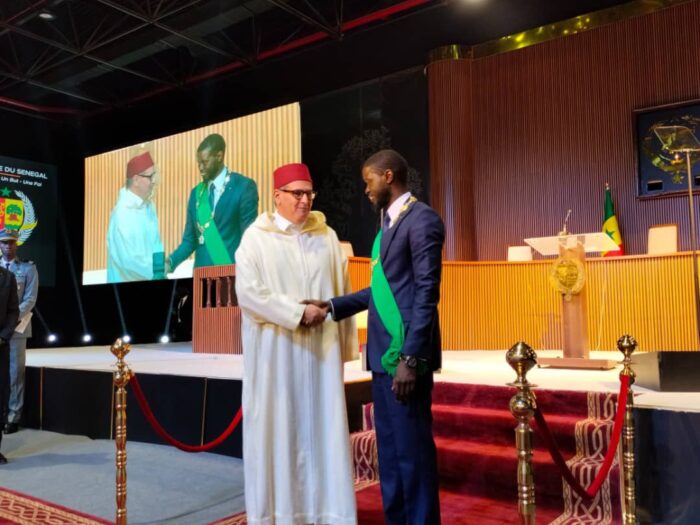
More recently, the publication of a joint communiqué on November 10, in which the two countries reaffirm their desire to take the Moroccan-Senegalese strategic partnership to an even more « ambitious » level , based on « solidarity, mutual trust and shared development, » while announcing a 15th Joint Commission and Moroccan-Senegalese Economic Days in Dakar in 2026. In other words, a concrete work schedule that goes well beyond the declarations of intent.
Momentum?
This rapprochement has not come out of the blue. It comes at a time when Senegal is entering a phase of economic repositioning. With the arrival of the Diomaye Faye-Sonko duo, Dakar is looking to gain greater control over its public policies and capture more local value, while the first offshore gas revenues from the Grand Tortue Ahmeyim (GTA) project, operated jointly with Mauritania, are beginning to reshape its growth prospects.
For its part, Morocco, after several years of broad continental prospecting, now seems to be focusing on more targeted partnerships capable of producing tangible, long-term results. There’s nothing to say that Rabat is « refocusing » its African strategy on Dakar, but the signals are converging sufficiently to make Senegal one of the priorities of the moment.
Potential beyond numbers
The figures do not yet tell the whole story of integration, but they do testify to a clear potential. Moroccan investments in Senegal are fluctuating sharply: just over one billion dirhams in net flows in 2023, then almost 400 million in 2024. The Moroccan presence is real, but still far from reaching its potential: the amounts involved remain modest in relation to the needs and shared ambitions.
The same is true of trade. According to the Foreign Exchange Office , Moroccan exports to Senegal will reach 3.03 billion dirhams in 2024, a stable level but slightly down from 2023. Conversely, imports from Senegal will rise to 589 million dirhams, confirming an increase in trade, albeit from a still modest base. In other words, the trade dynamic is making headway, but there is still plenty of room for improvement, given the complementarities between the two economies.
For Moroccan companies, the Senegalese market is not yet a mainstay, but it’s not marginal either. Senegal’s National Statistics Agency (ANSD) ranks Morocco as the country’s second-largest African supplier, behind Nigeria but ahead of South Africa and Egypt. A solid position in three segments where Moroccan supply is competitive – lubricants, packaging and pharmaceuticals – but one that suggests a much wider field that is still under-exploited.
Two sides of the same coin
If there is a comparative advantage in this relationship, it lies above all in the human factor. « It’s a historic relationship founded on trust, good faith and an almost instinctive mutual benevolence between the two countries, » recalls Hicham Kasraoui, a strategy consultant specializing in Africa. In a continent where most economic partnerships are built on mistrust or administrative slowness, Senegal is one of the few countries where Moroccan companies can move forward quickly. And that’s precisely what Rabat is looking for today: speed, visibility, and a partner capable of projecting itself.
« Morocco masters value chains that Senegal is seeking to develop; and Senegal offers a young, dynamic and receptive market »
Beyond the figures, the potential of the Moroccan-Senegalese partnership is based on an economic collaboration that is still far from being exploited. Morocco arrives with a solid industrial and logistics base, while Senegal is in a phase of expansion – rising agricultural power, rapid urbanization, infrastructure needs, energy transition. « Both countries are on trajectories that can reinforce each other. Morocco masters value chains that Senegal is seeking to develop; and Senegal offers a young, dynamic and receptive market », analyzes Hicham Kasraoui.
What brings Rabat and Dakar closer together today are also shared structural issues, with demographic pressure and the need to move upmarket. In agriculture, in particular, both countries face the same shocks (drought, climate volatility) and know that the answer lies in innovation and resilience. « We share the same development principles and the same expectations in terms of co-development. The challenges are largely similar, and the best response can only be a joint one », said Kasraoui.
The Atlantic, a new playground
Another priority, that of infrastructure, reflects a shared ambition: that of fast, competitive connectivity. » We need virtually seamless connectivity between ports, airports, freeways and rail lines, » says Kasraoui. Rabat has a clear advantage, but Dakar has been investing heavily for several years – and the complementary nature of the platforms can create real value on a regional scale.
« We need Senegal to facilitate financing models, contribute to the region’s security, and find real complementarity between Moroccan ports (…) and Senegal’s entire maritime façade »
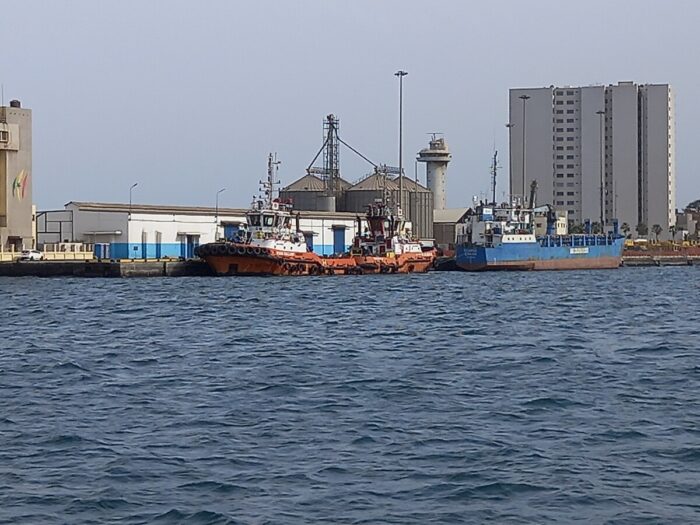
This convergence takes on a particular dimension in the Atlantic context. Senegal not only lies on the route of the proposed Africa-Atlantic Gas Pipeline between Nigeria and Morocco, but is also set to become one of its future suppliers. Its participation, along with Mauritania, is crucial to the viability of the energy corridor sought by Rabat and Abuja. And this role goes beyond energy.« We need Senegal to facilitate financing models, contribute to the region’s security, and find real complementarity between Moroccan ports – including the future port of Dakhla – and the entire Senegalese coastline, » said Kasraoui. In other words: if the Atlantic axis is to become a coherent economic area, Dakar will be one of its natural pivots.
Africa 4.0
The potential for cooperation is also to be found in the digital arena. While Morocco wants to capitalize on AI, technological sovereignty and digital transformation, Senegal has an already vibrant tech ecosystem. « In FinTech or digital services, there are real national champions, buoyed by solid incubators and clear public support, » sites Kasraoui. In this field, Rabat can learn as well as share. Senegal’s special economic zones – regularly ranked highly – are a case in point.
But for these technological convergences to take off, they need to be part of a more balanced commercial relationship. And this is where the task becomes more delicate. Trade has increased significantly – almost quadrupling in less than ten years – but remains unbalanced to the detriment of Senegal. » Sooner or later, we’ll have to address this deficit to build a more balanced relationship, » says Kasraoui. This implies an increase in cross-investment, greater access for Senegalese companies to the Moroccan market, and financing mechanisms capable of supporting joint projects.
Two avenues are open. The first is bilateral, based on the areas already identified – agriculture, renewable energies and infrastructure – and on greater mobilization of public and private financing. The second is through the African Continental Free Trade Area (AfCFTA), which could facilitate the harmonization of rules and access for Senegalese products and services to the Moroccan market, provided that economic players are fully committed to it, insists Hicham Kasraoui.
All in all, the Moroccan-Senegalese relationship is moving forward on solid foundations, but it has yet to reach its full potential. The potential is there, and so are the political signals; what remains is to transform this moment of alignment into tangible projects, to the benefit of both economies.
Written in French by Safae Hadri; edited in English by AngloMedia Group.


