

As soon as I set foot outside, I switch on my radar. If I’m walking, I constantly have to look right, left, ahead, and behind me to make sure no one is following. I’ve had to cross the street so many times, or even change my route completely, just to avoid any risk,” says Sara, 28, a call center employee in Casablanca. Beside her, Kenza, 26, confirms: “While men walk calmly down the street, we constantly have to watch our backs. It’s not fair, but that’s how it is,” she laments.
“Being a woman in the street means stepping into a space where every glance reminds you that your presence is forbidden”
The words of the two young women echo those of sociologist Fatema Mernissi, who extensively studied the role of women in Moroccan society and the challenges they face. In 1991, she already wrote: “Being a woman in the street means entering a space where every glance is a reminder of the prohibition.” More than thirty years later, and despite several legal, political, and institutional reforms aimed at strengthening the principles of gender equality and the empowerment of women, the situation has not really changed. The Moroccan public space remains an unequal territory, familiar and obvious for men, strewn with obstacles for women.
Several figures confirm this unease. According to a report by the Moroccan Center for Citizenship (CMC) published last July, more than half of Moroccans (52.2%) say they are dissatisfied with the way women are treated in public spaces. Only 11.9% express satisfaction, and 36% consider the level of respect “average.” Street harassment even figures among the main concerns related to “negative behaviors likely to tarnish the image of Moroccans” during the 2030 World Cup. Nearly 70% of survey participants (69.6%) fear that “female tourists” will be victims of verbal or physical harassment during the event.
Tourists in the spotlight
In early July, a video that went viral showed a French tourist, traveling solo in Essaouira, recounting her ordeal on a beach, with footage to support her story. In the video, a man is seen repeatedly kissing her hands against her will. “You don’t kiss people like that,” she says to the camera. An hour later, the man was still there, watching her. “It’s the first time I felt in danger in Morocco. I was really scared for myself,” she confides. A passerby eventually helped her and advised her to call the police, which drove the attacker away. The police arrested him a week later.
@sharkdz213s #maroc #essaouira #marocaine🇲🇦 #bousbir🇲🇦 #maghrebunited🇪🇭🇩🇿🇹🇳🇱🇾🇲🇷 #algerie🇩🇿 #algeria #dz #tunisia #tunisia🇹🇳 #tunisie #sharkdz🦈🇩🇿 #viralvideos #tik_tok ♬ son original – SHARK DZ 🦈🇩🇿ⵣ🇵🇸🇪🇭
A year earlier, in August 2024, another video had circulated: a tourist, posing with a cat in the medina of Chefchaouen, was kissed by surprise. Again, the police opened an investigation. The incident, which actually dated back to May 2023, led to the arrest of a man suffering from complications related to a psychological disorder.
The issue of harassment and women’s safety also fuels social media, notably through videos by Spanish TikTok creators. Clara Retamero, for example, shared her “annoying” experience in the streets of Marrakech last August as a solo traveler. Her video received over 700 comments, many of which accused her of wearing “provocative” clothing.
While female tourists are affected, Moroccan women remain the most exposed. In early July, in Tangier, a surveillance camera captured a sadly commonplace scene: a man on a motorcycle brushed past a passerby on the corniche and touched her body before disappearing. The widely shared video reignited the debate on violence against women in public spaces. It recalls another assault that took place in the same location in October 2024, this time involving four underage boys, who were brought before the examining magistrate of the Tangier Court of Appeal.
Women as prey
But these widely reported cases are only the tip of the iceberg. The reality is far darker. In early 2025, a study conducted by the organization Menassat for Social Research and Studies, titled “Women, Public Space, and Individual Freedoms,” revealed another stark finding: more than 82% of women surveyed stated that women are the primary victims of harassment in public spaces, a view shared by 81% of men. Even more worrying, 55% of Moroccans oppose women’s freedom to control their own bodies in public spaces, while 67% accept it in private spheres.
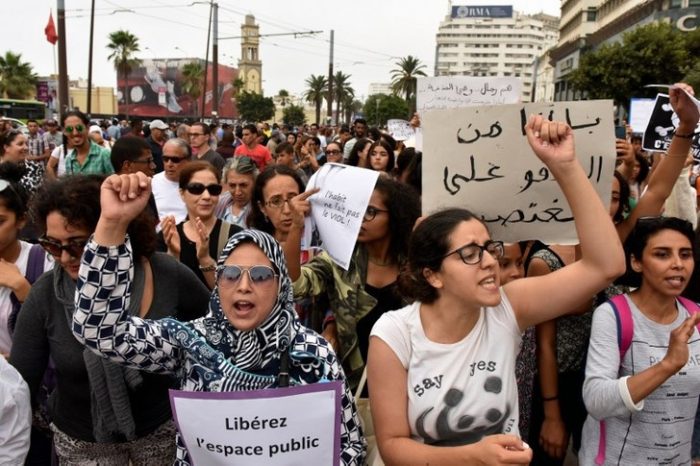
The most recent official national survey on the subject, published in 2019 by the High Commission for Planning (HCP), remains the reference. It notes that violence against women and girls in public spaces takes multiple forms: sexual harassment, groping, attempted rape, and rape. These acts of violence occur everywhere: in the streets, markets, parks, public transport, around workplaces, and even in residential neighborhoods.
“Violence in public spaces limits the freedom of movement of women and girls, reduces their ability to participate in school, work, and public life, hinders their access to services, and affects their health and well-being,” the HCP report emphasizes.
According to the same report, 1.7 million Moroccan women were victims of some form of violence in public spaces in the 12 months preceding the study. This represents 12.6% of the female population. In nearly one out of ten cases, the violence was sexual or physical. The most exposed are single women (18.7%) and divorced women (10.1%), but married and widowed women are not spared. Educated women, particularly those with secondary or higher education, are also among the main victims. The higher the level of education, the greater the apparent vulnerability.
“Carte blanche” to male desire
For Nouzha Skalli, former PPS Minister of Social Development, Family, and Solidarity, and a long-time women’s rights activist, the issue cannot be reduced to a lack of education or simple incivility. “Sexual harassment in our country is a structural phenomenon, rooted in sexual frustration among young people, particularly males,” she believes.
“We are repeatedly told that male desire is natural, legitimate, even necessary before marriage. This grants men an almost carte blanche to express their sexuality, unlike women”
According to her, society sends a double message: on one hand, it forbids any relationship outside of marriage in the name of religion, and on the other, it implicitly validates men’s right to a sexuality. “We are repeatedly told that male desire is natural, legitimate, even necessary before marriage to ‘allow him to carry out married life.’ This culture grants men an almost carte blanche to express their sexuality, unlike women, who are categorically deprived of it,” she laments.
Even after marriage, she continues, a man who takes a mistress risks almost nothing, “supported by the so-called right to polygamy.” Nouzha Skalli, now president of Awal Houriates, an independent, nonpartisan, nonprofit think tank working for human rights, fundamental freedoms, and full citizenship for women and men, recalls: “This man can invoke a fatiha or promise marriage. The right to sexuality exercised by men does not put them at much risk.”
In the streets and beyond, harassment continues to shape the lives of women in Morocco. Between legal gaps and digital invisibility, the fight for their safety and freedom is far from won. An analysis of a reality that resists change.
Read… pic.twitter.com/veIhVVL3vD
— TelQuel (@TelQuelOfficiel) September 3, 2025
Women, always blamed
But women, if they become pregnant or file a complaint, are treated as the guilty party. “Thus, a complainant will be asked where she was, how she was dressed, or why she got into the car with him,” Nouzha Skalli laments.
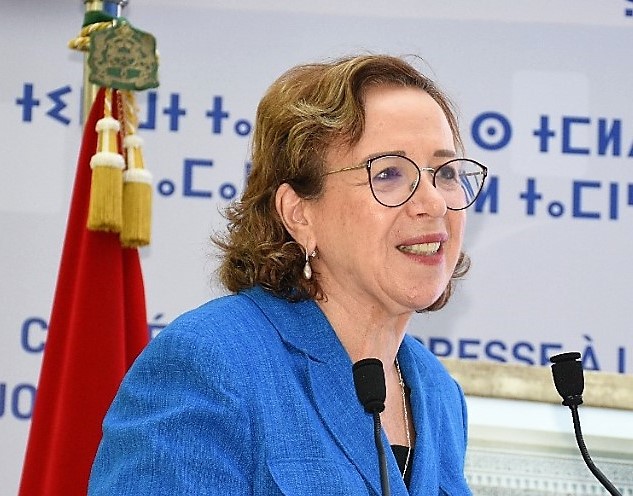
This legitimization of male desire drives some men to resort to violence, harassment, or deceit—promises of marriage, lies, use of date-rape drugs, etc.—to achieve their ends, our source believes. “Young people, particularly those from disadvantaged backgrounds, acknowledge their sexual frustration themselves and thank us for daring to talk about it, because for many of them, unlike the wealthier who find hidden solutions, they are pursued everywhere,” notes the former minister.
The expected silence
On the women’s side, few dare to take concrete steps to confront physical or sexual violence. The data from the HCP national survey are revealing: across all contexts, only 0.9% of victims of physical and/or sexual violence turned to civil society services. Similarly, only 10.4% took legal action or filed a complaint with the competent authorities—7.5% in the marital context and 11.3% outside of it. The proportion rises to 13% in cases of physical violence but drops to just 3% for sexual violence.
In other words, regardless of the context, the majority of women remain silent in the face of the violence they endure. The only exception is physical assaults in public spaces, reported by nearly 30% of victims. But even in these cases, obstacles remain numerous. “A rape victim, for example, is often treated as the guilty party and risks being prosecuted under Article 490 of the Penal Code on sexual relations outside of marriage. In the absence of evidence, she can end up convicted for fassad (immorality),” notes Nouzha Skalli.
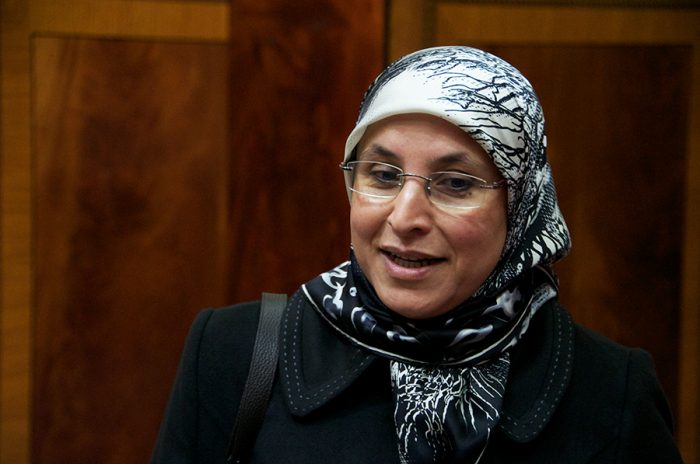
In 2018, while the government was still led by the conservatives of the Justice and Development Party (PJD), a new law intended to better protect women came into effect: Law 103.13. Championed by the minister at the time, Bassima Hakkaoui, it was presented as a turning point in the fight against violence toward women. “Seven years later, this law has shown its shortcomings,” observes Bouchra Abdou, president of the association Tahadi for Equality and Citizenship (ATEC).
A law with gaps
For the activist, a revision is necessary, starting with the very definitions of violence against women. Article 503-1 of the Penal Code, amended and supplemented by Article 2 of Law 103-13, states that anyone who persists in harassing another person in public or other spaces—through acts, words, gestures of a sexual nature or for sexual purposes, or via written, telephone, or electronic messages, recordings, or images—is guilty of sexual harassment and punishable by one to six months in prison and a fine of 2,000 to 10,000 dirhams. The penalty is doubled if the perpetrator is a colleague or a person responsible for maintaining order and security in public spaces.
“In the law, marital rape is not recognized, and sexual harassment is defined in a way that allows women to be accused of provocation”
But from the moment it was adopted, the very notion of “persisting in harassing another” sparked outrage among civil society. “But what does this actually mean? Does the perpetrator have to pull me, push me, or rape me for it to be recognized as sexual harassment? It is therefore necessary to have a clear and precise definition, in line with international conventions and UN standards, to protect women against all forms of violence,” insists Bouchra Abdou.
The same view comes from Nouzha Skalli. Law 103.13 “suffers from major gaps. It does not meet international standards and ignores the principle of ‘due diligence,’ which requires believing and supporting the victim, then investigating seriously. Marital rape is not recognized, and sexual harassment is defined in a way that allows women to be accused of provocation,” laments the former minister.
From the street to social media
Another limitation: while the text mentions harassment via written, telephone, or electronic messages, it does not explicitly define digital harassment or cyber-control, which have become commonplace. “Today, a large number of street harassers have left public spaces to move into the digital realm, and that is where the real danger lies,” warns Bouchra Abdou.
In public spaces, she recalls, harassment at least had some clarity. “The perpetrator could be identified. In the digital space, however, they most often act anonymously. They can harass a victim more freely, send messages, photos, or sexually explicit videos, which makes identification and prosecution much more difficult,” she emphasizes. The consequences, however, are very real: anxiety, isolation, and even school or professional dropout.
“Children must learn from a very young age what harassment is and understand that it is a crime punishable under the law”
Can we then hope for an improvement in the situation? For Bouchra Abdou, progress will only occur if there is a genuine political will. “Change has begun, but we need a radical transformation. The State must take responsibility, and the support units provided for under Law 103.13 must finally play their full role,” she insists. She also calls for extensive awareness-raising efforts, particularly through the media. “The public must become aware of the seriousness of harassment, whether in public spaces or online. It is essential to continuously broadcast prevention messages on television and dedicate regular programs to this issue,” she believes.
The role of schools is equally crucial, the activist continues. “Children must learn from a very young age what harassment is and understand that it is a crime punishable by law.” Appropriate sexual education is, in her view, an essential step: “It’s the foundation. If we don’t educate our children in this way before it’s too late, we risk moving toward moral decline.”
Hope remains measured on the part of Nouzha Skalli. Certainly, efforts are being made — training, integrated plans, partnerships with associations — but “certain ideological lobbies” continue, in her view, to block reforms by perpetuating the idea that “women are always to blame for going out, being present in public spaces, or even existing.” Yet, despite these resistances, “women are asserting themselves more and more, and many men are moving toward greater modernity,” she observes, concluding: “Society is advancing, but the law remains behind.”
Violence against women: the prosecution’s figures
The latest data published by the Public Prosecutor’s Office (2023) present a worrying picture of the violence experienced by women in Morocco. Harassment—whether verbal, physical, or digital, in public spaces or the workplace—is among the various forms of violence recorded by the authorities and documented by the prosecution.
- Harassment in the workplace
Total : 105 cases
By the boss : 16
By a colleague or unrelated person: 88
By a spouse: 1
- Harassment in public spaces
Total : 772 cases
By an unrelated person : 662
By a spouse : 105
- Harassment in written or electronic messages
Total : 220 cases
By an unrelated person : 202
By a spouse : 5
The DGSN and the gendarmerie claim to be stepping up prevention and enforcement operations, but activists highlight the scale of a phenomenon that remains largely underreported.
Written in French by Ghita Ismaili, edited in English by Eric Nielson


