

Casablanca, a summer morning. Between the rumble of combustion engines and impatient horns, a few silhouettes stand out. A BYD Seal glides silently along Zerktouni Boulevard. Further on, a Dacia Spring winds through the alleys of Anfa.
In front of a shopping center, a Tesla Model 3 driver waits, eyes fixed on a charging station that remains occupied. Here and there, the electric car is making its nest—still discreet, but undeniably present.
Smooth bodies, sharp LED signatures, the absence of exhaust pipes, closed grilles, and logos from Asia, Europe, or America add a discreet touch of modernity to the urban landscape.
Dealerships have understood it well: electric draws attention, fascinates, sparks curiosity and sometimes desire. But between the available supply and actual use, a gap remains.
In the showroom, but not in the city
The latest data from the Association of Vehicle Importers in Morocco (AIVAM) is clear: between January and May 2025, the Moroccan automobile market recorded strong growth, with 88,728 new vehicles sold, a rise of +36.7% compared to the same period in 2024.
Out of this total, 78,000 are passenger vehicles (PV) and 10,728 are light commercial vehicles (LCV). The momentum is real. Yet fully electric vehicles still account for only 1% of total sales.
By comparison, hybrid vehicles now make up 10% of the market, driven by the growing offerings of BYD, Toyota, Hyundai, Renault, and Lexus. A breakthrough that confirms motorists’ interest in alternative solutions, but also their caution toward going fully electric.
“The problem does not come from supply. Today, the Moroccan market offers a very diverse range of electric vehicles (…) starting at 200,000 dirhams”
Because here lies the paradox: nearly twenty brands now offer more than 40 fully electric models in Morocco. Dacia, BYD, DFSK, Citroën, Mercedes, Renault, Porsche, Geely, MG, BMW… all are betting on gradual adoption.
But demand remains constrained. “The problem does not come from supply. Today, the Moroccan market offers a very diverse range of electric vehicles, with Chinese and European brands, and models covering all price segments, starting at 200,000 dirhams,” notes Abdelouahab Ennaciri, president of AIVAM.
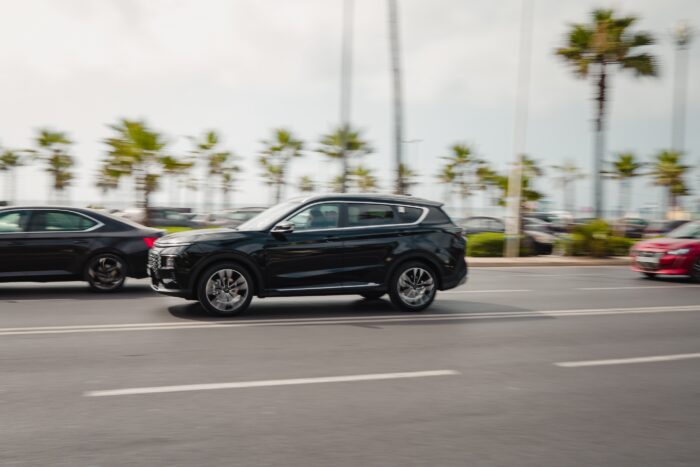
The vehicles are available, visible in showrooms, accessible through credit or leasing, sometimes even accompanied by commercial incentives. But once purchased, these vehicles run up against reality: the absence of a reliable, fast, accessible charging network that covers the entire national territory. It is therefore this gap—between the technological showcase and the poorly equipped roads—that slows the transition.
Brands are flocking in, models are multiplying, buyers are beginning to follow. Yet in Morocco, the electric car remains hindered by a stubborn reality: scarce charging stations, legal uncertainty, political inertia. Behind the speeches about energy transition,… pic.twitter.com/ltKGd7CVeD
— TelQuel (@TelQuelOfficiel) July 28, 2025
Delays under pressure
In major cities like Casablanca, Rabat, or Tangier, publicly accessible charging stations are sparse
In major cities like Casablanca, Rabat, or Tangier, publicly accessible charging stations are sparse, often limited to private parking lots, hotels, or shopping centers. As for so-called “fast” chargers, they remain exceedingly rare.
In total, there are about 600 public charging stations across the kingdom, a figure still far below the needs. By comparison, Spain has 40,000 public stations and Portugal 14,000. The result: recharging an electric vehicle is more an obstacle course than a daily reflex.
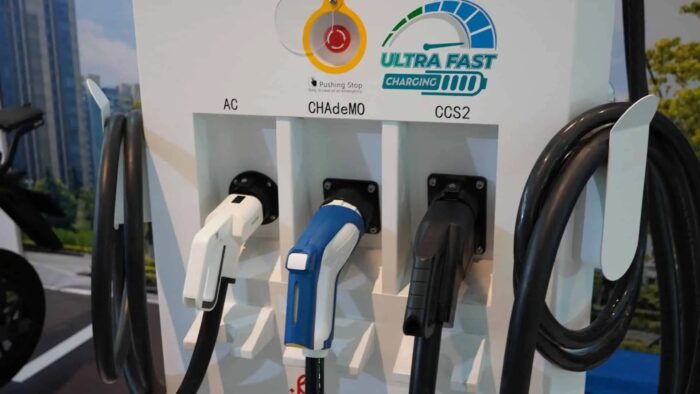
Especially since there is charging and charging. Not all stations are equal. The most common in Morocco are so-called “normal” or slow chargers, operating on alternating current (AC), with power generally between 7 and 22 kW. They are suitable for home or long-duration charging: it takes between 4 and 10 hours for a full charge, depending on the vehicle’s battery capacity.
At the opposite end, fast chargers use direct current (DC) and deliver power from 50 to 150 kW, and up to 250 kW for the most advanced models. This type of equipment makes it possible to recharge 80% of a battery in 20 to 30 minutes, or even 10 to 15 minutes for ultra-fast chargers like those deployed by Tesla or Ionity in Europe.
But in Morocco, these chargers remain the exception, and their scarcity seriously hinders electric mobility, particularly for long journeys.
FastVolt, Kilowatt: the duo powering the market
On the operators’ side, the Moroccan market is only just beginning to take shape. Tesla was one of the first to install its Superchargers in the kingdom. Free of charge, their use, however, remains limited to the brand’s customers.
Today, two private players dominate most of the field: Kilowatt and FastVolt
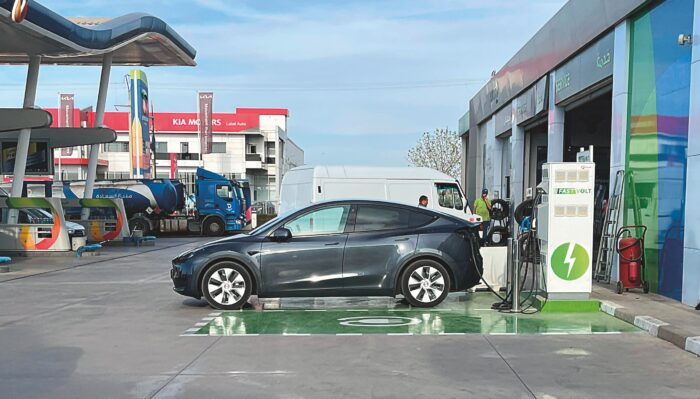
Today, two private players dominate most of the field: Kilowatt and FastVolt. The first, launched by entrepreneur Ali Lakrakbi, is betting on gradual coverage in high-traffic urban areas and strategic transit points.
Its model is based on partnerships with hotels, shopping centers, private parking lots, or major retail chains. Kilowatt thus benefits from free access to land, while its partners gain a marketing tool, enhancing their image and attracting customers concerned with sustainable mobility.
“The network is open to all electric vehicles, without brand restriction. The fast chargers are billed per session: our customers pay 90 dirhams for a fast charge. It’s simpler for the user,” explains Ali Lakrakbi. This model relies on flat-rate pricing, in the absence of a clear regulatory framework governing billing by kilowatt-hour.
“A DC fast charger costs between 250,000 and 400,000 dirhams to set up, compared to around 25,000 dirhams for an AC slow charger,” specifies Ali Lakrakbi
At the same time, some AC chargers installed at Kilowatt’s partner sites remain free for users. But this free access is often tied to temporary commercial agreements, and these slow charging points are not enough to absorb the growing flow of users, especially in major urban areas.
Yet behind this pricing simplicity, installation costs remain a challenge. “A DC fast charger costs between 250,000 and 400,000 dirhams to set up, compared to around 25,000 dirhams for an AC slow charger,” specifies Ali Lakrakbi. A major gap, which mechanically slows the rollout of a dense and efficient network, particularly in areas where traffic remains limited or unpredictable.
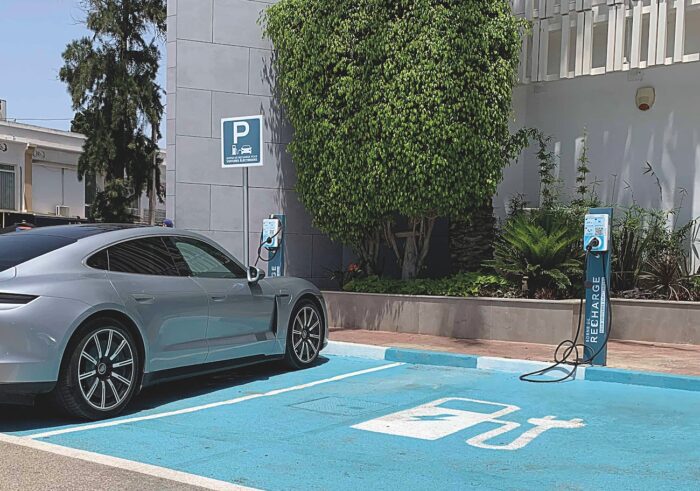
On the other side, FastVolt, a subsidiary of Afrimobility—the venture capital branch of AKWA Group specializing in funding and supporting startups—has been equipping Afriquia service stations.
Its plans are paid, either through subscription or per-use payment, often in the form of a “parking service.” This mechanism makes it possible to bypass the current legal framework, which grants the ONEE and autonomous utilities the exclusive right to sell electricity by the kilowatt-hour.
Other groups are setting up more discreetly. TotalEnergies has begun equipping certain highway rest areas, as has Shell. These initiatives, however, remain marginal.
Between WhatsApp and Plugshare
Amid this still-disorganized offering, motorists struggle to find their way. To navigate, many turn to applications like Plugshare, which allow them to check available stations in real time, their status, their compatibility with different vehicles, and sometimes even comments from other users.
Similarly, informal WhatsApp groups bring together the community of electric vehicle drivers to exchange real-time information: stations out of service, occupied chargers, new installations… One of the most active, titled “Electric Mobility in Morocco,” has more than 600 members and functions as a continuous support channel.
Should there be massive investment in infrastructure to create demand, or should one wait until a critical number of electric vehicles is on the road to justify the investments? “It’s the chicken or the egg dilemma”
But despite these community tools, the prevailing feeling remains uncertainty. Reading the comments in this WhatsApp group is telling: too few stations, too hard to find, too often out of service, lines that are too long… And when they are available, they are sometimes paid, sometimes free, sometimes reserved…
An ambiguity that weighs heavily on the decision to buy. This uncertainty fuels a vicious circle well known to industry specialists. Should there first be massive investment in infrastructure to create demand, or should one wait until a critical number of electric vehicles is on the road to justify the investments?
“It’s the chicken or the egg dilemma,” sums up a market player. As long as the network remains limited, mass adoption is compromised. But without adoption, investors hesitate to commit to costly deployment, especially for fast chargers, the installation of which can require up to 500,000 dirhams depending on power and the site’s technical constraints.
This blockage, far more than a simple technical obstacle, now raises the question of the credibility of the official discourse on energy transition. Because beyond sales figures and usage constraints, it is an entire ecosystem that is struggling to get moving. Yet this inertia stands in stark contradiction with the ambitions proclaimed by the authorities.
Morocco has committed to raising the share of renewable energies to 52% of its electricity production capacity by 2030. Internationally, it positions itself as an African model of low-carbon growth. The country is also investing heavily in the production of green hydrogen and the industrialization of the battery sector, with several projects underway.
Being ready for Morocco 2030
The influx of Moroccans living abroad during the summer holidays is already creating problems with the availability of charging stations. And the situation is likely to become even more complicated. By 2030, the kingdom will also host — along with Spain and Portugal — the World Cup. A strategic milestone, both an international showcase and a logistical challenge.
“We’re talking about a potential influx of 5,000 to 10,000 electric vehicles on Moroccan roads during the tournament,” says an operator
Industry players are counting on the arrival of several thousand foreign electric vehicles in the kingdom during the competition, particularly from European supporters and official delegations. “We’re talking about a potential influx of 5,000 to 10,000 EVs on Moroccan roads during the tournament,” says an operator. A major opportunity… provided the infrastructure is ready.
In this context, the State is no longer just a regulator or facilitator. It becomes a guarantor of coherence between its climate ambitions and its planning choices. Without clear direction, Morocco risks finding itself out of step between what it promotes internationally and what it actually offers on the ground. Rather than “forcing the hand,” the aim here would be to guide, support, and catalyze a dynamic that, in practice, already exists.
“Electric mobility is establishing itself as a global standard. Morocco cannot afford to fall behind”
“Electric mobility is establishing itself as a global standard. Morocco cannot afford to fall behind. Especially as international exchanges will intensify, and electric vehicles will naturally be part of the flows. We must be ready to welcome them, otherwise we will be left out,” warns Omar El Hani, president of the Intersectoral Professional Association for Electric Mobility (APIME).
For this, expectations vis-à-vis the State are clear: set a direction, ease the regulatory framework, and propose, eventually, a set of fiscal and logistical incentives. But above all, remove administrative and regulatory obstacles to allow investors who are ready to bet on the sector, without State aid or subsidies.
Investors waiting for a signal
And yet, the private sector is ready. Even though the number of vehicles on the road remains limited, several operators say they are prepared to invest heavily in the deployment of charging stations, particularly on the highway network. But to move forward, they demand above all a clear national strategy and a structured state framework.
Among them is Ratibecom, which is leading one of the most advanced projects to date. Ratibecom is a multi-activity group headed by entrepreneur Abdelmoula Ratibe, whose companies currently employ nearly 7,000 people.
The Ratibecom group has financing, technology (hardware and software), as well as partnerships in Morocco and abroad. The group is even planning to launch an application that would allow Moroccan subscribers to its service to charge their cars at international stations outside Morocco, thanks to partnerships established by the company.
Ratibecom plans to deploy, within five years, 1,000 fast-charging stations (that is, 2,000 charging points) across the entire Moroccan territory.
Around fifty of them, with capacities of up to 350 kilowatts, will be specifically intended for highway rest areas, a link considered essential to reassure future buyers about the feasibility of long-distance travel.
But despite the alignment of partners, plans, and financing, Ratibecom’s project remains on hold, lacking the approval of Autoroutes du Maroc (ADM)
But despite the alignment of partners, plans, and financing, the project remains on hold, lacking the approval of Autoroutes du Maroc (ADM). On the automakers’ side, however, the interest is real. “All the brands we have met are ready to sign provided we obtain authorization from Autoroutes du Maroc,” explains Abdelmoula Ratibe, CEO of the group.
The system envisioned by Ratibecom is based on a hybrid model, combining infrastructure deployment with incentives for vehicle purchases. If an agreement is reached with AIVAM, each buyer of an electric car could subscribe to a monthly plan of around 500 dirhams, which would cover all their charging needs.
“Some dealers have declared themselves ready to cover the cost of this plan on their own,” confides Abdelmoula Ratibe. On average, this plan would represent savings of 6,000 to 8,000 dirhams per year compared to a combustion vehicle, or up to 70% less in fuel expenses.
The goal: to create a virtuous circle that removes economic barriers to purchase while ensuring the viability of the charging network. On the automakers’ side, interest is therefore real.
ADM defends itself
Contacted by TelQuel, the National Motorway Company of Morocco (ADM) states that it has fully integrated the challenges of electric mobility into its sustainable development strategy. “Since its creation, ADM has placed social responsibility and sustainable development at the heart of its priorities,” says the manager of Morocco’s highway network.
As early as 2017, ADM recalls having launched, in partnership with IRSEEN, a pilot project for the installation of charging stations at strategic points of the highway network. Since then, it claims “nearly 50 stations in service, spread across the entire highway network,” with power levels ranging from 22 to 180 kilowatts.
This rollout “is still ongoing,” with the systematic integration of stations in new construction projects and the equipping of service areas. The stated goal: to guarantee increasingly extensive coverage for electric vehicle drivers.
But the significant gap between the power levels offered raises technical questions, with several industry professionals considering that 22 kW stations, while useful, do not fully meet the requirements of a highway network where fast charging remains essential for long-distance travel. Moreover, while ADM claims that the current 50 stations cover the entire network, some users note that routes such as the Casablanca–Safi axis would benefit from stronger coverage.
This situation arises in a context where demand is rapidly evolving. The growing number of electric vehicle drivers and the arrival of the first users on the network are creating new pressure that requires an acceleration in the deployment of infrastructure.
ADM states that it is currently conducting a study to “identify the needs in terms of number and power of stations.” But no timeline has yet been provided regarding the completion of this study
In response to these challenges, ADM states that it is currently conducting a study to “identify the needs in terms of number and power of stations, optimize charging time in relation to parking time, and resize parking areas to better accommodate electric vehicles.”
At the conclusion of this study, a “strategy to strengthen the charging network will be developed, including the deployment schedule, the prioritization of locations, as well as the upstream solutions to be implemented to guarantee reliable and optimal coverage for electric vehicle users, in a logic of complementarity and support for the country’s energy transition”, it specifies.
However, no timeline has yet been provided regarding the completion of this study. In addition, a strategic question remains unresolved: the financing model for future installations.
The public institution has not yet clarified whether these investments will be borne by ADM itself, by the oil groups operating at service areas, or by other private sector players. This question, understandable during a phase of study and planning, nonetheless draws the attention of potential investors regarding the prospects of upgrading the national road infrastructure to international standards.
While the sector tries to get organized
While waiting for ADM’s promises to materialize, other players in the sector have tried to respond to the urgent needs of motorists. An initiative led by private operators, in coordination with the Association of Vehicle Importers in Morocco (AIVAM) and APIME, aimed in particular to create a pooled fund to finance the nationwide deployment of charging stations.
Concretely, each importer or manufacturer of electric vehicles would commit to contributing about 6,000 dirhams per vehicle sold, in order to feed this fund and accelerate nationwide coverage. But despite the interest it generated, the project, too, has remained in the drawers.
The mechanism had even been submitted to the Competition Council to verify its compliance with market rules. “This mechanism aimed to involve the entire automotive value chain in building the national infrastructure. It has not been abandoned, but we are still waiting for a green light to relaunch it,” confides Omar El Hani, president of APIME.
Conceived as a collective response to the infrastructure deficit, this initiative, however, was never activated. No contractual framework was established. The idea, though still relevant to its promoters, remains suspended, awaiting a political signal.
The missing link
This is where the real problem lies. Because despite structured initiatives, promised investments, and the declared commitment of several private players, nothing is really moving. The political signal—decisive for triggering a true scaling-up—has yet to appear.
And this signal can only come from above. It requires a clear will, expressed through strong government arbitration, capable of removing institutional blockages, settling disputes between public actors, and above all, setting a readable course for the entire ecosystem. But to this day, no national plan has been formalized, no law or specific incentive framework for electric mobility has been enacted.
Above all, the administrative and regulatory obstacles have still not been lifted. Should this be seen as a simple delay in interministerial coordination? A lack of strategic vision? Or a form of economic conservatism, where entrenched interests—particularly those of the oil companies—still weigh heavily on future choices?
So many questions remain unanswered, feeding the frustration of operators. Because while official speeches celebrate energy transition, the reality on the ground remains frozen. And without a clear political push, even the most advanced projects end up bogged down in administrative limbo.
Written in French by Safae Hadri, edited in English by Eric Nielson


