

Morocco, the world’s leading producer of cannabis, wants to make its mark on the international legal market for this green gold. To achieve this, the kingdom is counting on improving the competitiveness of its products. In fact, this is one of its priorities for 2025, following record production of over 4,000 tonnes in 2024.« We’re going to focus on the competitiveness of our products, their marketing and the penetration of different markets, in countries where we have the opportunity to do so« , says a source at the National Agency for the Regulation of Cannabis Activities (ANRAC), contacted by TelQuel.
« Today, we have legal cannabis-based cosmetics and dietary supplements registered in Germany and France »
At present, Morocco already exports its cannabis in the form of dry matter or resin, in compliance with national regulations and those of destination countries. In May 2024, for example, Biocannat, a cooperative based in Bab Berred, sent 50.5 kg of CBD paste to Switzerland. But now, the kingdom wants to focus on exporting finished products. « We already have finished products based on legal cannabis registered in Germany and France. These are cosmetics and dietary supplements« , says our source.
With record production set for 2024, Morocco aims to strengthen the presence of its legal cannabis on the international market. Already present in France and Germany, products stamped « Made in Morocco » aim to conquer new horizons, capitalizing on their competitiveness… pic.twitter.com/5mtxGxs7s8
– TelQuel (@TelQuelOfficiel) February 6, 2025
According to the latter, Morocco is not only targeting the European market, where the majority of countries authorize the use of cannabis for medical, cosmetic or industrial purposes. The United States, for example, is considered the world’s leading market for legal cannabis products for medical and recreational use. And Canada, the first G7 country to fully legalize cannabis in 2018, also full of potential opportunities.
Focus on quality
To help them get started, in 2024 ANRAC accompanied several operators in the domestic market to attend or visit cannabis-dedicated trade fairs abroad. « We organize missions to practically every country where cannabis is regulated. And every time, the national operators are all present and come at their own expense. This shows that there’s a real interest and momentum in this direction« , explains our source: « They go there, they make contacts and find out about the different needs« . The aim is to ensure that they are better informed about each market and the different products on offer. This, in order to be more competitive.
To improve the competitiveness of products made in Morocco, the kingdom wants to focus on two « main parameters« : price and quality. « If we increase quality and productivity, we can reduce the cost of production and penetrate more markets by being more competitive« , summarizes our interlocutor. To achieve this, ANRAC first wants to reach 100% Good Agricultural and Collection Practices (GACP) certification.
In other words, legal cannabis growers must comply with World Health Organization (WHO) guidelines on Good Agricultural and Collection Practices (GACP) for medicinal plants.
ANRAC has established special guidelines for authorized growers. It lists the various « appropriate » quality standards for growing and harvesting cannabis to obtain high quality plant material for medical, pharmaceutical and industrial purposes, thus enabling « sustainable » development of the sector.
According to the guide, available on the agency’s website, the cultivation, production and harvesting of cannabis must be carried out under hygienic conditions that « minimize the risk of microbial contamination« . All personnel involved in handling cannabis must follow rules to prevent contamination.
Best practices
People suffering from transmissible infectious diseases are forbidden access to areas where they could come into contact with cannabis or its products. The same applies to those with open wounds, inflammations or skin infections, « unless they wear appropriate protective clothing and/or gloves until fully healed« .
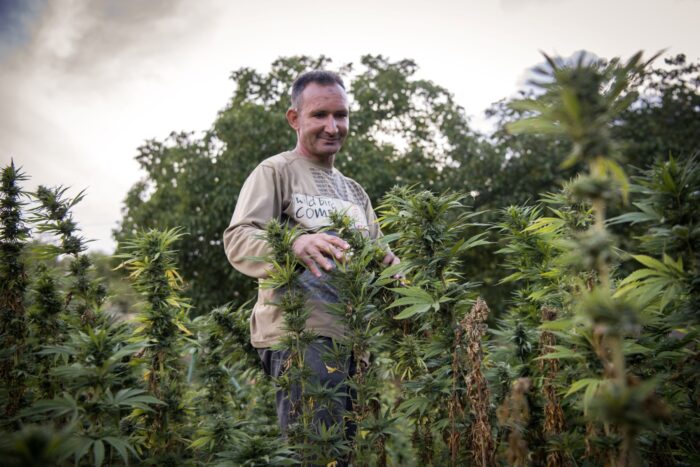
Authorized growers must also sow and cultivate cannabis in a way that is « directly inspired » by its « wild living conditions« , so as to « respect its original character » and « respectfully use cultivable land« , reads the guidelines.
Faced with a drought that has become structural in Morocco, the optimization of irrigation and the preservation of water resources are required. Growers are advised to avoid watering before the rains arrive. Irrigation should preferably be carried out « early in the morning or late in the afternoon« , once temperatures have dropped, to avoid water losses due to intense evaporation. Rainwater harvesting is recommended, as are modern micro-irrigation and soil moisture control methods. Finally, the use of registered pesticides is justified only to prevent or reduce crop damage.
« On the right track »
To comply with BPAR standards, further recommendations concerning harvesting, storage, transport and documentation are contained in this guide.
Authorized producers must also comply with GPM or Good Manufacturing Practices which are established international standards that govern the manufacturing, processing and packaging of products, including cannabis-based products, to ensure their quality, safety and efficacy. These standards are particularly important for products intended for medical or pharmaceutical use.
ANRAC is also organizing training sessions on these standards for national operators and cooperatives. « GACP certification is a prerequisite for producing and marketing Moroccan products and promoting them internationally. GMP standards must also be complied with if our finished product is to be sold abroad« , stresses our source at the agency. This is already the case for finished products sold in France and Germany. « It’s an indicator. It shows all the work that has been done in this direction at national level, and that we’re on the right track« , she adds.
The other parameter to be improved is the price of these finished products on the world market. ANRAC helps operators to improve their « technical conduct » and, consequently, their productivity. If this is optimal, Moroccan cannabis-based products will inevitably gain in competitiveness abroad, the agency believes.
Booming production
The figures for legal Moroccan cannabis are well and truly in the green. While the kingdom produced 294 tonnes in 2023, it made almost 14 times as much the following year. According to the agency’s balance sheet, presented to its board of directors at the end of December, legal cannabis production in 2024 amounted to 4082.4 tonnes, with an average yield of 20 quintals per hectare. More than half of this came from the local variety, known as Beldia, with 2,786.7 tonnes and an average yield of 17 qx/ha. The remainder was produced from imported varieties with a higher average yield, estimated at 28 qx/ha.
A further 2169 ha of legal cannabis were planted by 2647 farmers, grouped into 189 cooperatives. Here too, more than half of the area is devoted to the national variety (1,701 ha). « The momentum is there on the ground, » says our source at the agency with satisfaction. The royal pardon, granted in August 2024 to 4,800 cannabis growers, was the « turning point » for many of them, who are now working legally and « believe in it« , says our source.« And when they believe in it, they adhere to it.«
Thanks to this « very clear« improvement in productivity, farmers have a better picture of the future. « The agricultural, technical and economic context is settling down. Even if farmers need time, and operators too, » stresses the agency. Five cannabis processing plants are already operational, and others are in the process of being built. For 2025, the agency assures us that it has no quantified objectives, since this depends on the « voluntary commitment » of the farmer. However, a « strong commitment » from operators is expected.
New demands
ANRAC has a record of renewal of « practically 100% » of the authorizations issued in 2024. Many new applications have been submitted and are currently being examined by its various departments.
In addition to its role as legal cannabis watchdog, ANRAC’s mission is to support farmers and cooperatives in their dealings with other government departments, including the Ministry of Health and the ONSSA, from application to marketing. « This is what makes the Moroccan experience so special compared to other countries« , notes our source at the agency.
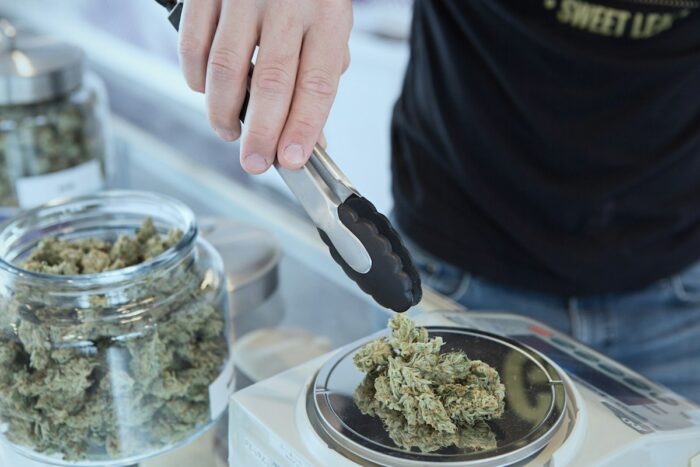
Structuring the cannabis industry is also a priority. The agency has launched a strategic study covering the first three months of the year. This will enable us to draw up « a medium- and long-term vision of the sector, its development and, above all, the protection of the local national variety, Beldia« , we are assured.
In 2024, ANRAC granted 3,371 authorizations, out of a total of 4,158 applications examined and processed; 3056 authorizations were issued to 2907 farmers, and 315 authorizations to 158 operators.
These 315 authorizations include 77 processing authorizations, 83 marketing authorizations, 67 export authorizations, 35 seed import authorizations and 50 transport authorizations. One authorization was issued for seed export, and two others for the creation and operation of nurseries. The 158 operators themselves include 35 cooperatives, 87 companies and 36 individuals.
Also in 2024, ANRAC certified 7.6 million imported cannabis seeds on the basis of 30 import authorizations granted by ONSSA to 21 importers. Finally, the use of 1,717 quintals of Beldia seeds was authorized for 112 cooperatives.
Written in French by Ghita Ismaili; edited in English by The AngloMedia Group.


