

The Moroccan poultry industry is facing a shortage of poultry feed due to bad weather and a lack of foresight on the part of importers. Small farmers are the first victims of the crisis.
While demand for white meat and eggs traditionally increases during Ramadan, the Moroccan poultry industry is in crisis. The cause: bad weather is blocking the arrival of raw materials used to feed poultry. But some stakeholders are pointing the finger at importers’ lack of foresight. In either case, small farmers are struggling to survive .
Overall, however, industry representatives are reassuring: « The indicators we have show that national poultry and egg production is able to meet market demand during the holy month. The industry has prepared in advance, as it does every year, to ensure a normal and regular supply, « says Ahmed Daoudi, director of the Interprofessional Federation of the Poultry Sector (FISA).
Compound feed shortages
« When laying hens that produce eggs for consumption are rationed, they lay less than one egg per day. »
Although supply is able to meet demand during Ramadan, disruption to port traffic due to heavy swells is delaying the unloading of compound feed at the kingdom’s ports. This disruption is hampering the production chain, particularly for small farmers, who are forced to sell their chickens prematurely. « Chickens that will not be found on the shelves in the coming weeks, » says Youssef Alaoui, president of FISA.
The impact is also noticeable on eggs: « When laying hens are rationed, they lay less than one egg per day, « adds the same source.
For Youssef Alaoui, the main explanation is circumstantial: it is the weather that is preventing food from being transported to the ports. But Mohamed Aboud, president of the National Association of Broiler Chicken Farmers (ANPC), does not share this view.
« While it is true that the bad weather in Morocco is preventing ships from docking, the unavailability of raw materials for compound feed is mainly due to human factors, » said Aboud.
Some importers have reportedly delayed their purchases.
« When we asked them to restock their raw materials, they replied that they first had to sell off the stocks they had purchased at a higher price than the current market price. Today, following the suspension of maritime traffic, we are paying the price for this lack of foresight, » says the ANPC president. He believes that « the weather conditions are ultimately just an excuse used by importers to absolve themselves of their direct responsibility. »
When contacted by Telquel, a source within the Ministry of Agriculture reported that, to date, no exceptional measures to support the sector are being considered. The situation is expected to return to normal by the end of the week.
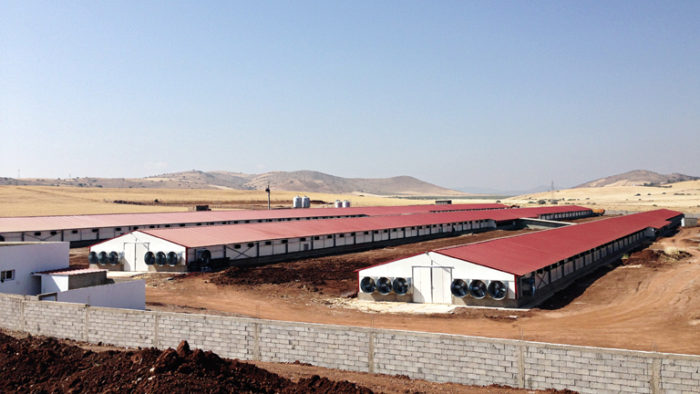
Small farmers suffocating
However, the economic situation of small producers is already critical, warns Aboud: « Small producers are not making any profits. Even though the price of a chick is currently 2 dirhams, production costs easily rise to 14 or 15 dirhams per kilogram. » This trend is primarily driven by feed costs. Corn and soybeans are rich in carbohydrates and protein. Without them, farmers are forced to increase rations to meet the nutritional needs of their chickens.« Small producers used to distribute an average of 3.5 kg of feed to produce one chicken. Now they have to provide up to 5 kg of feed,« explains Aboud.
Mohamed Aboud backs up his argument with figures: « If the basic feed costs 4 dirhams per kilo, the cost per head for feed alone is 20 dirhams. If we add other costs (gas, maintenance, medicines, vaccines, etc.), the production cost easily reaches 15 dirhams per kilo of meat produced. In this case, small farmers are bound to lose out. «
Logistical disorganization further worsens conditions for farmers: « The blockage of the supply chain threatens the continuity of small farmers’ operations. They no longer have access to compound feed because of the situation at the ports. The reduction in feeding rates causes the animals to lose weight, which in turn causes stress, exposing the chickens to disease. All these delays result in huge losses for small farms. »
Conversely, « large producers are not affected by these tensions, « he believes, because integration allows them « to reduce costs and even be as competitive as players in the European market. »
An oligarchization of the sector?
« The Green Morocco Plan has strengthened the oligarchic position of large industrialists by sidelining small producers. »
Mohamed Aboud extends his criticism to the very structure of the market, particularly for table eggs: « There is a big problem here. Eggs should cost much less on the Moroccan market. One wonders why an egg now costs 1.50 dirhams. « He points to « the market for table eggs, currently dominated by a small number of powerful players. »
The president of the ANPC recalls the evolution of the sector : « Before 2008, when the Green Morocco Plan was launched, there were around 500 producers of table eggs. Ten years later, in 2018, their number had halved. Currently, their number is certainly lower. » He denounces a chain of intermediaries and distributors that « maintains an unfairly high price level, with excessive margins. »
According to Mohamed Aboud, the root of the problem is essentially structural: « It is the way in which the Green Morocco Plan was implemented that led to this imbalance. By sidelining small producers who create competition, it has reinforced the dominant and oligarchic position of large industrialists. »
Written in French by Amine Belghazi; edited in English by AngloMedia Group


