

Not a geographical, but a climatic divide. Called “Carbon Border Adjustment Mechanism” (CBAM), this measure introduced by the European Union (EU) aims to impose on non-European imports the same level of environmental requirements applied to its own industries. Under the guise of climate fairness, a logic of shared responsibility is taking hold, leading to a profound revision of the rules of global trade. Morocco, a strategic partner of the EU, cannot escape it.
Aware of the possible repercussions of this regulatory shift, the Economic, Social and Environmental Council (CESE) has taken up the issue. In an opinion published following a self-referral and presented on Wednesday, September 24, the Council analyzes the impact of the CBAM on Moroccan exports, identifies the sectors at risk, and outlines a series of recommendations to anticipate, adapt, and seize the opportunities of this transition.
“Morocco must turn this new regulatory constraint into a strategic opportunity for its industrial competitiveness,” emphasized Abdelkader Aâmara, president of the CESE, at the opening of the presentation session. An approach that aims to place the Kingdom’s industrial sovereignty at the heart of climate challenges.
A European mechanism with global repercussions
The principle of the CBAM is clear in its formulation: to prevent the most polluting European industries from relocating to less regulated regions, causing a “carbon leak” incompatible with the objectives of the Green Deal. To achieve this, imported products will now be subject to a tax equivalent to the carbon price paid by European manufacturers for their emissions. This mechanism will initially apply to six highly emissive sectors: iron and steel, aluminum, cement, nitrogen fertilizers, hydrogen, and electricity.
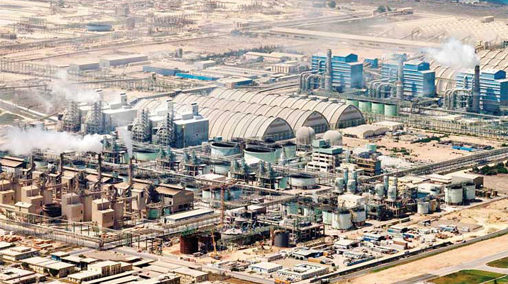
Within this limited scope, Morocco’s exposure still appears modest. The affected trade represents barely 3.7% of commerce with the EU, largely concentrated on nitrogen fertilizers produced by OCP. “In the short term, the direct impact on Moroccan exports remains relatively limited,” notes Amine Mounir Alaoui, the thematic rapporteur. “The first products affected are from large companies that are well organized and prepared to handle this mechanism,” he adds.
“Moroccan SMEs cannot afford to adapt to the European carbon border adjustment mechanism”
But the balance is fragile. Other segments of the value chain, such as ammonia, exported electricity, or, in the future, downstream sectors like automobiles or processed steel, could quickly fall under the scope of the mechanism. In that case, it would be Moroccan industrial SMEs on the front line. “SMEs cannot afford to set up CBAM monitoring units and adapt to this EU mechanism,” warned this CESE member, calling for structured support, notably through the creation of a dedicated fund.
In this perspective, the CESE advocates for a strategic initiative from the state. “The goal is to assist, not to finance,” Amine Mounir Alaoui clarified, emphasizing that the state must create the conditions for a controlled transition without replacing the role of industrial players. “Morocco must implement a readjustment mechanism, because it is unacceptable for Moroccan manufacturers to pay a tax on exported products while imported products into Morocco are exempt from any taxation,” the CESE member further explained.
Four axes to avoid a climate lag
In response to these findings, the Council has formulated a set of recommendations structured around four axss. “Morocco must establish a reactive governance system, built around public oversight and technical support for SMEs,” emphasizes Amine Mounir Alaoui. The first pillar: provide Morocco with an operational institutional framework dedicated to managing the CBAM. “A steering structure is needed that can ensure strategic monitoring, anticipate European regulatory developments, and support businesses, especially the most vulnerable,” the Council recommends. A monitoring unit dedicated to exporting SMEs would centralize information and streamline access to adaptation tools.
The second axis: the gradual establishment of a national carbon pricing framework. This would align Moroccan exporters with European standards while limiting the risk of value leakage. “For small businesses, the cost of a carbon assessment or European certification represents a burden that is hardly sustainable,” notes the rapporteur. The CESE therefore recommends the creation of a national support fund for SMEs to cover expenses related to compliance. “A gradual carbon pricing system would help limit the CBAM’s impact on competitiveness while keeping revenues within the national territory,” the opinion notes. But adaptation to new European constraints also requires accelerating projects that have been underway for several years.
“Industrial decarbonization is no longer an option; it becomes a condition for competitiveness”
Third axis: accelerate the implementation of the Kingdom’s low-carbon strategy. Morocco already has a national low-carbon strategy (SNBC), updated in 2023, which sets the goal of climate neutrality by 2050. It relies notably on the development of renewable energies, energy efficiency, waste valorization, and support for industrial innovation sectors. “Industrial decarbonization is no longer an option; it becomes a condition for competitiveness,” the CESE opinion reminds.
This requires expanded and secure access to renewable electricity, particularly for industries connected at medium voltage. The roadmap also includes support for the development of green hydrogen and CO₂ capture and valorization technologies, in partnership with actors such as OCP or IRESEN. “It is imperative to strengthen the country’s technical sovereignty over the verification of its emissions,” emphasizes the CESE, advocating for the accreditation of Moroccan structures capable of issuing recognized certifications. “The strategy is behind schedule and will need to be caught up as quickly as possible,” warns Amine Mounir Alaoui.
Finally, the Council calls for strengthening international and regional cooperation. The goal is to avoid technical isolation and defend the interests of Global South countries in climate negotiations. It is also about laying the groundwork, in the medium term, for a Moroccan CBAM—a mirror mechanism that would establish competitive equity between local and imported products. “The CBAM acts more as a tool to protect the European market than as a true mechanism for reducing greenhouse gas emissions,” the Council concludes, calling for a rethinking of the climate transition through the lens of economic justice.
Written in French by Younes Saoury, edited in English by Eric Nielson


