

When European grids falter, eyes turn south. Since the start of the war in Ukraine, the Old Continent’s decarbonization strategies have accelerated, revealing the fragility of its energy supplies. The UK, in particular, is trying to compensate for the limitations of its offshore wind farm. Hence, in January 2025, faced with extreme tension on the grid, the country had to activate two emergency gas-fired power stations, at a cost of 12 million pounds (around 153 million Moroccan dirhams): all to provide just three hours of electricity, reports The Guardian.
It is in this climate of vulnerability that the energy behemoths are striving to find more viable solutions and new interconnection schemes. The latest to unveil its ambitions in this race for electrical sovereignty is Australia’s Fortescue. Its founder, Andrew Forrest, recently announced plans to produce up to 100 gigawatts of renewable energy in North Africa – mainly in Morocco – for injection into the European grid via undersea cables. At stake: 500 terawatt-hours per year, equivalent to the annual consumption of a country like Germany, or the output of 17 nuclear reactors.
This electricity would come mainly from solar farms, and would be reinforced by battery storage capacities and hydrogen power plants, to ensure a stable supply, 24 hours a day. The exact route of the cable has not yet been confirmed, but according to the Australian billionaire, the power destined for the UK would pass through several Western European countries.
Two projects, two visions
If Fortescue’s announcement is causing a stir, it is also reminiscent of another, equally ambitious project: Xlinks, piloted by Sir Dave Lewis. The British businessman plans to link Morocco to the UK via a 4,000-kilometer undersea cable from Tan-Tan to Devon, at an estimated cost of £25 billion (around 320 billion dirhams). Xlinks plans a mix of 7 GW of solar, 4.5 GW of wind and 5 GW of batteries, spread over an area of 1,500 km² in southern Morocco. In the long term, this would cover almost 8% of the UK’s electricity needs.
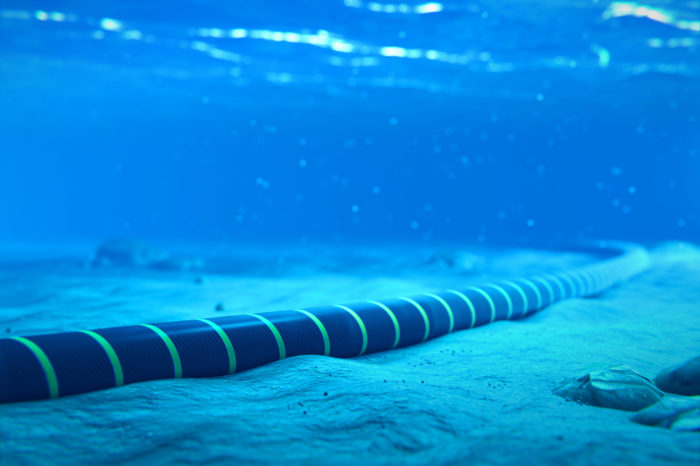
But while the two projects share a common ambition, their business models differ markedly. Fortescue does not seek any public subsidy and relies on a commitment to purchase at a defined price over a given period. Xlinks, on the other hand, is seeking a strike price guaranteed by the British government – a contract for difference that would provide the developer with a fixed electricity purchase price, even if market prices fall. A way of securing revenues with the support of public finances.
While Fortescue is only at the declaration of intent stage, Xlinks has already structured its financing round. In November 2023, TotalEnergies invested £20 million in Xlinks First Limited, alongside the UK’s Octopus Energy and the UAE’s TAQA fund. A strategic trio, reinforcing the project’s credibility through its financial strength and expertise in major energy projects.
In Morocco, the site studies have been completed, the land secured and all the necessary permits obtained. It’s across the Channel that things get complicated. Classified as « infrastructure of national importance », Xlinks has to go through a series of administrative stages, including a public hearing and an environmental impact study. Work is not expected to start before 2026.
Partner or host?
Thousands of hectares have been mobilized, gigawatts of production announced, and major investors committed. But behind the ambitions and international announcements, one question remains: what are the concrete benefits for Morocco?
To date, there has been no communication on the quid pro quos negotiated by the Moroccan side. Apart from general promises of local job creation and indirect economic spin-offs, no details have been made public on the distribution of revenues, possible equity investments or guarantees of skills transfer.
« At the very least, public players like Masen or CDG should be involved in the capital of energy projects. Otherwise, we’d just be renting out the sun with little to show for it. »
According to Amin Bennouna, an expert in energy and the development of energy projects, this lack of clarity raises questions: « When an oil company comes to prospect on our soil, ONHYM receives up to 25% of the revenues in the event of a discovery. Here, there’s no telling what Morocco stands to gain in the long term. »
The country therefore seems to be making its land, sunshine and political stability available, while remaining aloof from strategic discussions on governance and value sharing. « At the very least, public players like Masen or CDG should be integrated into the capital of projects. Failing that, there should at least be a clear mechanism for sharing the value created. Otherwise, we’re simply renting out the sun with little benefit other than a few jobs – which is what every business generates, whatever the sector, » insists Bennouna.
A question of sovereignty
The vagueness surrounding contractual quid pro quos raises another more political question this time: that of sovereignty. For beyond the promise of jobs, however laudable, there is the question of control over the resources, infrastructures and revenues generated. For Amin Bennouna, this vigilance must begin with land. It would be a strategic error to sell land to private players, and foreign ones at that. « I already hope that we won’t sell the land, but that we’ll limit ourselves to renting it out, under clearly defined conditions », he warns.
The experience of Noor III, in Ouarzazate, illustrates this principle of anchoring, however imperfectly. The Moroccan Agency for Sustainable Energy (Masen) holds a 25% stake in the project, which has not prevented technical difficulties from undermining the project, but which at least symbolizes a form of direct public involvement. « This model should be the baseline for any project of this scale, » says Amin Bennouna.

In addition to these land and financial considerations, there’s another, more technical, but just as structuring issue: the choice of technologies. Having long relied on concentrated thermodynamic solar power (CSP), Morocco now seems to be making a discreet but real shift towards photovoltaics (PV) coupled with lithium-ion batteries.
A technological shift
This shift can be seen in recent calls for tenders and in the persistent stumbling blocks surrounding the Midelt I project. Planned to combine CSP and PV, this pilot project has stalled. According to an expert close to the matter who requested anonymity, « ONEE and the Ministry of Energy Transition are opposed to pursuing thermal storage, deemed too risky after the malfunctions observed in Ouarzazate. Masen, on the other hand, is said to be defending the original terms of the call for tenders and the contract signed with the successful bidder, none other than France’s EDF ».
The tug-of-war has been going on for over a year. The entire schedule is on hold. Midelt II and III, although planned in PV battery configuration, could also be delayed until Midelt I is released, due to a lack of visibility on the contractual and institutional framework. This situation is made all the more sensitive by the fact that diplomatic balances weigh heavily in the equation. » Nobody wants to offend France by calling into question a contract won by EDF », observes the same source. « But technological conditions are no longer the same as they were five years ago. Batteries have become more reliable, longer-lasting and more competitive, especially when it comes to smoothing out fluctuations in solar production », it continues.
At the same time, the industrial, financial and operational limits of CSP are now hard to ignore. The photovoltaic boom, coupled with the spectacular progress of lithium-ion batteries, is therefore reshuffling the deck.
« Today, a lithium battery costs four times less than a lead-ion battery, with a longer lifespan and much greater discharge capacity », observes Amin Bennouna. The cost of a stored kilowatt-hour has fallen in just a few years from almost 2 dirhams to around 50 centimes. A substantial decline, not unlike that of photovoltaics between 2008 and 2015, according to Bennouna, . « The last major tender for lithium-ion batteries was awarded at 65 dollars per kWh, compared with 95 dollars a year earlier, » he details.
Learning to assert yourself
These developments are no longer just a matter for the future: they are already being observed in the field. In Aousserd, in the deep south of the country, still powered by diesel generators, a call for tenders has just been launched for a 1 MW photovoltaic power plant, complete with a battery storage system. A clear signal that decision makers seem to have turned the page on concentrating solar power (CSP), now considered obsolete.
This technological shift directly calls into question the coherence of the export projects in the pipeline. Morocco cannot simply stand by and watch as Xlinks or Fortescue embark on technical trajectories that no longer reflect its own choices. This is not only a question of industrial coherence, but also of long term strategic interest. We need to focus on mature, competitive technologies aligned with the imperatives of energy sovereignty, in order to encourage skills transfer and anchor these projects in a broader national industrial dynamic.
It remains to be seen whether Morocco will be able to transform these XXL projects into long term levers of power. The temptation to play the facilitator, capitalizing on the showcase effect and the promise of jobs, is real. But the stakes are much higher. With Xlinks, Fortescue and the others to come, a new negotiating space is taking shape between green energy-producing countries and consumer powers. In this game, Morocco will have to choose: to be a simple energy corridor, or a sovereign player, capable of setting its own conditions, defending its interests and influencing the continent’s energy future.
Written in French by Safae Hadri; edited in English by AngloMedia Group.


