

The controversy over fish prices in Morocco was reignited by the initiative of a fishmonger in Marrakech, whose discounted prices highlighted the exorbitant gap between wholesale prices and what consumers ultimately pay.
By offering sardines at 5 dirhams per kilogram, while major supermarkets in Casablanca list them at 13 dirhams, this vendor unintentionally exposed the markups applied by intermediaries and the role of distribution in driving up prices. Far from being welcomed, his initiative led to his ban from the Marrakech wholesale market—until shipowners offered him the opportunity to source his supply directly from them.
“In a country where meat prices are soaring, fish should be an affordable alternative for everyone”
Amid growing consumer discontent, the issue was brought to Parliament by Nadia Thami, a deputy from the Party of Progress and Socialism (PPS). She submitted a written question to the Maritime Fisheries Department, calling for a reform of the commercialization of seafood products. « In a country where meat prices are soaring, fish should be an affordable alternative for everyone, » she pointed out, adding that « it is inconceivable that seafood from our own coasts remains out of reach for many Moroccans. »
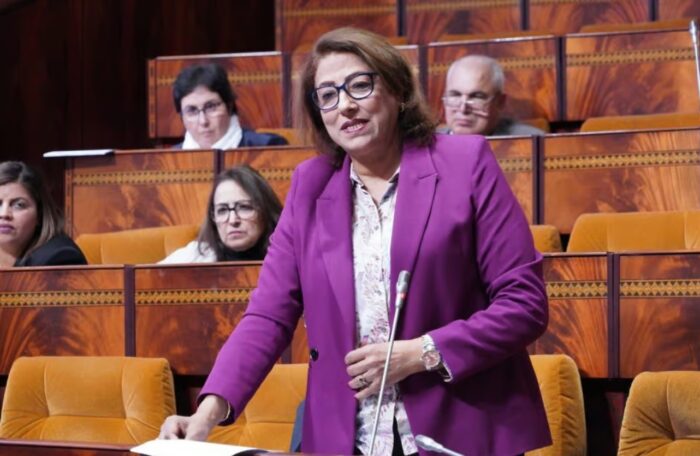
The parliamentarian criticized the role of intermediaries in driving up prices. « It is not enough to ensure an abundance of fish in our ports; these products must also reach local markets at reasonable prices, » she emphasized. According to her, « the current system favors a network of intermediaries who impose excessive markups at the expense of consumers. »
In her response, Zakia Driouich, Secretary of State in charge of Maritime Fisheries, emphasized the importance of structuring the fishing market to ensure fairer prices. She noted that national production reached 1.42 million tons in 2024, with an average annual growth of 1.7% since 2010. “Our priority is to align this momentum with the objectives of the Halieutis strategy, by promoting local consumption and ensuring optimal quality in distribution,” she stated.
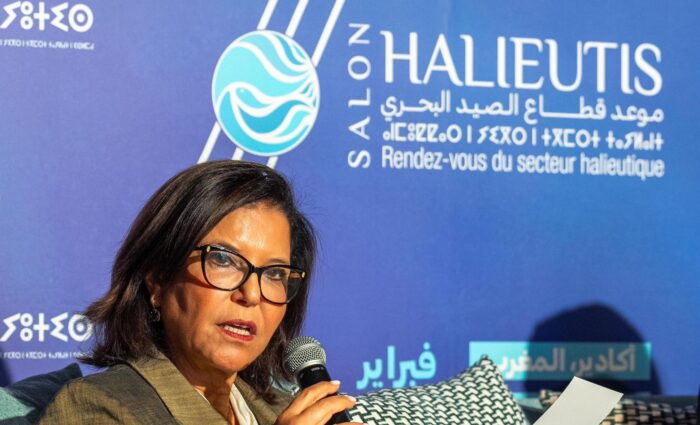
Among the measures implemented, the ministry has strengthened the distribution network by establishing 70 first-category wholesale markets located in ports and equipped distribution points, as well as 14 next-generation markets in fishing villages and rural areas. These infrastructures, representing an investment of 635 million dirhams, aim, according to the Secretary of State, to improve the supply of fish to various regions of the country.
Ten new wholesale markets outside ports will also become operational in the coming years, according to Zakia Driouich’s response. At the same time, two industrial seafood processing units, financed with 655 million dirhams, are under construction in Fès and Nador to optimize the conservation and distribution of fish in the national market.
More control over prices
To combat soaring prices, the Secretary of State emphasized the need for better regulation of distribution channels. “We have introduced an electronic auction system in 34 specialized markets to ensure greater transparency and reduce the influence of intermediaries,” she stated. This reform, which is expected to be gradually expanded, aims to “improve transaction traceability and ensure a fairer distribution of margins among the different market players,” the government official explained in her response.
The Maritime Fisheries Department has also emphasized the importance of sanitary inspections for fish sold on the market. “In 2023, nearly 90% of the fish quantities traded, approximately 113,000 tons, underwent rigorous inspections to ensure compliance with current standards,” stated Zakia Driouich.
Additionally, public authorities are promoting shorter distribution channels to limit the role of intermediaries and allow consumers to access seafood products at more affordable prices. Citizen-led initiatives, such as direct sales in certain markets and retail points, have been implemented to reduce the impact of markups applied throughout the supply chain. “This approach aims to curb excessive margins imposed by some intermediaries and enable consumers to access quality products at fairer prices,” emphasized the Secretary of State.
“As long as fish distribution channels remain poorly regulated, Moroccans will continue to pay high prices”
While these measures aim to stabilize prices, they have yet to convince consumers. Deputy Nadia Thami argues that “as long as distribution channels remain poorly regulated, Moroccans will continue to pay high prices for a product that is abundant in their own country.”
For her part, Zakia Driouich points out in her response that fish price fluctuations on the market are often influenced by external factors, such as weather conditions that can impact product availability and logistical costs associated with transporting goods to various points of sale.
With the approach of Ramadan—a period when fish demand surges—the effectiveness of the reforms introduced by the Maritime Fisheries Department will be put to the test. The question remains whether they will be enough to ease household expenses or if the debate over high fish prices will continue to stir public opinion.
Written in French by Younes Saoury, edited in English by Eric Nielson


