

The figure went relatively unnoticed, but it deserves attention. In its latest report on the state of debt burdens in Africa and the Caribbean, the African Export-Import Bank (Afreximbank) reveals that Morocco accounts for 5.9% of the continent’s external debt, making it the fourth most indebted African country internationally, behind Nigeria, Egypt, and Angola.
A striking observation: the kingdom is not among the largest economies in Africa in terms of gross domestic product (GDP), yet it carries significant weight in the continent’s external debt.
In 2023, Morocco’s public external debt — meaning loans contracted by the state from foreign creditors — stood at around 44.4 billion dollars (nearly 444 billion dirhams), up 3.8 billion dollars from the previous year. That same year, according to data from Bank Al-Maghrib, Morocco’s direct public debt represented 71.60% of the country’s GDP. Should we be concerned?
Orange alert
For economist Hicham El Moussaoui, a professor and researcher at the Faculty of Economics and Management at Sultan Moulay Slimane University in Béni Mellal, this level of debt must be analyzed with nuance. According to criteria established by the IMF and the World Bank, a sustainable public debt ratio for middle-income countries like Morocco generally falls between 50% and 70% of nominal GDP. “With a rate of 71% in 2024, Morocco has slightly crossed the upper limit of the sustainable threshold,” the expert notes. This situation places the kingdom in a “zone of exposure to external shocks,” making it more vulnerable to various destabilizing factors such as rising international interest rates, depreciation of the national currency, or an economic slowdown.
“Debt has increased in Morocco mainly because the state’s financing needs exceed its revenues, in a context of successive shocks, significant development expenditures, and partial economic slowdown”
However, Hicham El Moussaoui moderates this analysis by highlighting a reassuring indicator: debt service, meaning the total annual payments the government must make to repay its loans. “The debt service-to-public revenue ratio stands at 12% in 2024, which remains well below the critical threshold of 20%,” he points out. This figure suggests that despite exceeding the debt threshold, the situation remains manageable. “It’s a warning to be taken seriously, but at a controllable, not alarming, level,” the economist sums up, while stressing one essential condition: “maintaining sufficient economic growth and a structured deficit.”
In Morocco, the public debt ratio has been rising steadily for several years. The reason: ambitions greater than its capacity to finance them. “Debt has increased in Morocco mainly because the state’s financing needs exceed its revenues, in a context of successive shocks, significant development expenditures, and partial economic slowdown,” the economist notes.
Cyclical and structural factors
Several crises have converged to worsen the budgetary situation. The COVID-19 pandemic was the first major shock, “reducing tax revenues and increasing health and social spending, which led to a massive resort to borrowing.” The war in Ukraine then triggered global inflation, which caused a rise in commodity prices, widened the balance of payments deficit, and required external borrowing to stabilize macroeconomic balances.
Successive years of drought have also severely affected the country, which is highly dependent on agriculture. “This slowed growth, reduced revenues, and with the rise in support expenditures, the need for borrowing increased,” explains Hicham El Moussaoui. More recently, the reconstruction of areas damaged by the Al-Haouz earthquake “also required a major investment, with a budget of 120 billion dirhams just for its emergency phase.”
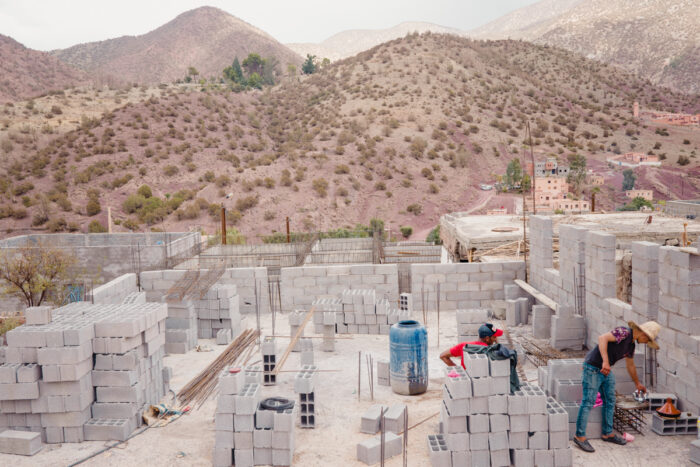
Beyond these shocks, structural factors also explain this trajectory. “Morocco has recorded a structural budget deficit for years, with expenditures exceeding revenues, partly financed through debt,” the expert observes.
Massive investments in infrastructure represent a significant budgetary item. The economist lists “the continuous rise in spending on costly infrastructure, such as the high-speed rail (LGV), highways, dams, energy transition, health, and education, partially financed by debt, within a long-term development logic, especially with the prospect of hosting major international sporting events, namely CAN 2025 and the 2030 World Cup.”
A sign of development?
The project to establish a social state has also weighed on public finances with “the increase in social spending: salary raises, the expansion of health coverage, and the granting of various subsidies.”
“Although Morocco experiences periods of moderate growth, it remains too weak and unstable to sustainably reduce the debt-to-GDP ratio”
The economist also points to governance issues that worsen the situation: “The low return on public investments reflects their inefficiency, revealing multiple dysfunctions in the governance of public spending: lack of transparency, weak execution, poor monitoring and evaluation, etc., which could exacerbate financial imbalances and deepen debt.” Finally, the lack of sufficient economic growth, he says, is a major challenge. “Although Morocco experiences periods of moderate growth, it remains too weak and unstable to sustainably reduce the debt-to-GDP ratio,” our source states.
In light of the rising debt, a fundamental question also arises: can it be seen as a sign of development through structural public investments, or does it signal a growing risk to the country’s macroeconomic stability? For Hicham El Moussaoui, the answer hinges on three essential criteria: the purpose of the debt, its management, and the repayment capacity.
A large portion of the debt is, in fact, contracted to finance strategic infrastructure, modernize the economy by supporting key and promising sectors — notably automotive, aerospace, and renewable energy — and accelerate crucial institutional reforms, including digitalization, justice, business climate, and governance. “From this perspective, debt is not problematic in itself, if it serves to increase the stock of productive capital and boost long-term growth potential,” notes the professor.
Caution required
“It is clear that in such an unfavorable economic context, and if financing needs continue on their upward trend, external debt risks becoming unsustainable”
However, regarding management and repayment capacity, the economist urges caution. On one hand, due to “the insufficient return on these public investments,” and on the other, because of “the volatility of economic growth depending on climate conditions and the fragility of budgetary balance.”
“We can speak of a development dynamic driven by the state,” adds the economist. But “in the absence of robust growth, budgetary discipline, improved efficiency of public investments, and especially stimulation of private investment, debt can become a major constraint on the country’s macroeconomic stability.”
In the current context marked by rising interest rates, budgetary pressures, and climate uncertainties, the question of the medium-term sustainability of this debt becomes crucial. “It is clear that in such an unfavorable economic context, and if financing needs continue on their upward trend, external debt risks becoming unsustainable,” warns Hicham El Moussaoui. However, several indicators help put this risk into perspective.
In addition to the debt service-to-GDP ratio, which remains below the critical threshold of 20%, Morocco’s foreign exchange reserves, equivalent to 7 months of imports, also remain “well above the critical threshold of 3 months.” And the very structure of external debt, with “an average maturity of 7 years, a significant portion at fixed rates, and a diversity of lenders,” grants the kingdom a degree of financial resilience.
Reducing dependence
This relative stability will nevertheless depend on “proactive management of public financing to prevent this stability from being weakened by market tensions or a potential rise in borrowing costs.” The expert emphasizes the need to “reduce dependence on external debt” through a prudent fiscal policy, based on “accelerating tax reforms, as well as rationalizing public spending” by optimizing public investments, targeting subsidies, and controlling the wage bill.
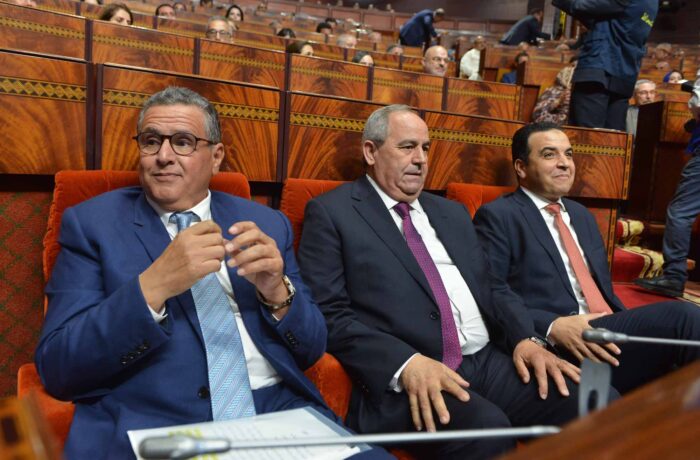
A paradigm shift is also necessary, according to the economist: “To ensure stronger and more inclusive growth, it is essential to make private investment the engine of growth rather than public investment, because only private investment generates healthy and sustainable wealth and job creation.”
One of the major challenges remains the debt-to-exports ratio, which determines the country’s repayment capacity. To address this, “Morocco should accelerate and further deepen the diversification of its markets and better capitalize on its products to achieve high value-added exports, which translate into higher foreign currency inflows.”
In short, according to the economist, Morocco shows relative debt stability, “but this debt carries moderate risks,” the expert concludes. This situation requires constant vigilance by the authorities over several key indicators: the evolution of the debt service-to-GDP ratio, the debt-to-exports ratio, the budget deficit, and the level of foreign exchange reserves.
Written in French by Ghita Ismaili, edited in English by Eric Nielson


