

Report published in issue 749 of TelQuel, dated January 27, 2017
Among the 930,000 documents, classified as secret or confidential, released online by the CIA on January 18, 2017, simply typing « King Hassan II » into the search engine yields 23,000 references, along with thousands of memorandums, conversations, diplomatic cables, and notes detailing how the United States perceived the late king and his kingdom, Morocco. The documents have been redacted to remove overly personal details in order to protect CIA sources, the agency justifies. Yet, they remain rich in detail.
At the beginning of Hassan II’s reign, the CIA was concerned about his potential rapprochement with the USSR. As the king of a newly independent country, he could have embraced non-alignment before eventually turning an ear to Moscow. A brief mention of this concern appears in documents dated from the 1970s to 1988, reflecting an era firmly rooted in the Cold War—a time when everyone was expected to choose a side. Hassan II, while firmly aligned with the United States, took liberties with Washington, as his primary diplomatic objective was securing recognition of Morocco’s sovereignty over the Sahara. The agency took note of this, just as it had long observed that Hassan II had neutralized the leftist opposition. With no real political rivals remaining, the CIA scrutinized the nature of his regime. The agency’s questions became more personal—just like the regime itself. Who would succeed Hassan II? Who were the strongmen surrounding him? Who among them could pose a threat to the king? These questions, for the United States, all pointed to a single underlying conclusion—a common thread running through every declassified document concerning Morocco: Hassan II had to remain a loyal ally, a key supporter of Washington’s interests in North Africa and the Middle East.
Hassan II-Gaddafi: sworn enemies
The CIA was all ears when it came to the frequent and heated exchanges between the sovereign and the « Guide of the Libyan Revolution. » The intelligence agency paid even closer attention in 1984, a year when relations between Morocco and the United States cooled significantly. The reason: the unexpected signing of a union treaty between Morocco and Libya in Oujda, much to Washington’s dismay. A mini Maghreb Arabe Uni that did not sit well with the Americans.
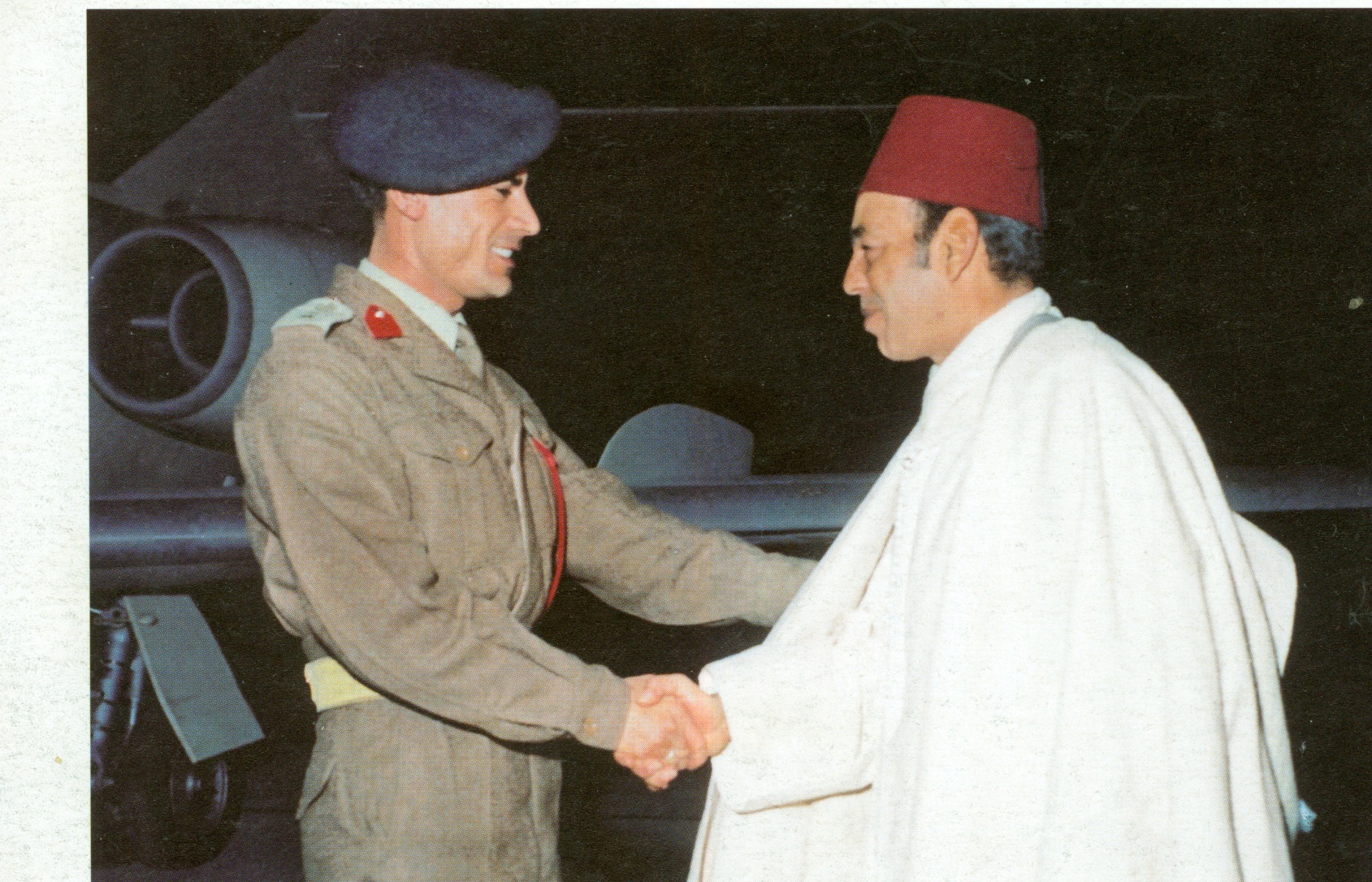
Colonel Gaddafi launched relentless attacks against his North African rival, Hassan II. In March 1973, a CIA telex reported that the Libyan leader was openly and directly criticizing the Moroccan king, who was thirteen years his senior. « Colonel Gaddafi called kings in general, and Arab kings in particular, lunatics. He cited Morocco and Jordan as examples: ‘Those who are now kings or crowned princes are mentally ill,’ » detailed the U.S. embassy in Rabat in a message to the U.S. State Department.
Amid the Cold War, the United States closely monitored Morocco’s tense relations with its Libyan neighbor, a champion of pan-Arabism who openly displayed his anti-monarchist and socialist stance.
Tensions between Hassan II and Muammar Gaddafi reached their peak on February 27, 1976, the day the Polisario proclaimed the « Sahrawi Arab Democratic Republic » (RASD), partially armed by the Libyan leader. Gaddafi expressed his disapproval of Hassan II’s military response in a scathing letter to the king, intercepted by the CIA: « If you were fighting separatists within your kingdom, we would stand with you. If you were fighting colonialists in the Sahara, we would stand with you. But to fight people simply because they say no—we cannot stand with you. » These sharp words cemented Libya’s position on the Sahara issue.
In 1984, Hassan II signed a political and economic agreement with Libya in Oujda, hoping that Gaddafi’s regime would withdraw its support for the Polisario. The king took a calculated risk, potentially straining relations with the Americans. He adopted a new tone, expressing “consternation” at their “obsession” with Gaddafi during a tense meeting with Republican Senator Kasten on December 13, 1984, as reported in a diplomatic cable. Tactical and pragmatic, Hassan II found it useful to rehabilitate the man who had long been his enemy. « Gaddafi is not responsible for all the terrorism in the world, » the monarch told the senator.
This unexpected rapprochement alarmed Washington. U.S. intelligence services feared a « shift in Morocco’s foreign policy that might not align with U.S. interests, particularly in fostering closer ties with Eastern Europe and the Soviet Union. » A concerning prospect, given that Washington considered Morocco one of its most reliable allies in the Arab world.
On December 19, 1984, Hassan II asked Senator Kasten to relay his exact words to U.S. President Ronald Reagan: he wanted more material aid for Morocco. « The United States knows that it can do whatever it wants in Morocco, » Hassan II reminded him, listing everything he had offered Washington. While acknowledging the close relationship with the U.S., he was “disappointed to note that this friendship is rarely reciprocated in equal measure.” Kasten observed that the king had never appeared « so tense and impatient » under the strain of the Sahara war. « Under such stress, Hassan II is inclined to act like the tribal, Bedouin, Berber, and Francophone chief that he is, » the senator noted, suspecting that the king was using his alliance with Gaddafi and the threat of a Soviet rapprochement as leverage to negotiate additional aid.
In 1986, a CIA internal report anticipated the collapse of the agreement between Hassan II and Gaddafi. Their prediction proved accurate: within months, the union between Morocco and Libya fell apart. Once again an enemy of Hassan II, Gaddafi is even believed to have attempted to assassinate the Moroccan king in 1987.
A self-promoting ally
Hassan II prided himself on being an indispensable military ally of the United States. While his role was indeed significant, Rabat exaggerated its importance, according to the CIA. The agency feared a potential shift in the king’s stance, as he had made the Sahara issue—and the position of his allies on it—the sole barometer of his diplomatic strategy.

« Strategic Morocco-U.S. cooperation directly contributes to American military dominance in the Mediterranean. » This statement appears at the very beginning of a report assessing the 1982 agreement that strengthened military cooperation between the two countries, which was later evaluated by the CIA in 1984. At the height of the Cold War, U.S. interests in Morocco were largely based on its « strategic geographic location. » The kingdom allowed U.S. military ships to dock in its Mediterranean and Atlantic ports. Washington, in turn, valued Hassan II’s positions, which aligned with « those of the United States. » The king implemented policies that « assisted American objectives and countered Soviet ambitions in the region. » Across the Middle East, the Arab world, and sub-Saharan Africa, the CIA noted that « Moroccan friendship has been particularly useful. »
From Rabat’s perspective, military cooperation was expected to be the final step in defeating the Polisario and asserting regional leadership over its Algerian rival. However, the U.S. consul in Morocco at the time dismissed this notion as misguided: « There is a widely held belief that this partnership will allow Morocco to defeat the Polisario. »
This « unrealistic » view was shared by American analysts. According to their assessment, this « misunderstanding is fueled by Morocco’s exaggerated perception of American capabilities, as well as its overestimation of its importance to Washington. » In other words, while Morocco was an important ally, it was likely not as crucial as it believed itself to be. The report repeatedly emphasized that relations between the two countries were « good, but fragile, » given that Morocco’s foreign policy was heavily dictated by the Sahara conflict. Since Hassan II was more pragmatic than ideological, the CIA feared that he might reconsider his stance toward the U.S. if he felt Washington’s « pro-Moroccan neutrality » was wavering. In their view, he would not hesitate to adopt hostile policies if he sensed a shift in the geopolitical winds.
Who will succeed him?
A few years after Morocco’s independence, the United States questioned the future of the monarchy following the premature death of Mohammed V. Decades later, under Hassan II, the issue remained relevant for the American intelligence agency. The CIA speculated on which of his two sons, Sidi Mohammed or Moulay Rachid, would succeed him.

The day after Mohammed V’s death on February 26, 1961, the CIA was already concerned about the country’s stability. The agency worried about the rising influence of the UNFP, describing it as « a strong and nationalist left-wing group » led by figures « who have little respect for Hassan II and are inclined to turn Morocco into a republic. » Though the group would be sidelined by the king within a few years, this did not entirely reassure Washington. At a time when former colonies were embracing non-alignment and the Cold War between the United States and the USSR was intensifying, the U.S. feared a Moroccan shift toward Moscow. A top secret CIA bulletin expressed distrust toward the new monarch, who had initiated an economic agreement during Soviet President Brezhnev’s visit to Morocco in early February 1961. « It is possible that he will make further arrangements with the Sino-Soviet bloc, » the intelligence services warned.
Twenty years later, in the early 1980s, the CIA turned its attention to Hassan II’s succession. While the possibility of an abdication was quickly dismissed, the agency seriously considered the prospect of the 52-year-old king dying from illness or assassination. Sidi Mohammed, recognized as the crown prince, was expected to take over, though the report noted his rivalry with his twelve-year-old brother.
Among the possible scenarios, the Americans quickly ruled out another coup d’état but sought to identify the key figures who would oversee the transition of power from Hassan II to his son. Washington focused on the rivalry between General Dlimi and Interior Minister Driss Basri, whose influence could diminish the authority of Prince Sidi Mohammed. Despite the protests of 1981, the CIA did not view left-wing movements or political parties like the USFP as a real threat to the monarchy, predicting they would struggle to assert themselves. Lacking a « charismatic leader, » it was also considered highly unlikely that Islamist fundamentalists would take power in the event of Hassan II’s death.
Lieutenants Dlimi and Basri
Following the two coup attempts in 1971 and 1972, the United States focused on identifying the key figures closest to Hassan II. Ahmed Dlimi, unsurprisingly, was at the top of the list as the regime’s number two since the 1970s. The CIA produced reports highlighting his influence over Hassan II and his power within the military, while also expressing concern about the possibility of another coup—one that Dlimi himself could potentially orchestrate.
Two years after the 1972 coup attempt against Hassan II, the CIA assessed the security measures and purge carried out by the Moroccan king within the military. The United States believed that another coup attempt was unlikely as long as no clear military leader emerged and the army remained loyal to the king. However, the U.S. remained wary of General Dlimi. According to the CIA, the man who would become one of the key figures of repression during the Years of Lead was the only powerful figure in the regime with « a position of authority that would allow him to orchestrate or facilitate a coup. » But in 1974, when this assessment was made, the agency saw no immediate threat, no signs of a rift between Dlimi and Hassan II.
Ahmed Dlimi died on January 22, 1983, in a car accident in Marrakech. Despite the suspicious circumstances surrounding his death, CIA cables adhered to the official version: « The accidental death of General Dlimi, the king’s military and intelligence advisor, is unlikely to have a major impact on the country’s internal or external affairs. » In its analysis, the agency focused on what it considered an urgent challenge: Hassan II would now need to find another man to serve as « protector of the monarchy » when the time came for succession.
In another document from April 1983, a U.S. defense attaché reported that military officers close to Dlimi were « shaken » by his death and that the king had to act against a perceived threat. « Several officers and a troop commander based in ‘Western’ Sahara were recently arrested, » he noted. The mysterious death of the second-in-command of the Royal Armed Forces (FAR) only strengthened the power of Interior Minister Driss Basri, on whom Hassan II became even more reliant. The United States took note of this shift, classifying Basri as Morocco’s new second most powerful man after the king. According to American intelligence, the fact that the Interior Minister was not from the military was clear proof that Hassan II wanted an alternative and a counterbalance to the armed forces, whom he no longer fully trusted.
Autonomy, the only solution
Twelve years after the conflict between Morocco and the Polisario began, following the Green March in 1975, the status quo remained unchanged on the ground. Even at the time, the CIA saw no lasting solution to the conflict other than an autonomy plan for the Sahara under Moroccan sovereignty.
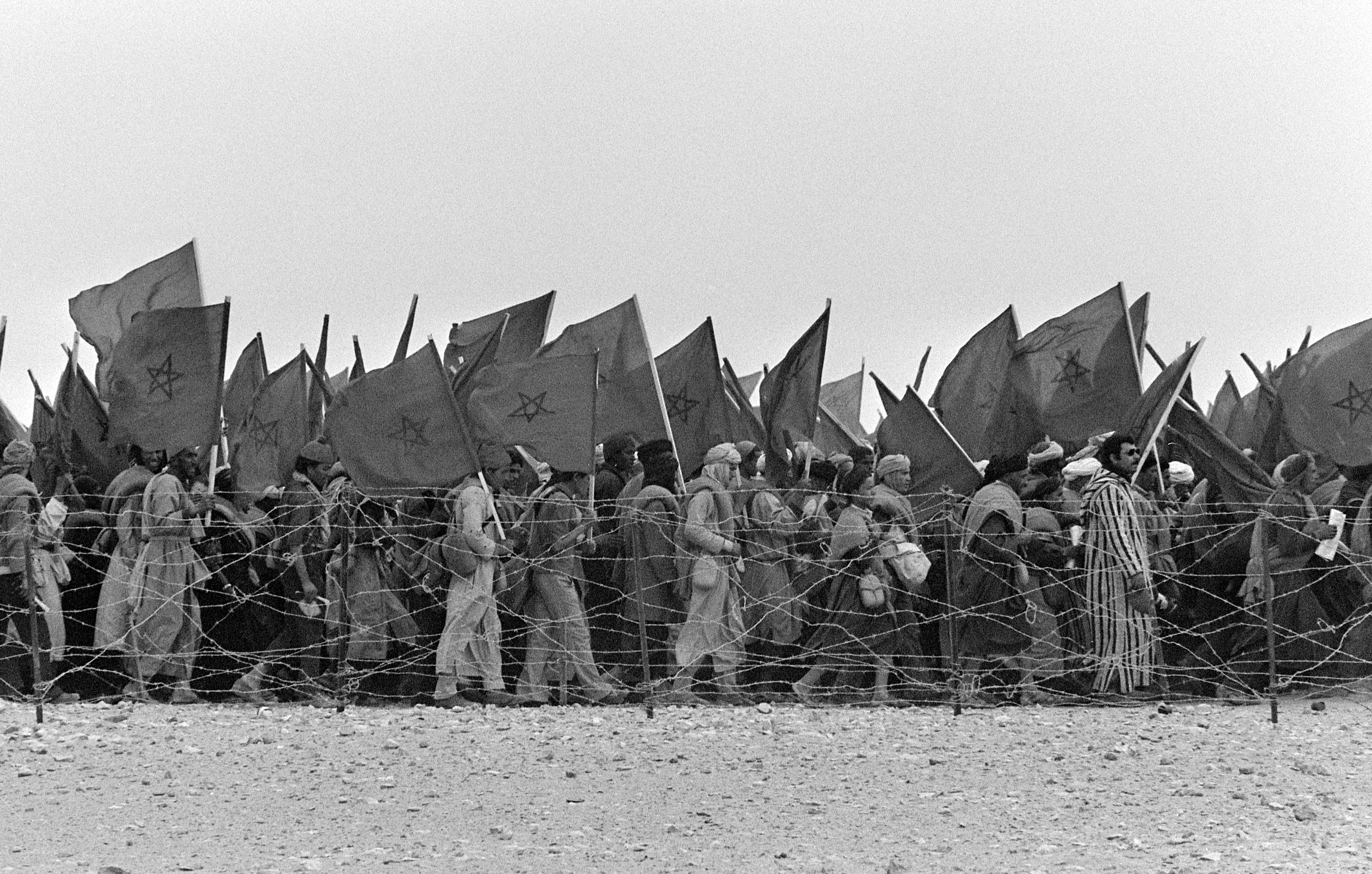
As early as 1975, the CIA assessed that the Polisario forces were « incapable of militarily defeating the better-equipped Moroccan army. » This evaluation remained consistent over the years. In a 1981 report on the viability of a potential state in the Sahara, the agency’s conclusion was clear: « Regardless of its borders [with or without the phosphate-rich regions], a Saharan state would require substantial international assistance for food and hydrocarbon imports. »
By 1987, the CIA already believed that « the most likely diplomatic solution would be based on a federal concept involving Hassan II’s sovereignty over the Sahara in exchange for a degree of autonomy for the Polisario. » Such a solution might have materialized in the 1980s, at a time when Algeria’s economy was in recession and its support for Polisario independence was no longer absolute.
President Chadli Bendjedid and part of Algeria’s military establishment were, at that point, willing to accept a resolution to « save face. » The Algerian proposal included « a semi-independent state under the Moroccan flag. » In 1987, the Americans saw Bendjedid as a key player in resolving the conflict, particularly as Hassan II had « less incentive to negotiate [than Bendjedid], given that Morocco already controlled most of the territory. »
However, the two leaders had differing visions of what a federal entity would look like. Hassan II believed that the level of autonomy proposed for the Polisario was too extensive.
The CIA’s proposed compromise to bridge their positions involved an autonomy arrangement under Moroccan sovereignty, with a regional parliament and an independent budget, while maintaining sovereign powers under Morocco’s control. A proposal that sounds strikingly similar to Morocco’s current autonomy plan—now regarded by the United Nations and the international community as the most credible solution on the table.
The rise of religious Islamism
The United States was deeply shaken by the 1979 Iranian Revolution. Since then, it has been fixated on the rise of religious sentiment in Moroccan society, fearing that Hassan II, as Commander of the Faithful, could become its victim. At no point does the agency acknowledge that the king himself introduced Saudi Arabia’s Wahhabism—Washington’s ally—as a counterbalance to the Moroccan left.
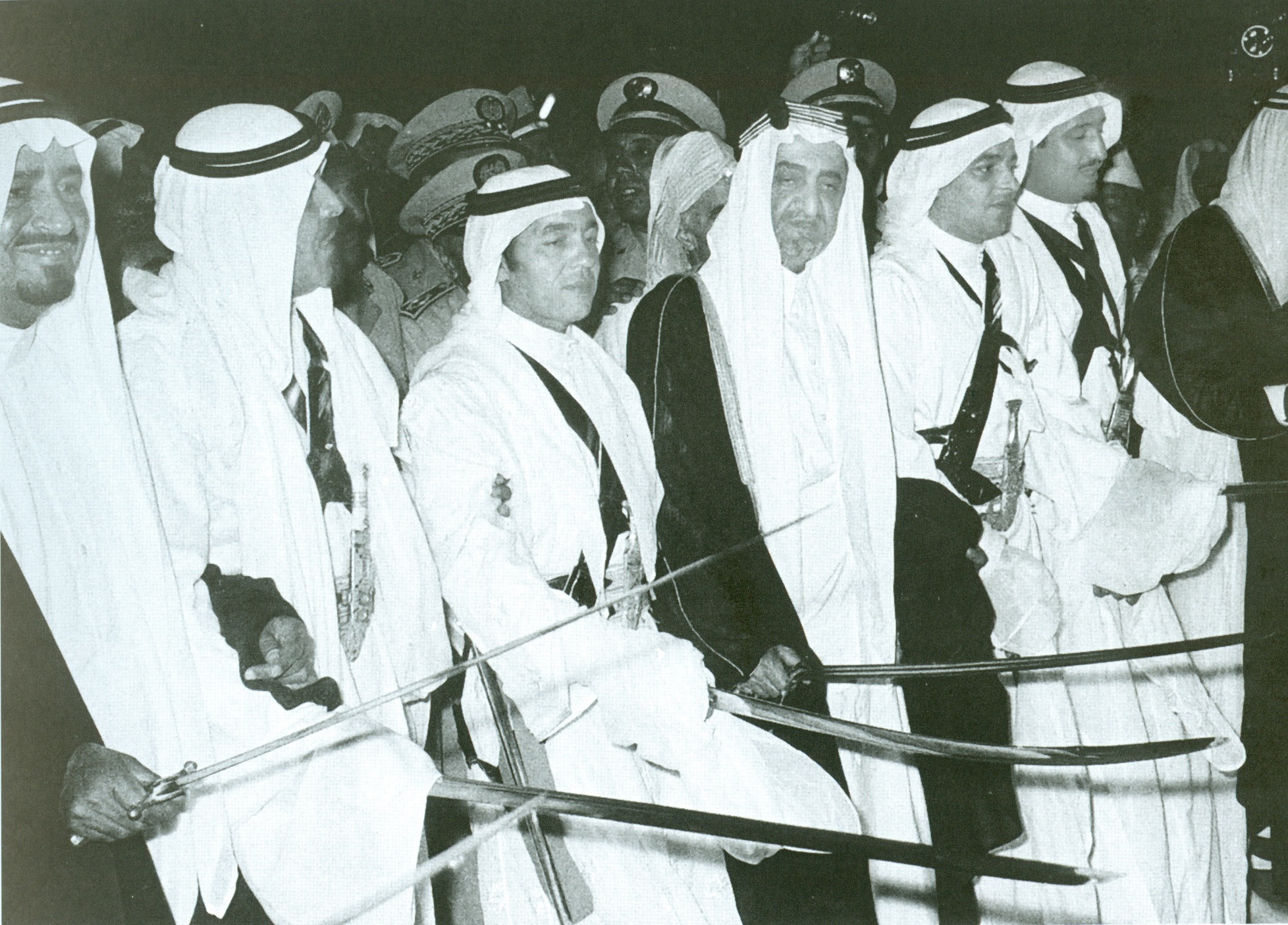
In February 1983, an internal memo titled « Morocco: Islam and Politics » analyzed the role of religion in the Moroccan regime. For the United States, there was no doubt: « Islamic awareness has increased in Morocco since the 1979 Iranian Revolution. » In Iran, Khomeini’s rise to power as the leader of the Islamic Revolution had severed diplomatic ties between Iran and the United States. « Mosque attendance has risen, and the spirit of Ramadan is unusually fervent, » according to a source from the U.S. embassy cited in the document. The Americans were particularly concerned about the spread of Islamist education, fueled by radical Islamic literature « clandestinely arriving from Libya, Pakistan, Iran, and Egypt. »
While « the leaders of the Socialist Party (USFP) in Morocco have been unable to organize any meaningful political opposition, » fundamentalist groups were gaining traction among young dissidents, particularly in the kingdom’s major cities. Chabiba Islamiya, linked to Egypt’s Muslim Brotherhood, was openly authorized and legitimized by the regime to « counter leftist movements. » However, in the short term, the Americans were not overly alarmed by these religious groups. « Most of these groups are small and lack cohesion and coordination, » they reassured themselves, estimating that there were around 15 fundamentalist groups in Rabat, between 70 and 80 across Morocco, with approximately 45,000 members.
« In the short term, Hassan II should be able to control religious extremism, » the U.S. concluded, relying on a regime in which Islam was tied to a « tradition of tolerance. » According to the CIA, it would be difficult to overthrow Hassan II without directly challenging Islam itself, as he held the title of « Commander of the Faithful. » The ulamas were viewed as being co-opted by the king, reinforcing his religious authority. « Moroccan officials seem aware of the current Islamic resurgence, » the CIA noted, though it anticipated that « fundamentalists will continue to seek a greater role in the political process. »
By 1986, the CIA repeated its concerns. Following the social unrest of the early 1980s, the regime’s authoritarian measures had deepened public frustration. « We believe that prolonged economic difficulties and growing political disillusionment have created new problems for the Moroccan regime, including the rise of the religious right, » the agency observed, noting that the kingdom remained primarily focused on finding a resolution to the Sahara conflict.
The CIA’s assessment proved to be largely accurate. By 1997, the Justice and Development Party (PJD) entered the electoral process. In 2016, Abdelilah Benkirane was reappointed as head of government for a second consecutive term, cementing the party’s position as Morocco’s leading political force.
Written in French by Théa Ollivier and Nizar Idrissi Zougari, edited in English by Eric Nielson


